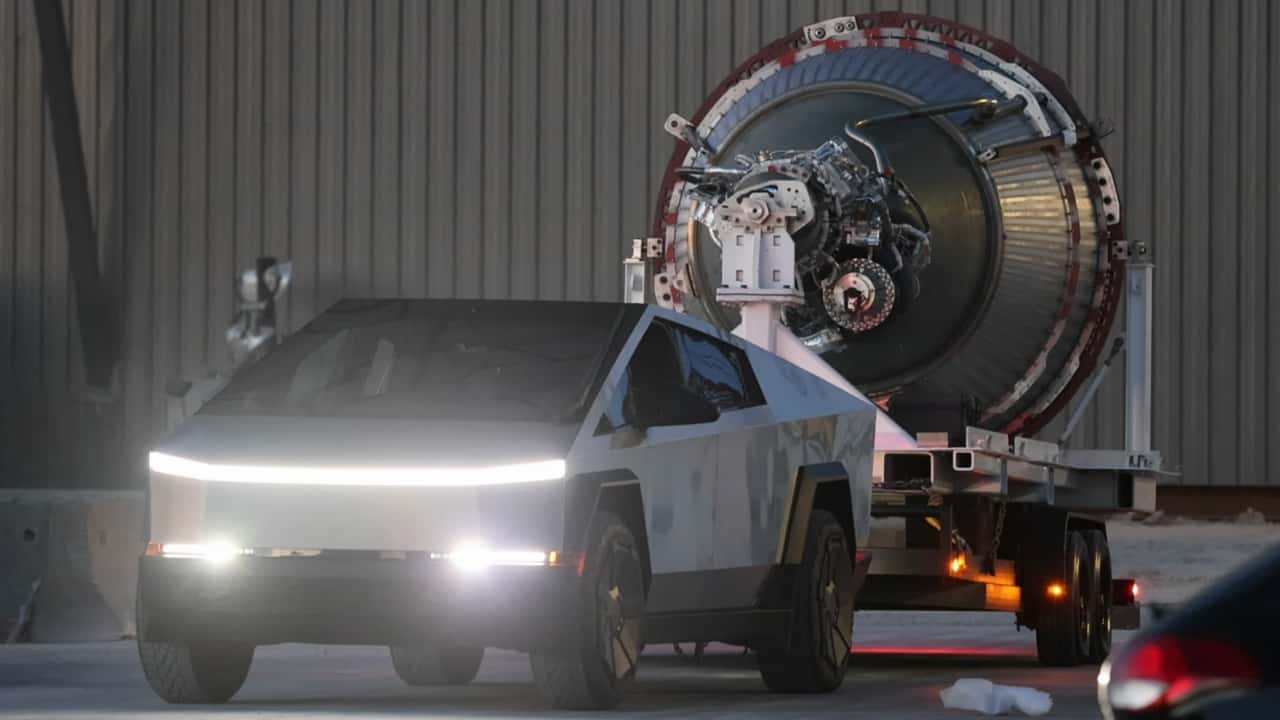
New vehicle registration data has peeled back the curtain on Tesla Cybertruck deliveries in the final quarter of 2025, revealing a fascinating and complex picture of demand. While the angular stainless-steel pickup continues to turn heads on public roads, a significant portion of its recent sales originated not from retail customers, but from the corporate fleet of SpaceX, another Elon Musk venture. This substantial internal purchase underscores the unique ecosystem Musk is building while raising pertinent questions about the organic market appetite for Tesla's most radical vehicle.
SpaceX Emerges as a Major Cybertruck Fleet Customer
The data indicates that SpaceX purchased a staggering 1,279 Cybertrucks in Q4 2025. This single corporate order represents a significant chunk of the quarter's total deliveries, instantly positioning the aerospace company as one of the electric pickup's largest known buyers. For context, Tesla does not break out Cybertruck delivery numbers by segment, making this fleet registration data a rare and valuable insight. The purchase aligns with SpaceX's operational needs across its sprawling facilities in Texas, California, and Florida, where the Cybertruck's durable exoskeleton and utility could be leveraged for on-site transport and logistics.
Decoding the Strategy Behind the Internal Sale
Analysts see this transaction as a multi-faceted strategic move. Firstly, it provides Tesla with a guaranteed, high-volume sale that bolsters its quarterly delivery figures—a critical metric watched by investors. Secondly, it serves as a powerful real-world durability test under demanding industrial use, generating invaluable data on the Cybertruck's performance in a fleet setting. Finally, it reinforces the synergistic branding between Musk's disruptive companies, projecting an image of futuristic technology and resilience. "This isn't just a sale; it's a statement," notes an automotive industry strategist. "It demonstrates internal confidence in the product while effectively stress-testing it in a controlled environment."
However, this revelation inevitably leads to analysis of underlying consumer demand. The Cybertruck remains a polarizing design with a premium price tag, and its production ramp has been characteristically challenging. The SpaceX fleet purchase ensures a baseline of volume, but it also complicates the narrative of how quickly Tesla is converting its massive reservation list into actual customer deliveries. The key question for the market is whether this represents a one-off capitalization on corporate synergies or a necessary mechanism to support volumes while broader retail demand matures.
Implications for Tesla's Trajectory and the EV Market
For Tesla, the fleet sale is a pragmatic short-term boost, but the long-term success of the Cybertruck hinges on widespread adoption beyond Musk's corporate umbrella. The vehicle is a crucial entry into the highly profitable and competitive pickup truck segment, dominated by established players like Ford and Rivian. Proving its mettle with a demanding customer like SpaceX is a compelling testimonial, yet the ultimate benchmark will be its acceptance by commercial fleets and individual buyers unaffiliated with its CEO.
For Tesla owners and investors, this development is a double-edged sword. It confirms strong internal execution of Musk's vertical integration strategy and provides near-term delivery support. Yet, it also highlights the Cybertruck's ongoing niche status. Investors will scrutinize upcoming quarters for signs of accelerating retail customer deliveries to gauge true market penetration. Owners, meanwhile, may benefit from the rigorous fleet testing, which could lead to faster identification and resolution of any early production issues, ultimately refining the vehicle for all users. The Cybertruck's journey remains one of the most watched stories in automotive, and this latest chapter proves its path is as unconventional as its design.