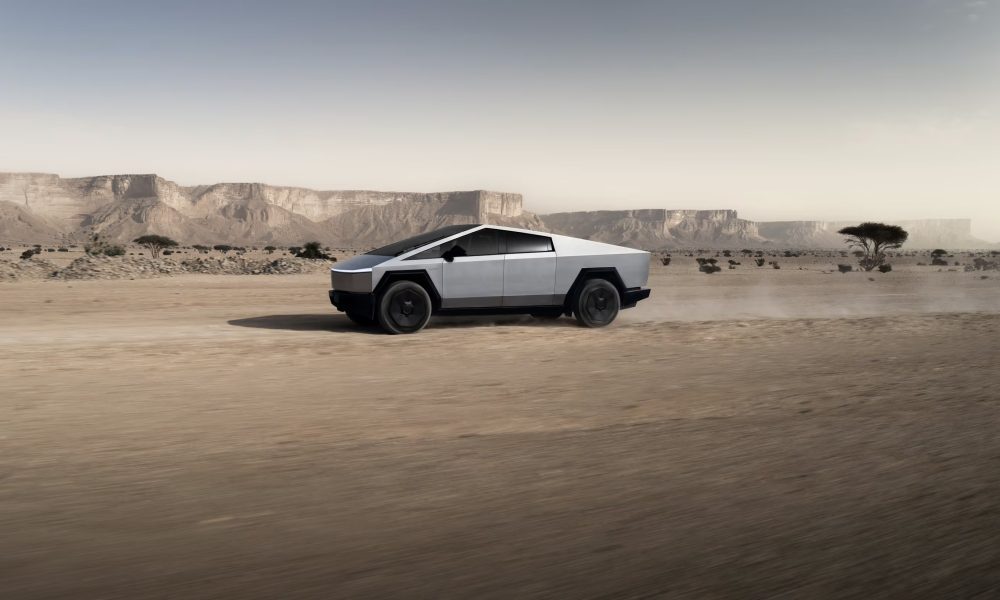
Tesla’s Cybertruck saga took a quiet but revealing turn. The company has officially discontinued the entry-level Rear-Wheel Drive (RWD) variant of its angular electric pickup. The reason? Abysmal sales. New data confirms that Tesla sold only 173 units of the Cybertruck RWD before pulling the plug. That minuscule figure underscores the steep challenge Tesla faces in moving a vehicle that was once hailed as the future of the pickup market.
The Numbers Behind a Silent Exit
The Cybertruck RWD was positioned as the “affordable” entry point to Tesla’s electric truck lineup. Yet, with a starting price that crept past $60,000 and a range of roughly 250 miles, it failed to attract mainstream buyers. Industry analysts point to a brutal combination of factors: the RWD variant lacked the towing capacity and off-road credibility of its dual-motor and tri-motor siblings, while its price tag still placed it squarely in premium territory. For context, Ford sold over 24,000 F-150 Lightnings in the same period, many of which were lower-trim models. The 173-unit figure is a stark reminder that even Tesla’s brand power has limits when the product-market fit is off.
Why the Cybertruck RWD Failed to Find a Home
Several dynamics doomed the RWD version from the start. First, the Cybertruck’s polarizing design and massive footprint already narrowed its appeal. Adding a single-motor, rear-wheel-drive powertrain—which is inherently less capable for truck buyers who need to haul or tow—made the proposition even weaker. Second, Tesla’s own production ramp was chaotic. The company prioritized Foundation Series models, which were fully loaded and priced above $100,000, leaving the RWD variant as an afterthought. By the time Tesla officially opened orders for the RWD version, demand had evaporated. Enthusiasts who reserved early either upgraded to more powerful trims or simply cancelled. The result was a sales disaster that Tesla quietly buried, removing the RWD option from its configurator without fanfare.
Implications for Tesla Owners and Investors
For current Cybertruck owners, this discontinuation means the RWD variant will become a rare oddity—a collectible in the worst sense, with limited parts support and resale uncertainty. Investors, however, should focus on the bigger picture. The 173-unit failure signals that Tesla’s “one-size-fits-all” approach to the Cybertruck may have backfired. While the dual-motor and tri-motor versions are selling in the low thousands per quarter, the overall Cybertruck production rate is far below Tesla’s initial 250,000-unit annual target. This casts doubt on the company’s ability to capture the lucrative full-size pickup market, which is dominated by gas-powered giants. For Tesla to hit its long-term growth goals, the Cybertruck line needs a realignment—either through a cheaper, more practical variant or a hard pivot to the Cybercab and other robotaxi ambitions. Until then, the Cybertruck RWD stands as a cautionary tale of overpromising and underdelivering.