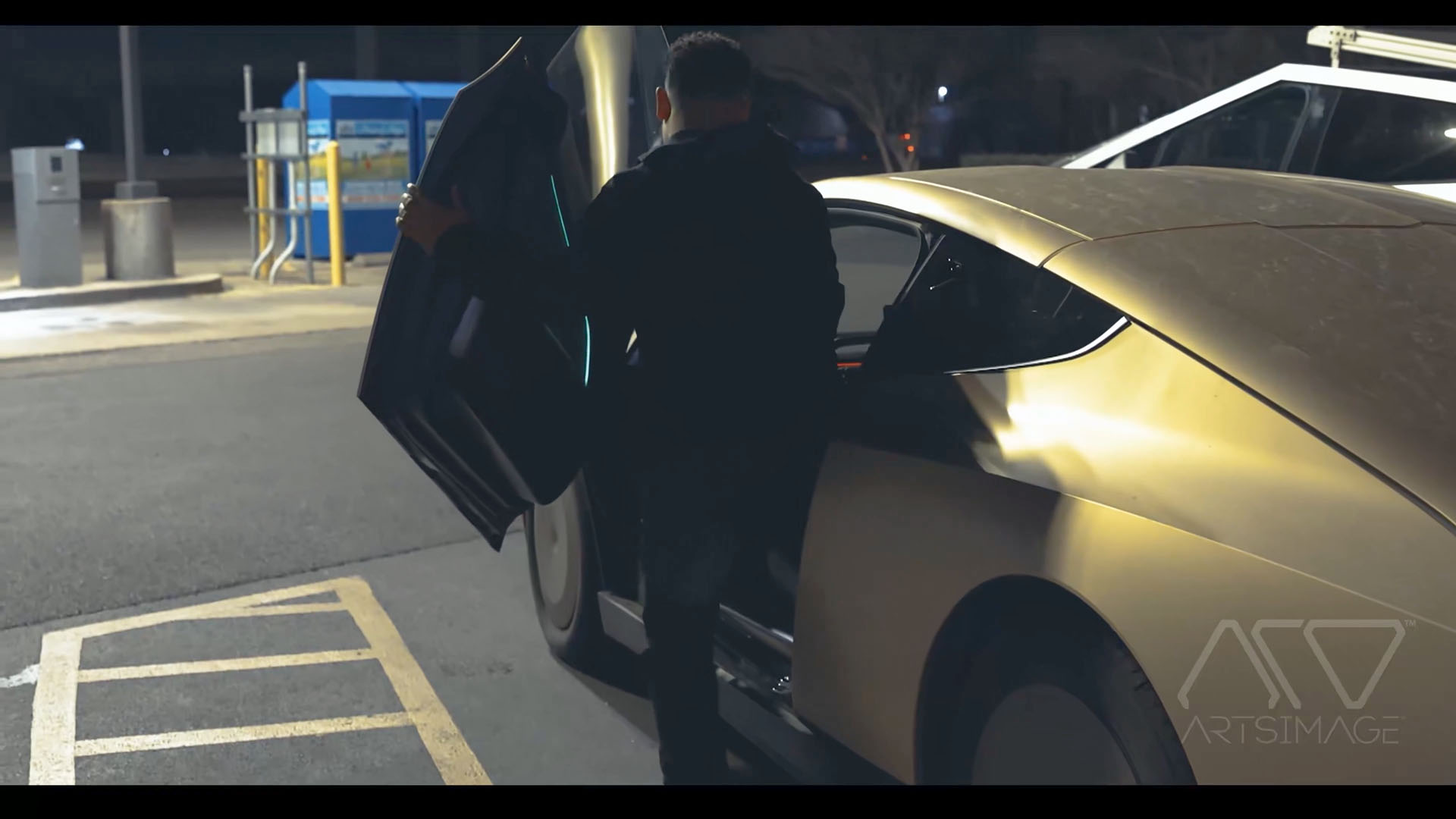
A new glimpse into Tesla's autonomous future has emerged from the streets of Palo Alto, cutting through the speculative noise with tangible hardware. A prototype of the highly anticipated Tesla Cybercab robotaxi was captured on video, not just driving, but demonstrating the practical function of its signature butterfly doors. This brief but revealing footage offers the clearest look yet at how passengers will interact with a vehicle designed from the ground up for a driverless world, where traditional door handles are deemed obsolete.
Form Meets Function in a Handleless Design
The video confirms Tesla's radical departure from conventional automotive entry systems. With no visible handles, the Cybercab's doors are activated via a smartphone command or potentially an in-app request, upon which the entire door panel lifts upward and slightly outward in a single, sweeping motion. This butterfly door mechanism is not merely a stylistic flourish; it is a critical engineering solution for a compact electric vehicle platform. By opening vertically, the doors require significantly less lateral clearance than traditional doors, making ingress and egress easier in tight urban parking spaces and reducing the risk of "dooring" cyclists or adjacent vehicles.
A Platform Built for Autonomy and Scale
The choice of butterfly doors is intrinsically linked to the vehicle's core identity as a dedicated robotaxi built on Tesla's next-generation, low-cost EV platform, often referred to as the "Model 2" platform. This architecture prioritizes manufacturing efficiency and passenger utility over driver-centric controls. The sight of the prototype navigating public roads suggests development is progressing toward Elon Musk's promised unveiling on August 8, 2024. Before the Cybercab, such door systems were largely confined to high-end supercars, but Tesla aims to democratize the technology for a mass-market fleet vehicle, underscoring its commitment to redefining automotive norms.
This public sighting serves as a powerful piece of real-world validation. It moves the Cybercab from a render in an investor presentation to a functioning prototype being tested in real-world conditions. The seamless operation of the doors in the video, devoid of any visible struggle or hesitation, hints at a mature design nearing production readiness. It directly addresses a key user experience question that has lingered since the vehicle's initial announcement: how will customers physically enter a car with no handles?
For Tesla owners and investors, the video is a concrete signal that the company is executing on its ambitious vision for autonomous ride-hailing. A functional, handleless entry system is a non-trivial feat that demonstrates progress on the integrated hardware and software required for the robotaxi ecosystem. The impending August unveil now carries greater weight, promising to showcase not just a concept, but a tangible product. Success in this arena could unlock a recurring high-margin revenue stream that would fundamentally alter Tesla's valuation model, making the Cybercab perhaps the most important product in the company's pipeline since the Model 3.