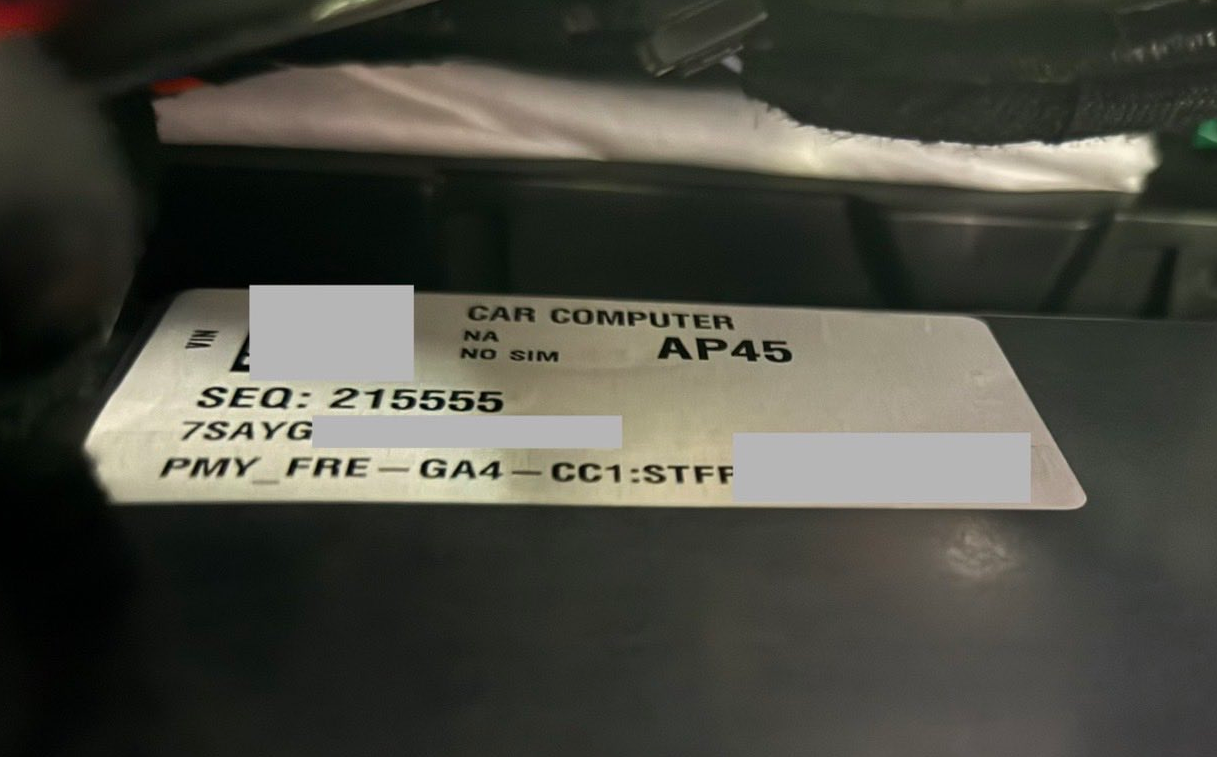
In the fast-paced world of Tesla hardware, where every decimal point can signal a major leap toward full autonomy, a mysterious new part number sent the enthusiast community into a speculative frenzy this week. Reports emerged of a component labeled "AP45" appearing in Tesla's internal parts catalog, instantly interpreted as the long-rumored successor to the current Hardware 4 (HW4) system. However, Tesla has now officially stepped in to douse the flames, confirming to Drive Tesla that no "AI 4.5" or "HW4.5" system exists and that the designation was simply a clerical error.
Decoding the "AP45" Mystery
The confusion originated when a part associated with Tesla's Autopilot and Full Self-Driving suite was listed with the AP45 identifier. Given the company's history of incremental hardware updates—like the significant jump from HW3 to HW4—observers logically assumed this was evidence of a mid-cycle refresh. This "Hardware 4.5" was theorized to potentially offer improved camera resolution, faster processing, or other enhancements critical for the evolving FSD (Supervised) software stack. The speculation highlighted the intense scrutiny Tesla's autonomous driving roadmap is under, where hardware capabilities are seen as the bedrock for future software unlocks.
Official Clarification and the HW4 Reality
Tesla's clarification is definitive: the "AP45" label was a mistake. The company stated there is no new intermediary hardware version currently being produced or shipped. This means all new vehicles, including the recently updated Model 3 Performance and Cybertruck, are equipped with the established Hardware 4 system. HW4 itself, which began rollout in 2023, marked a substantial upgrade with a more powerful Tesla-designed FSD computer, higher-resolution cameras, and a radar unit, though its full potential remains largely untapped by the current software.
The swift correction from Tesla underscores the challenges of managing information in a digital age where internal data is instantly visible and analyzed. It also serves to refocus the narrative on the current hardware's capabilities. The emphasis from the company appears to be on maximizing HW4's performance through software, rather than preparing the market for another imminent hardware change. This aligns with CEO Elon Musk's longstanding philosophy of achieving autonomy primarily through advanced artificial intelligence and neural networks, not just raw hardware specs.
Implications for Owners and the Road Ahead
For current and prospective Tesla owners, this clarification provides valuable certainty. Those taking delivery of a new electric vehicle today can be confident they are receiving the latest and most capable production hardware available, with a clear runway for software improvements. For investors, the episode is a reminder of the market's hypersensitivity to any signal about Tesla's autonomous driving technology timeline, but the outcome reinforces that no disruptive hardware transition is underway that could impact near-term production or costs.
The path forward now seems sharply defined: the next major leap will be to Hardware 5, which Musk has previously suggested is still years away. In the interim, the story returns to where it has been for months—on the continuous, iterative updates to the FSD software stack. The mission to achieve a truly driverless car continues, but for now, it will be powered by the capable brains of HW4, not a phantom 4.5.