Tesla's global march toward autonomous driving has secured a critical new beachhead. In a landmark decision, Israel's Ministry of Transportation has granted Tesla approval to begin supervised trials of its Full Self-Driving (FSD) software on the nation's public roads. This move marks the first official government-sanctioned testing of Tesla's most advanced driver-assistance system outside of North America, signaling a pivotal moment in the company's international validation strategy.
A Strategic and Demanding Proving Ground
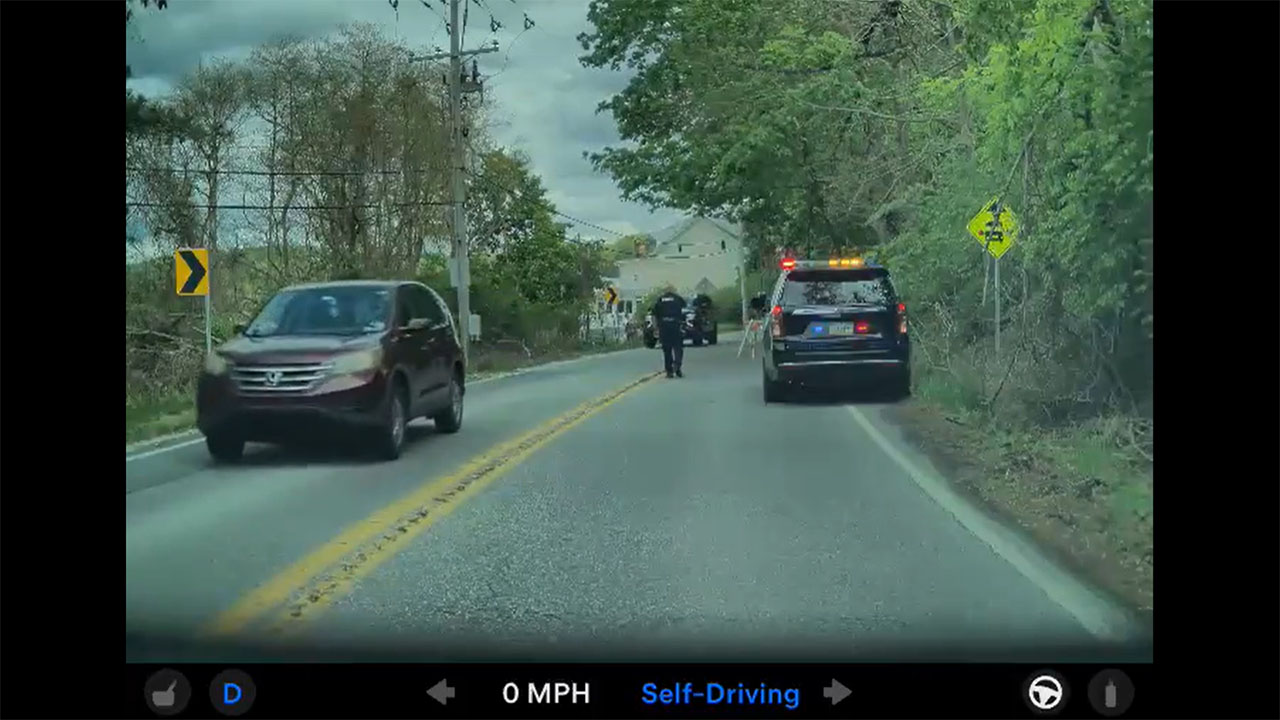
The choice of Israel is far from incidental. The country presents a uniquely challenging and valuable real-world laboratory for Tesla's FSD Beta. Israeli urban environments are characterized by dense traffic, complex intersections, and aggressive driving styles—a stark contrast to the more structured road systems where the technology was primarily developed. Successfully navigating these conditions would provide Tesla with invaluable data to improve its neural networks for chaotic, unstructured driving scenarios common in many global markets. This trial is not a public rollout; it is a closely supervised data-gathering mission involving a limited number of vehicles, with human safety drivers required at all times.
Beyond Technology: Navigating Regulatory Landscapes
This approval represents as much a regulatory breakthrough as a technical one. Israel, with its advanced tech sector and proactive stance on innovation, has positioned itself as an early adopter willing to collaborate with Tesla under strict oversight. The trial framework will likely involve rigorous reporting on system performance, disengagement rates, and edge-case handling. A successful pilot in Israel could serve as a powerful proof-of-concept for other regulators in Europe, Asia, and elsewhere who have been cautious, citing concerns over Tesla's camera-only "Tesla Vision" approach and the system's operational design domain.
The implications of this expansion are profound for Tesla's technological roadmap. Data is the lifeblood of autonomous driving development, and every new mile driven in a novel environment strengthens the system. Exposure to Israel's distinct road signage, traffic laws, and driver behavior will force the FSD neural net to adapt and generalize beyond its North American training. This directly addresses a common critique that Tesla's FSD is overly tailored to U.S. and Canadian roads, accelerating its path to becoming a truly global autonomous product.
For Tesla owners and investors, the Israeli trial is a clear signal of forward momentum. It demonstrates the company's ability to engage with foreign transport authorities and advance its core AI ambitions despite regulatory headwinds elsewhere. A successful test period could expedite future FSD deployment timelines in key international markets, unlocking a significant revenue stream from software sales. For investors, it reinforces the long-term thesis of Tesla as an AI and robotics leader, not just an EV manufacturer, with its most valuable software product taking tangible steps toward worldwide applicability.