Elon Musk has made bold promises about Tesla's Full Self-Driving (FSD) software before, but his latest declaration carries a distinct tone of finality. In a statement on Thursday, the CEO asserted that the forthcoming update, version 15, is "the one we’ve been waiting for," signaling a potential watershed moment in the company's decade-long pursuit of autonomous driving. This pronouncement shifts the spotlight from the incremental refinements of the current v14.3 to the anticipated leap promised by v15, framing it as the culmination of years of neural network training and real-world data collection.
The Bridge to Autonomy: Refining the Foundation with v14.3
Before the main event, Tesla is meticulously laying the groundwork. Musk's comments placed significant emphasis on the ongoing enhancements within the v14 software branch, which is currently being distributed to customers. These updates are not mere bug fixes; they represent critical fine-tuning of the system's perception, prediction, and planning stacks. Each incremental improvement to v14.3 processes more data from Tesla's fleet of millions of vehicles, teaching the neural network to handle increasingly complex and rare "corner cases." This phase is essential for achieving the robustness required for true unsupervised operation, making the stable performance of v14 a prerequisite for v15's ambitious capabilities.
v15: The Tipping Point for FSD Capability
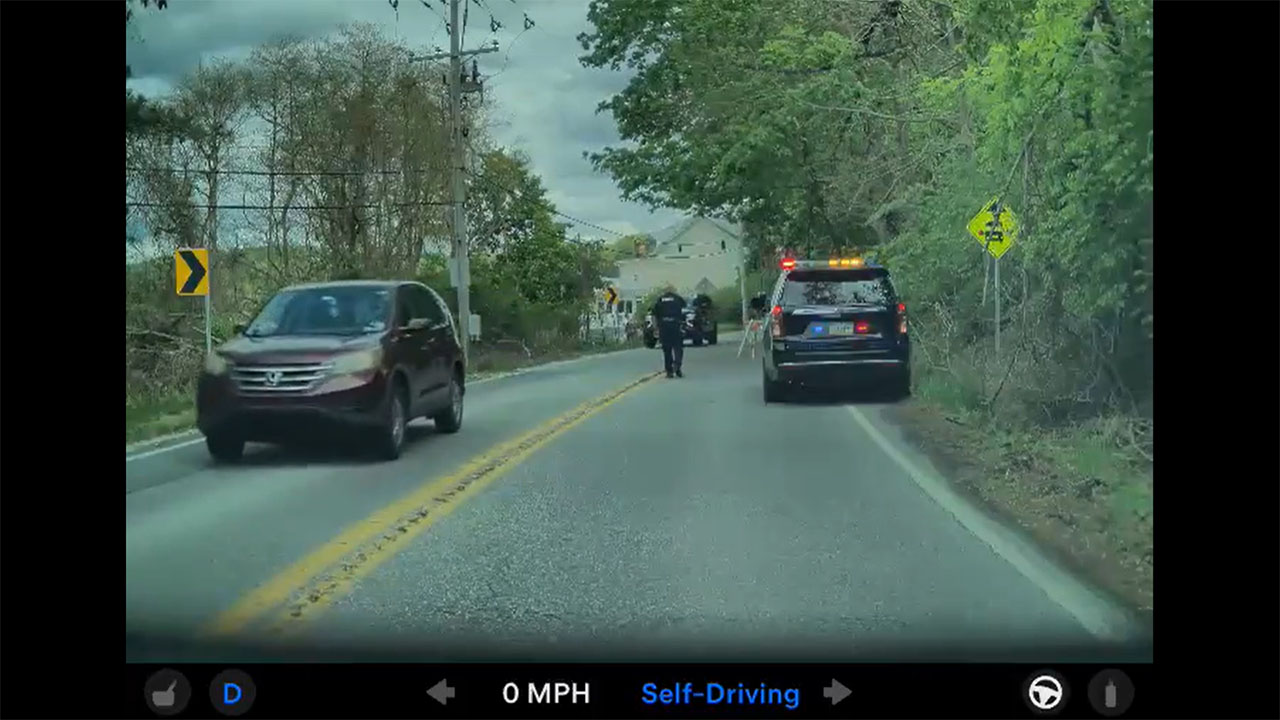
So what makes FSD v15 the release "we've been waiting for"? While Musk stopped short of detailing specific features, the implication is that this version will represent a fundamental architectural improvement, likely leveraging the next generation of Tesla's AI models. Industry analysts speculate it could involve a more deeply integrated "end-to-end" neural network, where the car's camera inputs are processed directly into steering and acceleration commands with less hard-coded logic. The goal is a system that drives with a fluidity and situational understanding indistinguishable from—or superior to—a human. Musk's framing suggests v15 is designed to cross a critical threshold in reliability, potentially reducing the need for driver intervention to a statistically negligible level.
The path to this point has been built on an unprecedented scale of data. Tesla's advantage lies not in lidar or high-definition maps, but in its vast fleet continuously feeding real-world driving scenarios back to its AI training data center, Dojo. This iterative loop—where every intervention by a current FSD user helps train the system for everyone—is accelerating progress. The jump to v15 is poised to be the most tangible result of this strategy to date, demonstrating that sheer data volume and computational power can solve the immense puzzle of autonomous driving.
For Tesla owners and investors, the implications are profound. A successful v15 rollout that meaningfully advances the technology would solidify Tesla's lead in the real-world AI race, transforming its cars from products into appreciating assets via software updates. It would also apply immense pressure on competitors relying on different technological stacks. For the broader EV market, it reaffirms that the ultimate value of an electric vehicle may not be its battery, but its silicon brain. As the wait for v15 begins, the entire automotive and tech industries will be watching to see if Musk's latest promise is the one that finally delivers.