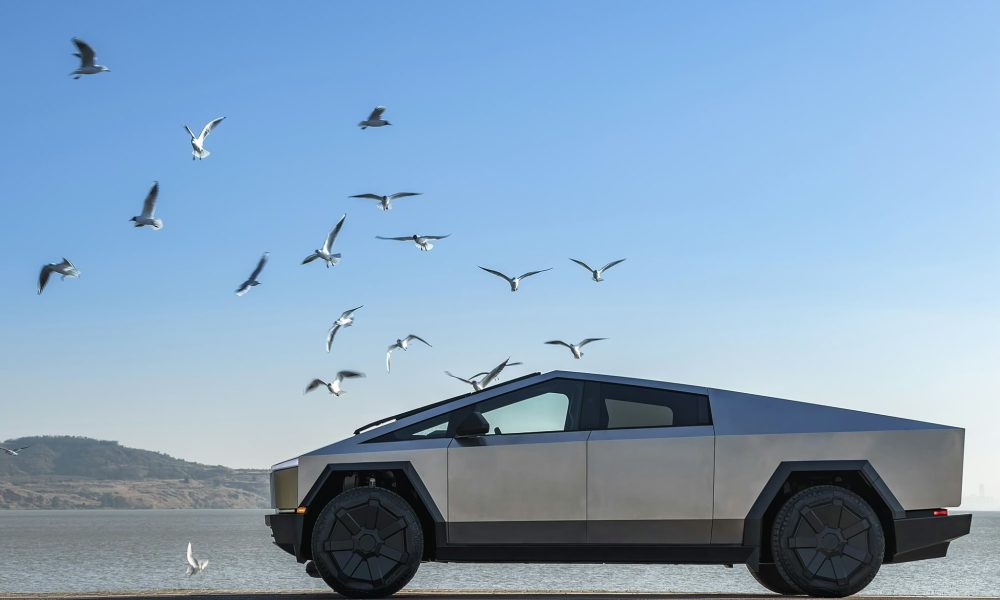
While reports of softening demand and delivery delays for the Cybertruck in its home market continue to circulate, Tesla has executed a strategic pivot, officially launching its stainless-steel electric pickup in a region synonymous with opulence and performance: the Middle East. The first customer deliveries have now commenced in the United Arab Emirates, marking the vehicle's high-profile debut in the Gulf and signaling a clear new phase in Tesla's global rollout strategy.
A Calculated Entry into a Lucrative Market
Tesla's choice of the UAE as the Cybertruck's second international market, following only South Korea, is far from accidental. The region presents a unique blend of extreme wealth, a penchant for bold automotive statements, and ambitious government-led sustainability initiatives like the UAE's Net Zero by 2050 strategic initiative. The Cybertruck's polarizing design, which may challenge traditional tastes elsewhere, aligns perfectly with the Gulf's appetite for conspicuous, head-turning vehicles. Furthermore, the UAE's well-developed luxury infrastructure and high per-capita GDP make it an ideal testing ground for a premium electric vehicle with a price point that can exceed $100,000 for fully configured models.
Contextualizing the US "Demand Collapse" Narrative
The Middle Eastern launch occurs against a backdrop of growing analyst concerns over the Cybertruck's trajectory in North America. Reports of order cancellations, extended delivery timelines for new reservations, and a complex, costly production process have fueled talk of a demand collapse. While Tesla has not released official reservation numbers in over a year, the shift in focus to international markets suggests a need to cultivate new demand pools. The move can be interpreted as both an offensive play to capture a receptive new audience and a defensive maneuver to maintain production momentum and narrative control amid domestic headwinds.
For Tesla, the UAE launch serves multiple critical functions. It generates fresh global media buzz, taps into a high-margin customer base less sensitive to price, and demonstrates progress on long-promised international expansion. The company is leveraging the Cybertruck not just as a product, but as a brand halo device to reinforce its image as an innovator in a key growth region. Success here could pave the way for a faster rollout in other wealthy, image-conscious markets, effectively using the Gulf as a springboard.
For Tesla owners and investors, this geopolitical maneuver carries significant implications. It reveals a pragmatic, agile approach to global sales, prioritizing markets where the vehicle's economics and appeal are strongest. Investors will watch Q3 and Q4 2024 delivery figures closely to gauge if international launches can offset any North American softness and contribute meaningfully to margins. For EV enthusiasts in the region, it signals Tesla's deepening commitment, likely accelerating supercharger network expansion and service support. Ultimately, the Cybertruck's desert debut is a high-stakes test of whether Tesla's most radical vehicle can find a sustainable global niche beyond its initial hype cycle.