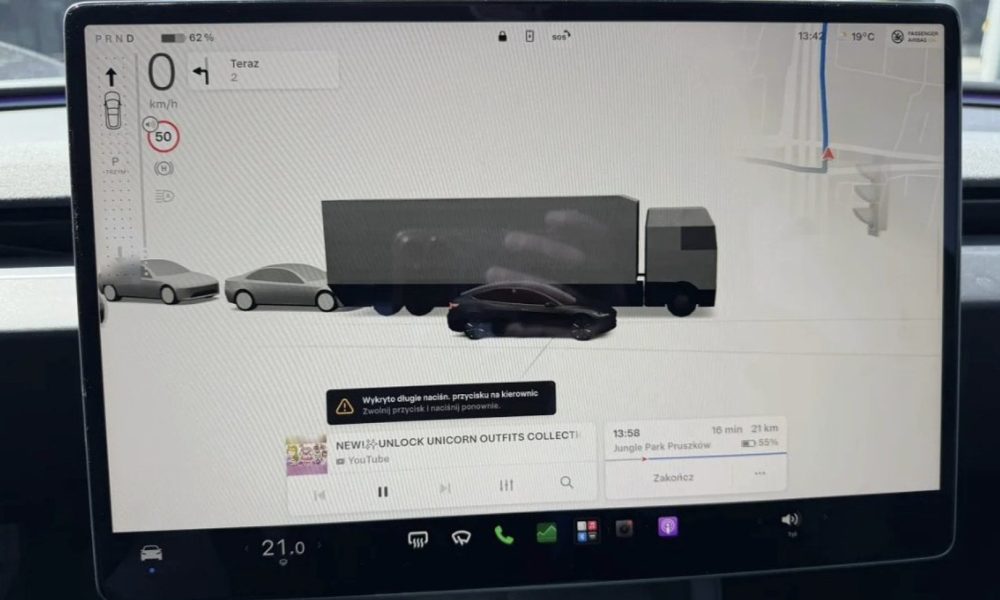
Tesla is quietly making the world a smaller place for its Full Self-Driving system. With the rollout of software update 2026.14, part of the expansive Spring Update, the company has begun incorporating region-specific vehicle designs into its FSD visualization. For the first time, European owners are seeing accurate renderings of cab-over, flat-fronted semi-trucks on their center displays, signaling a critical step toward global deployment of the autonomous driving suite.
Global Vision, Local Renderings
Historically, Tesla’s FSD visualization has been heavily optimized for North American roadways. The neural network primarily rendered vehicles with long, forward-hood designs typical of American pickup trucks and semi-trailers. However, the latest update reveals a significant pivot. In Europe, where cab-over-engine trucks dominate commercial logistics due to strict length regulations, the visualization now accurately reflects these distinct silhouettes. This isn't merely cosmetic; it proves Tesla’s AI is learning to identify, classify, and predict the behavior of diverse global traffic participants. The change confirms that the FSD stack is being trained on a broader, more international dataset, moving beyond its U.S.-centric origins.
More Than Just a Pretty Picture
The update to the visualization screen is a clear indicator of deeper software architecture changes. For Tesla’s Full Self-Driving (Supervised) system to function safely in Europe or Asia, it must recognize vehicles that look fundamentally different from those in California. A delivery van in Berlin has a vastly different profile and turning radius than a pickup truck in Texas. By rendering these vehicles correctly, Tesla is signaling that its occupancy networks and object detection algorithms have been updated to handle these variations. This visual parity is a prerequisite for unlocking features like Navigate on Autopilot and Autosteer on City Streets on foreign highways, where misidentification could lead to unsafe maneuvering.
Implications for Tesla Owners and Investors
For current Tesla owners in Europe, this update offers a tangible preview of the company's commitment to their market. It suggests that regulatory approval for more advanced FSD features may be closer than many analysts anticipate. The accurate rendering of local traffic is often a precursor to enabling those features in specific geographies. For investors, this is a bullish signal for total addressable market expansion. Tesla cannot monetize FSD at its full $8,000 or $99/month price point in Europe or China unless the software is locally validated. This quiet update in the 2026.14 release indicates that Tesla is methodically checking the boxes required to unlock a massive new revenue stream, moving one step closer to a truly global autonomous driving product.