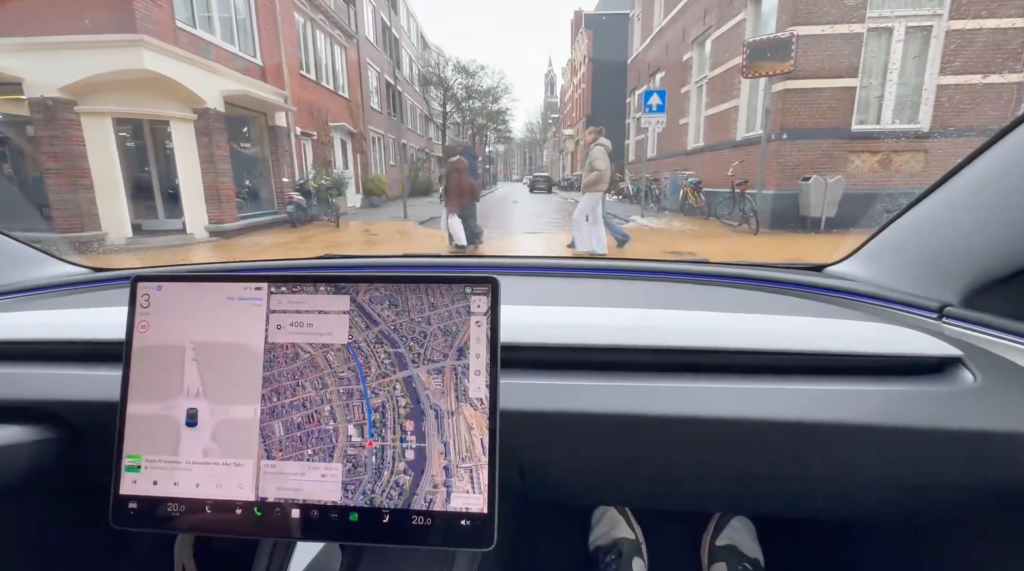
Tesla’s Full Self-Driving (FSD) technology is proving its European mettle at a blistering pace. Less than a month after receiving regulatory approval in the Netherlands, Dutch Tesla drivers have collectively racked up over 10 million kilometers on the system. This staggering milestone, confirmed by early data from the region, signals a far stronger-than-expected appetite for autonomous driving features in one of Europe’s most EV-friendly markets.
A Record-Breaking Adoption Rate in the Netherlands
The Netherlands has long been a stronghold for electric vehicle adoption, but the speed of FSD uptake is remarkable. Achieving 10 million kilometers in under 30 days means the average FSD-equipped Tesla in the country is driving hundreds of kilometers autonomously each day. This rapid accumulation of real-world data is invaluable. Every mile driven feeds Tesla’s neural network, helping the system learn European road signs, roundabouts, and traffic patterns far quicker than simulation alone could achieve. For context, this pace suggests a level of user trust and system reliability that many industry skeptics doubted would arrive so soon across the Atlantic.
What This Means for FSD’s European Expansion
This Dutch milestone is more than just a local victory; it is a critical proof-of-concept for Tesla’s broader European rollout. The European Union’s regulatory framework for autonomous driving is notoriously fragmented and cautious. By demonstrating safe, high-mileage usage in the Netherlands, Tesla strengthens its case for approvals in larger markets like Germany, France, and the UK. The data collected from these initial kilometers will be used to fine-tune the system for the continent’s varied infrastructure—from the narrow, cobbled streets of Amsterdam to the high-speed autobahns of Germany. This success directly challenges competitors like Mercedes-Benz and BMW, who have also launched Level 3 systems but at a more measured, geo-fenced pace.
Implications for Tesla Owners and Investors
For current Tesla owners in Europe, this news is a strong signal to keep their software subscriptions active. The rapid learning curve means FSD performance will improve noticeably in the coming months, with smoother navigation of complex intersections and better handling of dynamic traffic. For investors, the Netherlands’ 10 million km is a leading indicator of potential revenue. If this adoption rate scales across Europe, the recurring revenue from FSD subscriptions and the one-time purchase option could significantly boost Tesla’s high-margin software income. Furthermore, it de-risks the narrative that Tesla’s autonomy lead is limited to North America. The company is now proving it can adapt its core technology to foreign markets at a speed that most traditional automakers cannot match, reinforcing its position as the definitive leader in the global electric vehicle and autonomous driving race.