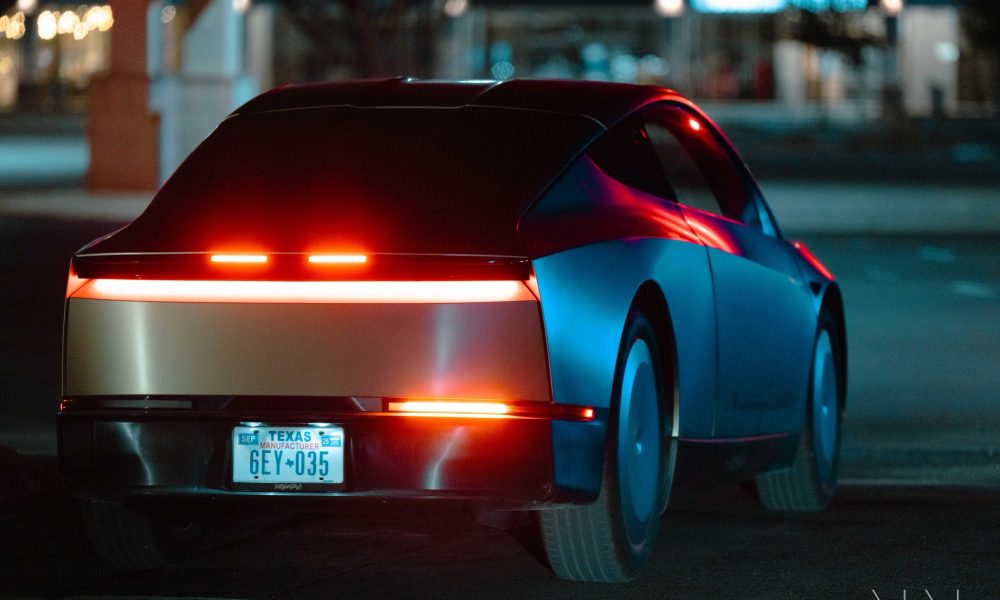
In a revelation that reframes the entire autonomous mobility landscape, Tesla has confirmed it already possesses a fully engineered Robotaxi vehicle, and its core design strategy fundamentally challenges traditional automotive paradigms. During the pivotal Q4 and FY 2025 earnings call, executives unveiled a critical insight: the majority of autonomous rides will cater to just one or two passengers. This understanding hasn't just influenced software—it has physically shaped a purpose-built vehicle that prioritizes efficiency, cost, and network density over conventional passenger capacity.
The One-to-Two Passenger Imperative
Elon Musk and his team detailed data-driven projections showing that most Robotaxi trips will be single-occupancy commutes or rides for couples. Designing a vehicle around this majority use case is a stroke of operational genius. Instead of a larger, heavier, and more expensive van or sedan that is rarely fully utilized, Tesla's model is lean and optimized. This focus allows for a smaller battery pack, reduced material costs, and superior energy efficiency per mile—key factors for profitability in a competitive EV ride-hailing market. The vehicle is a tool built for the job it will actually perform 90% of the time.
Engineering for Density and Durability
By shedding unnecessary seats and size, Tesla's Robotaxi is engineered for maximum uptime and durability. Fewer components mean lower maintenance costs and simpler repairs. The compact footprint allows for better urban maneuverability and more efficient fleet parking, increasing the potential vehicle utilization rate—the holy grail of autonomy economics. This is not a modified Model 3; it is a ground-up platform where every design decision, from the chassis to the interior materials, is made to withstand the brutal cycle of continuous, 24/7 operation with minimal human intervention.
The strategic implications are profound. This model suggests Tesla's autonomy play is not a distant science project but a tangible service on the cusp of deployment. It demonstrates a mature, data-rich understanding of the transportation market that leapfrogs competitors still thinking in terms of retrofitting existing passenger cars. The company is betting that a high-margin, high-volume business will be built on frequent, short trips in an optimized vehicle, not occasional large group fares.
For Tesla owners and investors, this announcement is a watershed moment. It validates the immense R&D spend on autonomy and provides a clear path to monetizing the technology beyond individual car sales. The existence of a complete vehicle signals that regulatory approval and scaled manufacturing are the final hurdles, not engineering. Investors should watch for updates on the dedicated Robotaxi manufacturing facility and any pilot program announcements, as these will be the next catalysts. For owners, the dawn of the Tesla Network promises the potential to add significant residual value to their vehicles, transforming them from depreciating assets into potential income generators.