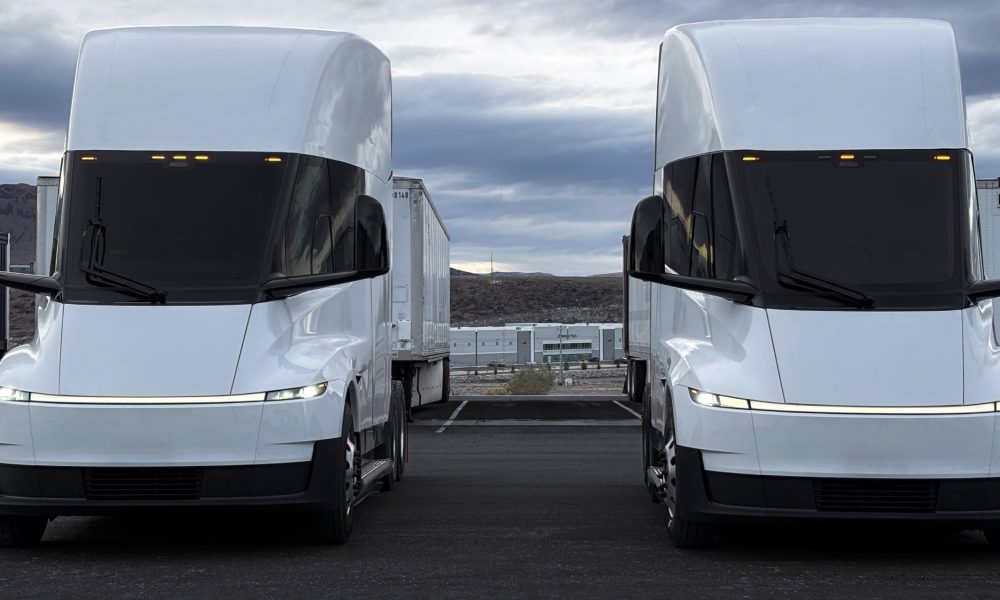
For years, the Tesla Semi has been a revolutionary vehicle in search of its ecosystem. That critical infrastructure is now coming into sharp focus. Tesla has dramatically updated its public "Find Us" map, adding a staggering 64 new Megacharger locations across 15 states. This single update transforms the roadmap for long-haul electric trucking, revealing the foundational skeleton of the coast-to-coast network designed to make the Semi a viable, nationwide reality.
Mapping the Arteries of Electric Freight
The newly plotted sites, combined with the two existing operational stations in California and Nevada, bring the total visible network to 66 locations. The map reveals a strategic focus on major interstate corridors, particularly I-5 on the West Coast, I-80 through the Midwest, and I-95 along the Eastern Seaboard. Key freight hubs like Dallas, Chicago, Atlanta, and Reno are prominently featured. This placement is no accident; it directly targets the most heavily trafficked routes for Class 8 trucks, ensuring the Semi can integrate into existing logistics patterns rather than forcing a complete operational overhaul.
The Power Behind the Semi: Understanding the Megacharger
While Tesla's Supercharger network is built for speed, the Megacharger is built for sheer scale. Designed specifically for the Tesla Semi, these stations are expected to deliver charging capabilities far beyond the current 250kW V3 Supercharger. Industry analysts speculate that Megachargers could operate at 1 MW (1,000 kW) or higher, capable of adding hundreds of miles of range in well under an hour. This update confirms Tesla is not just planning a few pilot stations but is committing to the high-power infrastructure required to keep fleets moving with minimal downtime, a non-negotiable in the freight industry.
The scale of this rollout suggests Tesla is moving with confidence toward higher-volume Semi production. The initial, limited deliveries to high-profile partners like PepsiCo served as a real-world proving ground. This massive infrastructure expansion indicates the company is preparing to scale beyond these early adopters. It is a classic Tesla strategy: deploy the vehicle to validate the technology and then unleash the supporting infrastructure to enable mass adoption, effectively de-risking the proposition for future fleet customers who need guaranteed route coverage.
Implications for Tesla's Ecosystem and the Broader Market
For Tesla investors, this is a significant capital expenditure that underscores the company's long-term commitment to diversifying its revenue streams beyond consumer vehicles. A successful Semi and Megacharger network opens the massive commercial transport sector. For Tesla owners, the expansion may have tangential benefits; many Megacharger locations are likely to be built alongside existing or new Supercharger stations, potentially expanding overall site availability and bringing more investment to convenient highway stops. Most importantly, this move places immense competitive pressure on the entire heavy trucking industry and charging providers, accelerating the timeline for the electrification of freight.