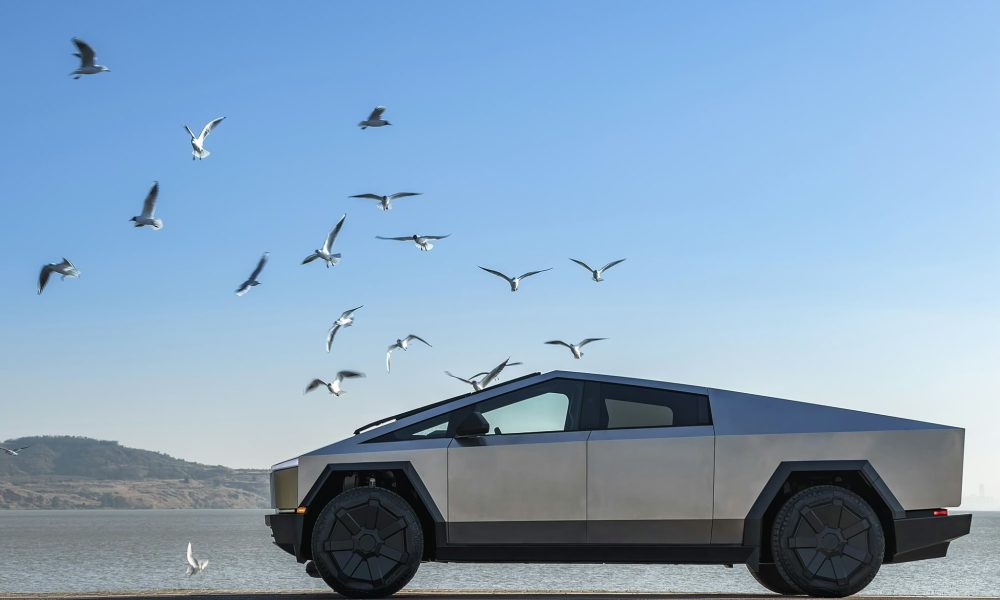
When Tesla unveiled the angular, stainless-steel Cybertruck in 2019, it promised to shatter the conventional pickup truck mold. Now, a recent exchange with investors suggests the vehicle's ultimate purpose may be evolving beyond personal transportation. In response to pointed questions about a potential redesign for a more traditional market, CEO Elon Musk pivoted the conversation toward a broader, more autonomous future, framing the Cybertruck not just as a vehicle, but as a node in a robotic delivery network.
From Investor Question to Autonomous Vision
During a recent earnings discussion, an investor directly questioned whether Tesla would ever develop a "more normal" pickup truck to compete directly with high-volume sellers like the Ford F-150. Rather than addressing a potential redesign, Musk reframed the Cybertruck's uniqueness as a strategic advantage. He emphasized that its exoskeleton design and ultra-hard stainless-steel skin are fundamental to its function and durability. More notably, he projected a future where the vehicle's utility is amplified by autonomy, suggesting its primary use could shift from daily commuting to a fleet-based function.
The Cybertruck as a Delivery Platform
Musk's vision extends far beyond the garage. He posited that in a future with widespread full self-driving (FSD) capability, the Cybertruck could operate as an autonomous cargo and delivery vehicle. This aligns with his long-stated ambition for a Tesla "robotaxi" fleet, but applies it to the logistics and utility sector. The implication is clear: the Cybertruck's robust, secure vault and adaptable bed could be perpetually in motion, ferrying packages or equipment without a human driver. This transforms the EV from a consumer product into a continuous revenue-generating asset, operating within Tesla's proposed autonomous network.
This strategic pivot addresses the Cybertruck's niche appeal head-on. By focusing on a future autonomous delivery role, Tesla can justify the vehicle's polarizing design and potentially higher cost structure. The durability required for constant, unattended commercial operation dovetails perfectly with the Cybertruck's proclaimed ruggedness. It also allows Tesla to bypass the immediate need to court traditional pickup buyers with a softened design, instead betting on a paradigm shift in how vehicles are utilized.
For current Cybertruck reservation holders and investors, the implications are significant. Owners may eventually have the option to enroll their vehicles in a Tesla delivery fleet, turning a capital expense into a source of income during idle hours—a concept previously floated for other Tesla models. For investors, it reinforces the company's long-term narrative as a technology and AI company first, and a carmaker second. The success of this vision, however, remains inextricably linked to the realization of safe and regulatory-approved Level 4 or 5 autonomy, a hurdle that has proven formidable for the entire industry. The Cybertruck's ultimate market impact may depend less on winning over truck purists today, and more on Tesla winning the race for full self-driving tomorrow.