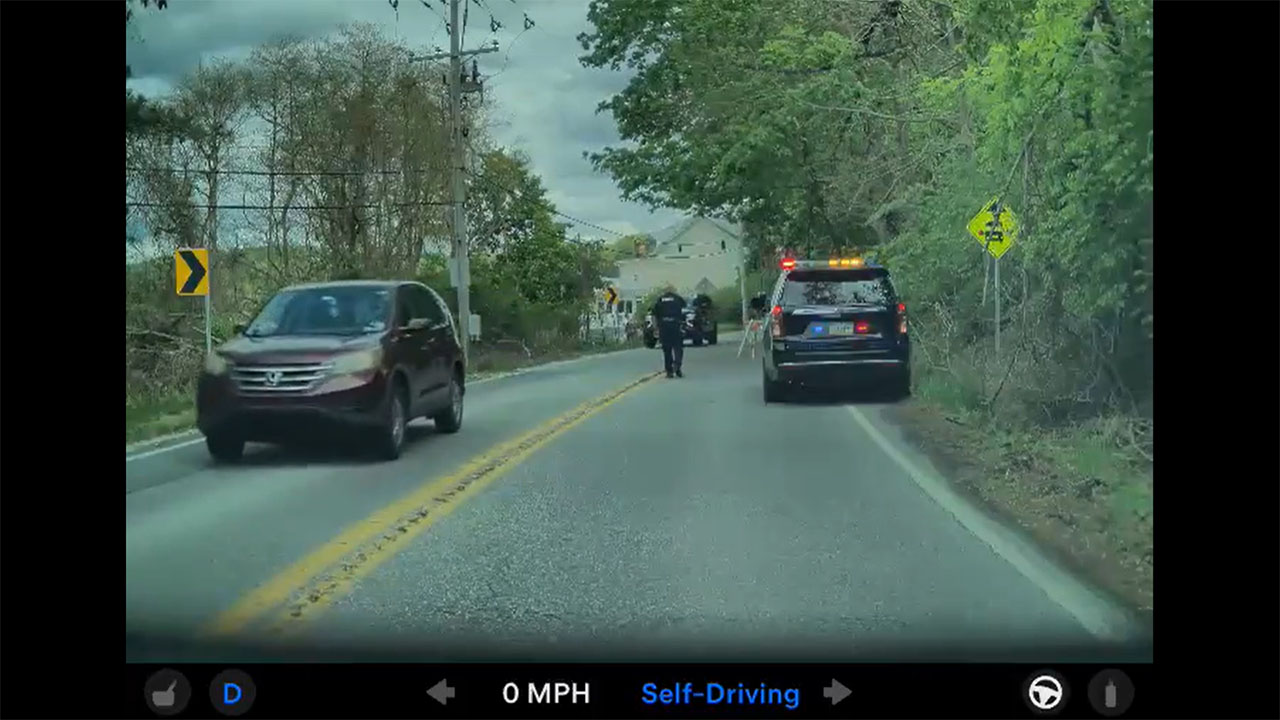
The National Highway Traffic Safety Administration (NHTSA) has officially closed its long-running probe into Tesla's "Actually Smart Summon" feature, delivering a significant regulatory and reputational win for the automaker. The investigation, which scrutinized the driver-assist feature's performance in parking lots, concluded with the agency finding zero injuries and zero fatalities across all documented incidents. This closure, without a recall, validates Tesla's over-the-air update strategy while spotlighting the unique challenges of low-speed, complex automated driving.
A Probe Focused on Low-Speed Fender Benders
NHTSA's Office of Defects Investigation opened the preliminary evaluation in October 2022, following a accumulation of consumer reports. The agency ultimately identified 159 incidents where Smart Summon—a feature allowing a vehicle to navigate a parking lot to its owner without anyone behind the wheel—was involved in a crash. Crucially, every case resulted only in minor property damage, such as scraping against fixed objects or other vehicles at very low speeds. The nature of these incidents underscored the feature's operational domain: unstructured, pedestrian-rich environments where sensor interpretation is notoriously difficult, yet where the consequences of error are typically minimal.
Software Updates Deemed Sufficient Remedy
The decisive factor in closing the investigation was NHTSA's assessment of Tesla's proactive software improvements. During the probe, Tesla deployed six over-the-air (OTA) updates specifically aimed at enhancing Smart Summon's performance. These updates likely included refinements to object detection, path prediction, and driver alert protocols. The agency concluded that these iterative improvements "adequately addressed the issues" identified in the complaint database, rendering further action unnecessary. This outcome is a textbook example of how OTA capabilities allow modern EV makers to address functionality concerns rapidly, without the logistical nightmare of a physical recall campaign.
This resolution highlights the evolving regulatory framework for advanced vehicle automation. NHTSA's approach focused on tangible safety outcomes—the absence of injuries—rather than perfection in a feature explicitly labeled a beta and requiring constant driver supervision. It acknowledges the reality of deploying such systems in the real world, where continuous software refinement is part of the development cycle. For Tesla, the closed probe serves as a defensive data point against critics who equate any investigation with a fundamental product failure, demonstrating that reported issues were both minor and mitigatable.
For Tesla owners and investors, the NHTSA decision carries clear implications. Owners using Smart Summon can have increased, though cautious, confidence that its safety profile has been scrutinized and improved upon through software. It reinforces the value of keeping their vehicle's software continuously updated. For investors, the closure removes a lingering regulatory overhang and strengthens the investment thesis around Tesla's software-centric model. It proves the company's ability to navigate safety inquiries and rectify issues remotely at scale, a critical advantage as it develops more advanced autonomous systems. The verdict underscores that in the new era of software-defined vehicles, regulatory success is not just about avoiding recalls, but about demonstrating effective and agile response.