Elon Musk has reignited the debate over Tesla's autonomous driving timeline with a fresh, ambitious claim. In a recent social media post, the CEO asserted that the forthcoming Full Self-Driving (FSD) Version 15 will "far exceed human levels of safety." This pronouncement, however, lands with a heavy dose of déjà vu for the EV community, as it mirrors near-identical promises made for both the hyped V12 in 2023 and the current V14 just last year.
A Pattern of Promises and Performance Gaps
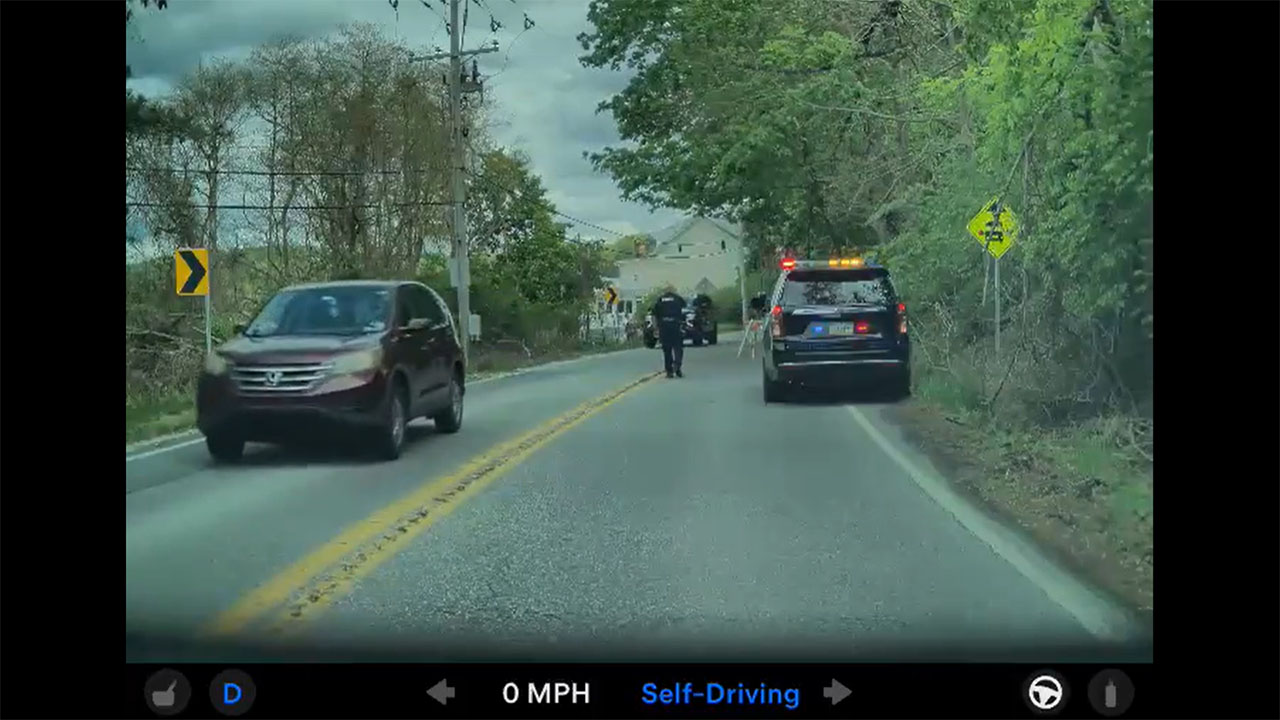
The core issue for observers isn't the ambition but the repetitive pattern. Musk's latest prediction came in response to a user's detailed, 600-mile test of FSD v14.3, which highlighted both impressive capabilities and persistent flaws. While Musk acknowledged that iterative "point releases" would polish V14, he positioned V15 as the quantum leap. This framing is strikingly familiar. In both previous cycles, major version numbers were touted as the threshold where Tesla's AI would finally surpass human reliability, a benchmark that remains unfulfilled. The repeated cycle of major-version hype followed by incremental, imperfect reality has become a defining narrative for FSD's development.
The Mounting Pressure for a Definitive Leap
This context places immense pressure on the actual deployment of FSD v15. The technology is no longer a distant prototype; it's a $12,000 (or monthly subscription) feature actively used on public roads. Regulatory scrutiny is intensifying globally, and competitors are deploying more geographically constrained but operational robotaxi services. For Tesla, achieving a demonstrable and statistically validated safety milestone is crucial not just for customer satisfaction but for regulatory credibility and the long-term valuation thesis built on autonomous mobility. Another cycle of overpromise and underdelivery risks eroding trust in the company's self-driving forecasts altogether.
Musk's enduring optimism is rooted in his belief in Tesla's end-to-end neural network approach, where the system learns from millions of fleet data miles rather than following pre-programmed code. The theory is that each major version represents a fundamental architectural improvement capable of unlocking new performance plateaus. Yet, the transition from controlled demonstrations to consistent, unsupervised, real-world safety superiority has proven to be the industry's most formidable challenge. The gap between a system that can often drive well and one that is provably safer than a human in all conditions remains vast.
What This Means for Tesla Owners and Investors
For current Tesla owners and FSD purchasers, the announcement is a mixed signal. It suggests continued rapid iteration and potential improvement, but also implies the much-anticipated "safety superiority" milestone is again pushed to the next update. Investors must weigh the potent marketing and revenue potential of a truly autonomous system against the recurring delay of its arrival. The stock's significant premium is partly tied to this future, making each major FSD version a high-stakes event. The success or failure of V15 to materially break from the pattern set by V12 and V14 will be a critical indicator of whether Tesla's ambitious vision is on the cusp of realization or stuck in a cycle of perpetual refinement.