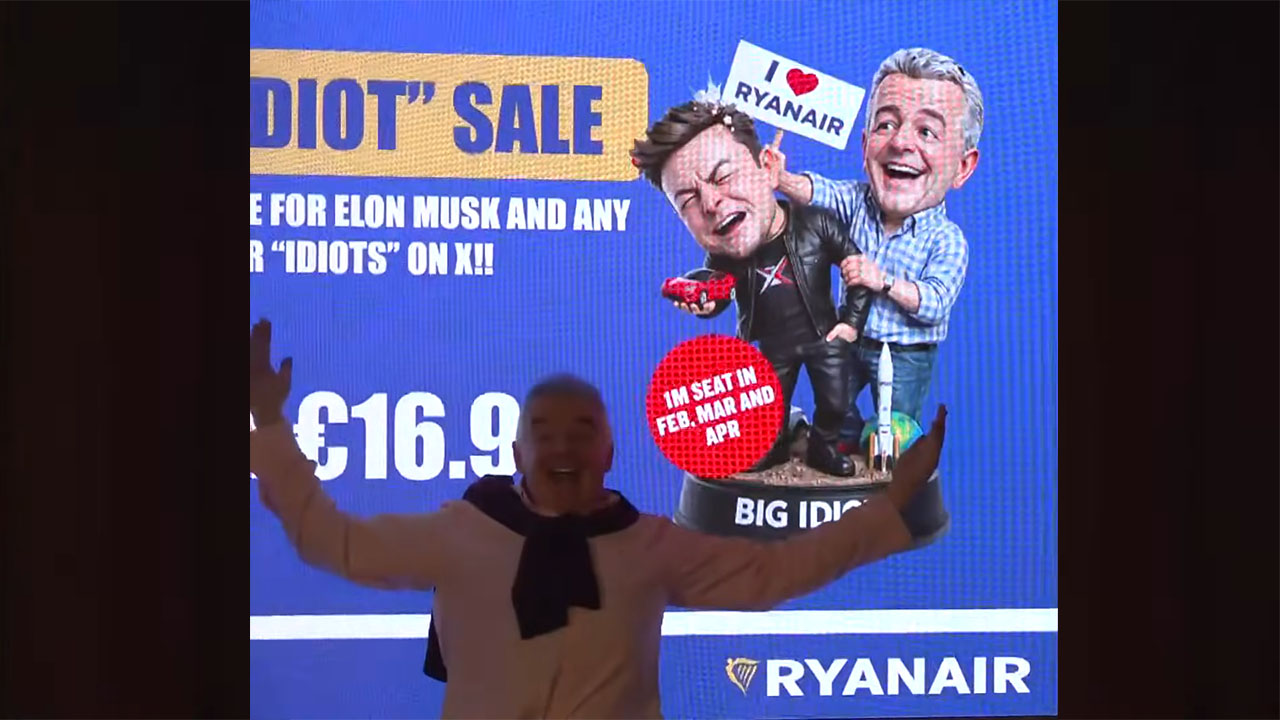
The most unexpected corporate feud of 2026 has taken to the skies, pitting the king of electric vehicles against the undisputed monarch of low-cost air travel. What began as a sharp exchange over the future of transportation has, according to Ryanair CEO Michael O’Leary, delivered a massive, unintended windfall for his airline. In a characteristically brash hour-long press conference in Dublin, O’Leary framed his public spat with Elon Musk as a masterclass in free marketing, proving that in the age of viral social media, even a clash of titans can be co-opted for commercial gain.
From Policy to Personal: The Press Conference Pivot
O’Leary’s press conference opened not with Tesla, but with a detailed critique of the Trump Administration's aviation policies and their impact on Ryanair's operations. Yet, it was the segue into his now-public row with Elon Musk that captured the room's energy. The CEO revealed that what started as a pointed debate on the viability of long-haul electric air travel versus the efficiency of modern jets quickly escalated on social media platforms. O’Leary, never one to shy from controversy, leaned into the conflict, recognizing the global spotlight it cast on his brand. "He's selling cars, I'm selling seats," O’Leary quipped, framing the dispute as a clash of fundamentally different transport visions for the future.
The Calculated Benefits of a Viral Feud
For Ryanair, the metrics speak for themselves. O’Leary highlighted a significant spike in brand mentions, social media engagement, and website traffic directly correlated with the peak of the online disagreement. In his analysis, engaging with a figure of Musk’s stature—regardless of the context—lifts Ryanair into a broader conversation about sustainability, innovation, and cost, which are core to its own market positioning. The CEO’s blunt admission that the spat provided "good publicity" underscores a modern media truth: visibility is currency, and a debate with the world’s richest person guarantees front-page coverage far beyond the aviation trade press.
This episode reveals a shrewd understanding of the digital attention economy. While Musk’s comments often drive the narrative for his companies, O’Leary demonstrated how an agile competitor can harness that energy for its own purposes. The Ryanair chief turned a critique of the EV industry's long-term ambitions into a platform to tout his own fleet's improving efficiency and unbeatable fares, effectively using the Tesla CEO’s vast platform as a megaphone for his counter-argument.
For Tesla and its observers, the implications are multifaceted. The spat reinforces the reality that Tesla’s mission extends beyond competing with legacy automakers; it is challenging entrenched transportation paradigms, including aviation. Musk’s vision for a sustainable energy future inevitably collides with other high-emission sectors. For Tesla investors, this highlights the company’s role as a disruptive force across industries, but also the potential for its leadership to become a lightning rod that competitors can use for their own benefit. Tesla owners and enthusiasts see the debate as validation of the EV maker’s expansive influence, even as it attracts return fire from seemingly unrelated quarters.
Ultimately, O’Leary’s candid press conference takeaway serves as a case study. In 2026, a CEO’s willingness to engage in a public, high-stakes debate can be a potent tool, transforming a technical argument about batteries versus jet fuel into a global publicity coup. The real winner, for now, isn’t necessarily the technology, but whoever best masters the narrative.