After years of anticipation and a meticulously managed pilot program with high-profile partners like PepsiCo, Tesla has pulled back the curtain on critical specifications for its revolutionary electric semi-truck. With the company now signaling a decisive shift toward mass production in 2024, newly revealed details about the Tesla Semi's trim levels and capabilities move it from a compelling prototype to a tangible challenger in the freight industry. This transparency marks a pivotal moment, providing fleet operators with the hard data needed to justify what could be the most significant transition in trucking since the diesel engine.
Unveiling the Specs: Range and Performance Defined
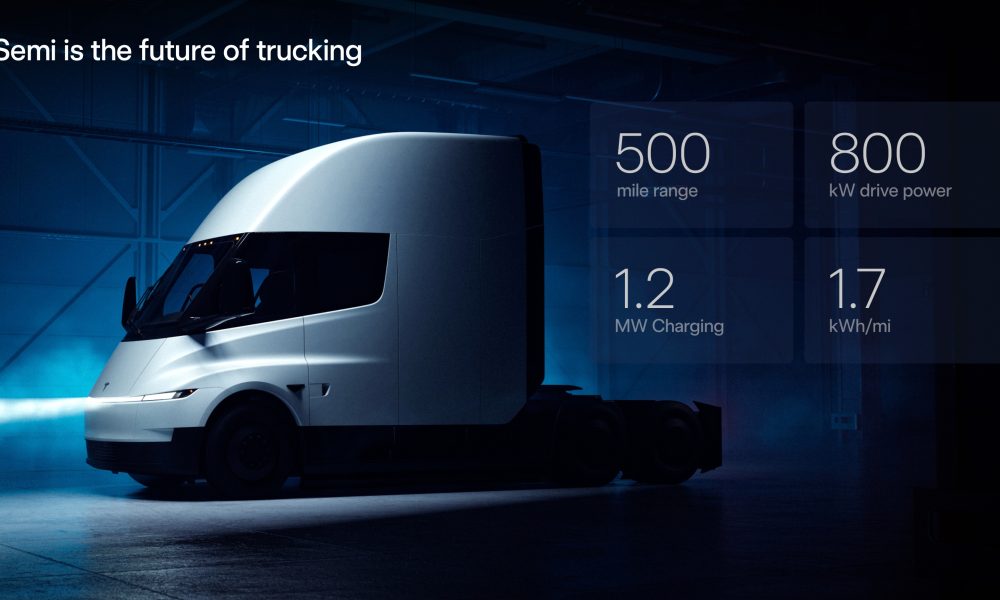
Tesla has officially confirmed two primary configurations for the Semi. The first is a 500-mile range variant, designed for long-haul routes where minimizing downtime for charging is paramount. The second is a 300-mile range model, tailored for regional hauling and back-to-base operations. Both versions boast staggering performance metrics for a Class 8 vehicle, including the ability to maintain highway speed on a 1% grade—a task that saps the efficiency and speed of traditional diesel trucks. Furthermore, Tesla claims the Semi can recover 70% of its range in just 30 minutes using its dedicated Megacharger infrastructure, directly addressing the critical issue of operational uptime.
The Economics of Electrification: A Compelling TCO Proposition
Beyond raw performance, Tesla's latest revelations sharpen the focus on the Semi's economic argument. The company emphasizes a dramatically lower cost of operation compared to diesel, citing significant savings on energy and maintenance. While the exact purchase price remains a closely guarded secret, the projected savings per mile could redefine the total cost of ownership (TCO) calculus for fleets. The Semi's tri-motor architecture and regenerative braking are engineered not just for power but for exceptional energy efficiency, a factor that translates directly to lower "fueling" costs and a faster path to ROI for adopters, even with higher upfront capital outlay.
Implications for Tesla and the EV Market
The move to mass production and detailed specification release is a statement of operational confidence from Tesla. It transitions the Semi from a low-volume proof-of-concept to a product that must scale, meet delivery timelines, and withstand the relentless demands of commercial logistics. Success in this arena would validate Tesla's core technology in its most strenuous application yet, potentially creating a new, high-margin revenue stream. For the broader electric vehicle market, a successful Tesla Semi launch accelerates the electrification of transport's most challenging segment, forcing competitors to accelerate their own roadmaps and pushing infrastructure developers to expand high-power charging networks for heavy-duty applications.
For Tesla investors, the Semi represents both substantial opportunity and execution risk. Penetrating the conservative trucking industry requires proving unprecedented reliability and total cost advantages. For fleet managers and Tesla owners observing the brand's expansion, the Semi's technology trickle-down is a key trend. Innovations in battery durability, ultra-fast charging, and powertrain efficiency proven in the brutal world of freight will inevitably filter into Tesla's next-generation consumer vehicles, reinforcing the company's long-term technological moat. The road to mass production is now clearly marked, and the freight industry is watching every mile.