As the digital price tickers at fuel stations across Europe increasingly flash numbers starting with a '2', a palpable sense of anxiety is settling over drivers of internal combustion engine vehicles. This morning's commute provided a stark snapshot: a Total station displaying diesel at €2.04 per litre, prompting a colleague in a diesel SUV to text, "Saw that? 2 euros for diesel. I'm going to end up buying a Tesla." For Tesla drivers, however, this moment is less about shock and more about validation—a real-time economic experiment proving out a long-held calculation.
The Psychological Tipping Point vs. The Long-Term Math
The €2-per-litre mark is undeniably a psychological tipping point, a round number that crystallizes the pain of volatile fossil fuel costs. It's the catalyst that pushes many to finally run the numbers on electric vehicle ownership. However, for current Tesla drivers, the significance is different. The soaring price validates their investment not as a temporary shelter from a spike, but as a permanent escape from a fundamentally unstable system. Their savings aren't just about today's €2.04; they are about being insulated from the geopolitical and market forces that will inevitably push it to €2.20, €2.50, and beyond. The real value isn't in beating this week's price, but in having removed the fuel gauge from their daily financial concerns entirely.
Beyond the Pump: Total Cost of Ownership in Sharp Focus
While the fuel price shock dominates headlines, the Tesla ownership proposition extends far beyond avoiding the pump. The conversation shifts to Total Cost of Ownership (TCO). Tesla drivers benefit from lower maintenance costs due to fewer moving parts, no oil changes, and regenerative braking that preserves brake pads. In many regions, they also enjoy incentives like reduced taxation, toll exemptions, and cheaper parking. When a diesel SUV driver laments the €100+ to fill their tank, the Tesla owner's cost-per-mile analysis—factoring in home charging, Supercharger use, and minimal servicing—becomes overwhelmingly compelling. The €2 litre makes this complex TCO equation simple and urgent for newcomers.
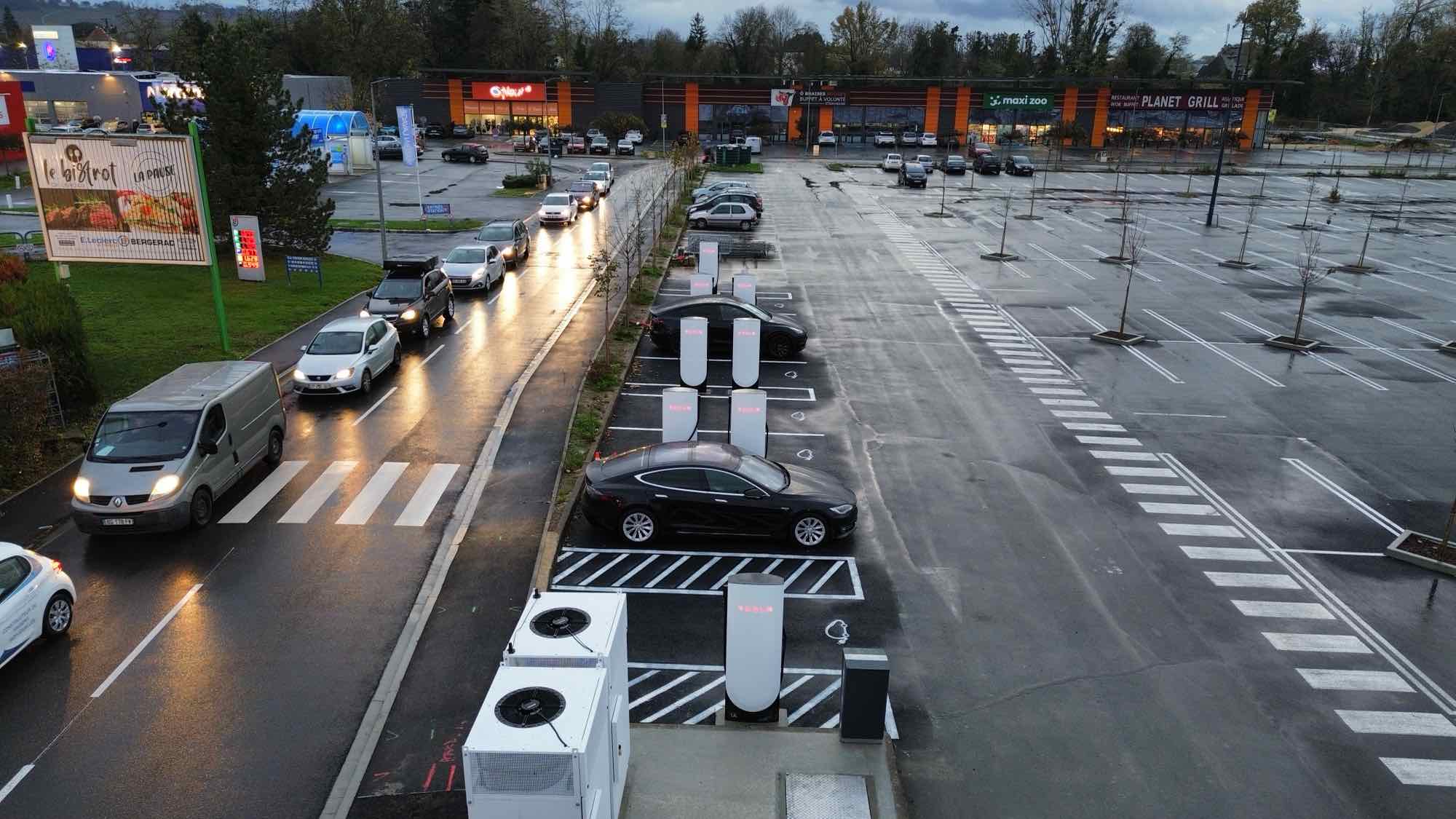
It's crucial to analyze what this price surge doesn't mean for an EV driver. It does not equate to equivalent upward pressure on electricity costs for charging. Home energy prices, while subject to their own markets, are generally more stable and, when paired with solar panels and Powerwall storage, can be completely decoupled from street prices. Furthermore, it doesn't mean congestion from drivers seeking cheaper fuel; Tesla navigation seamlessly routes drivers to Superchargers, often integrated into convenient stops. The external chaos of the oil market creates internal calm in the EV.
For Tesla investors and prospective owners, the implications are clear. Each surge in fossil fuel prices acts as a massive, involuntary marketing campaign for electric vehicles, with Tesla at the forefront. It accelerates the demand curve, pushing more consumers past the initial EV hesitation. For owners, it reinforces the wisdom of their choice and enhances resale value. However, the broader lesson is one of energy independence. The true endgame isn't just cheaper motoring, but a transportation model powered by a diverse, increasingly renewable grid—a system where the driver, not a global cartel, has ultimate control over their "fuel" cost and source.