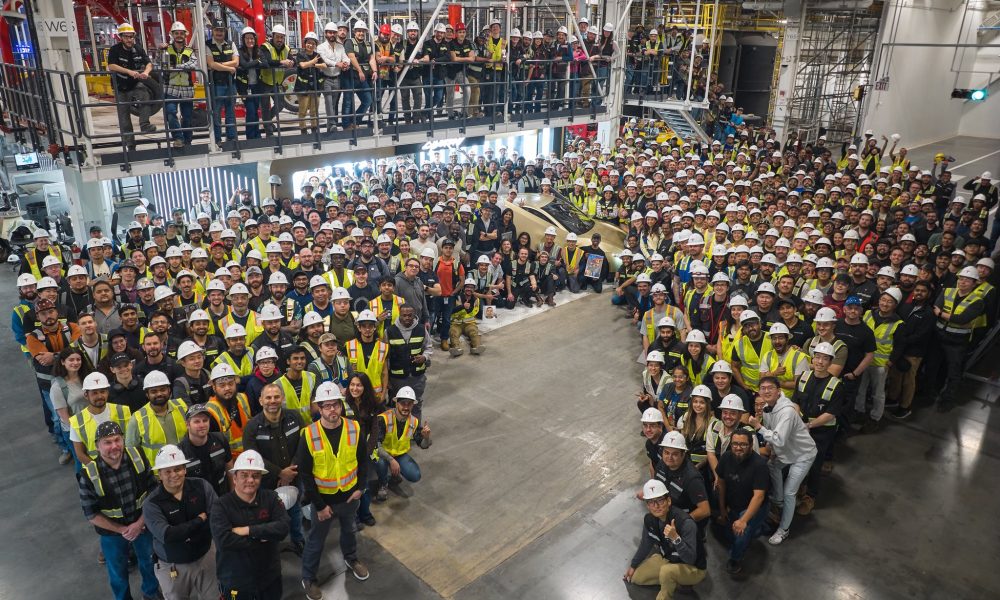
The future of mobility has officially taken physical form. In a landmark moment for Tesla and the autonomous vehicle industry, the first production-intent Tesla Cybercab has rolled off the assembly line at the company's Gigafactory Texas. The reveal, shared via Tesla's official social media account, shows a team of employees gathered around the angular, futuristic vehicle, marking the tangible start of Elon Musk's long-promised robotaxi revolution. This isn't just another prototype; it's a signal that Tesla is transitioning its full self-driving ambitions from software simulation to a manufacturable hardware reality.
From Vision to Reality: The Cybercab's Strategic Debut
The timing and method of this unveiling are as significant as the vehicle itself. By showcasing the assembled Cybercab with a proud production team, Tesla is sending a clear message to investors and skeptics alike: the project is on schedule and moving into the hardware phase. This visual proof of progress directly supports CEO Elon Musk's recent announcement of a dedicated Robotaxi unveiling event on August 8, 2024. The vehicle's stark, cyberpunk design language, reminiscent of the Cybertruck, suggests a shared manufacturing platform and a deliberate departure from conventional car design, positioning it squarely as a purpose-built machine for autonomous service, not personal ownership.
Gigafactory Texas as the Epicenter of Tesla's Next Act
The choice of Gigafactory Texas as the production birthplace is a strategic masterstroke. This facility is rapidly evolving into Tesla's most advanced and integrated manufacturing hub, already producing the Model Y, Cybertruck, and critical 4680 battery cells. Adding Cybercab production creates immense synergies, allowing for shared learnings in stainless steel exoskeleton construction and streamlining the supply chain. It transforms Giga Texas from a car plant into the beating heart of Tesla's three-pillar future: its core EV business, the high-growth energy storage division, and the nascent but potentially colossal autonomous ride-hailing network.
While the celebratory image is a major milestone, it also raises immediate and critical questions. Tesla has not yet disclosed key specifications like passenger capacity, interior layout, or the operational range of the Cybercab. More importantly, its entire business case hinges on the regulatory approval and proven safety of its Full Self-Driving (FSD) software at a Level 4 or 5 autonomy standard. The coming months will be focused on rigorous real-world testing, validation, and navigating the complex web of federal and local regulations that govern driverless vehicles on public roads.
For Tesla owners and investors, the Cybercab's arrival is a watershed moment. It represents the first concrete step toward unlocking what many analysts see as Tesla's ultimate high-margin, software-driven revenue stream. A successful robotaxi network could generate recurring service income that dwarfs traditional car sales. For current owners, especially those who purchased the FSD package, it validates the long-term vision their investment supports. The path ahead remains fraught with technical and regulatory challenges, but with the first Cybercab now built, Tesla's autonomous future is no longer a concept—it's on the production line.