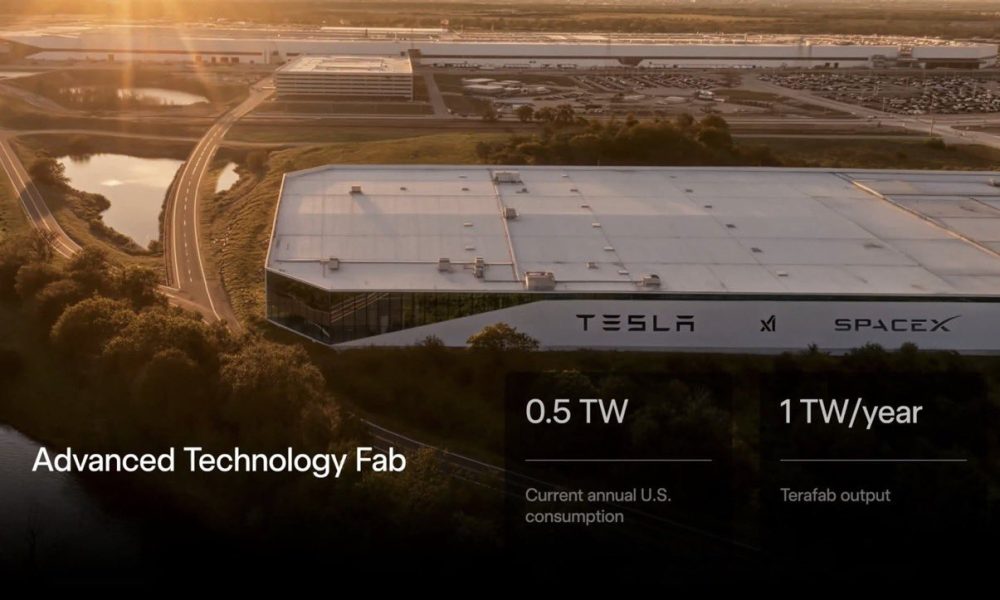
For years, the silicon chip has been the quiet, indispensable engine of the modern automotive revolution, powering everything from infotainment systems to autonomous driving algorithms. As the race for artificial intelligence and full self-driving intensifies, Tesla CEO Elon Musk has repeatedly signaled that securing enough of this high-performance computing power is a fundamental strategic challenge. Now, the company is moving beyond hints and partnerships to take direct control. Leaked details and insider reports point to an ambitious, in-house initiative codenamed TERAFAB—a project that could redefine Tesla's technological independence and accelerate its most ambitious goals.
Beyond the Chip Shortage: Building a Silicon Foundation
Tesla's foray into custom silicon is not new; the Dojo supercomputer and the D1 chip were groundbreaking first steps in creating a tailored AI training platform. However, TERAFAB appears to be a vastly broader and more vertical endeavor. Industry analysts suggest it encompasses the design and potentially even the manufacturing of a wide array of semiconductors needed for Tesla's ecosystem. This includes next-generation Full Self-Driving (FSD) processors, AI accelerators for Dojo and its robots, and energy management chips for its energy storage products. The core motivation is clear: to eliminate reliance on external foundries like TSMC or Samsung during global shortages and to create hardware perfectly optimized for Tesla's unique software stack, from neural networks to vehicle control.
The "Tera" Scale: Implications for Autonomy and Robotics
The name itself—TERAFAB—hints at the monumental scale of the ambition. "Tera" evokes a trillion operations, a standard in high-performance computing, while "fab" is industry shorthand for a semiconductor fabrication plant. While constructing a state-of-the-art fab is a capital-intensive endeavor costing tens of billions, Tesla may initially focus on chip design while partnering with a foundry for production. The payoff, however, would be measured in performance. Proprietary chips could process the immense data from Tesla's fleet of millions of vehicles more efficiently, drastically reducing the time needed to train new FSD models. This silicon advantage would be a force multiplier not just for its cars, but for the Optimus robot and any future AI-driven product, creating a cohesive and unrivaled technological architecture.
For Tesla owners and investors, the TERAFAB project signals a critical long-term pivot. Owners can expect more rapid and sophisticated updates to Autopilot and FSD capabilities as hardware and software development become more tightly synchronized. The potential for new, chip-enabled features in vehicles and energy products is significant. For investors, it represents both a substantial risk and a monumental opportunity. The R&D and capital expenditure required are enormous, but success would grant Tesla one of the strongest competitive moats in technology: control over the core silicon that powers the age of autonomy. It transforms Tesla from a car company that uses chips into a vertically integrated AI and robotics company that builds its own central nervous system.