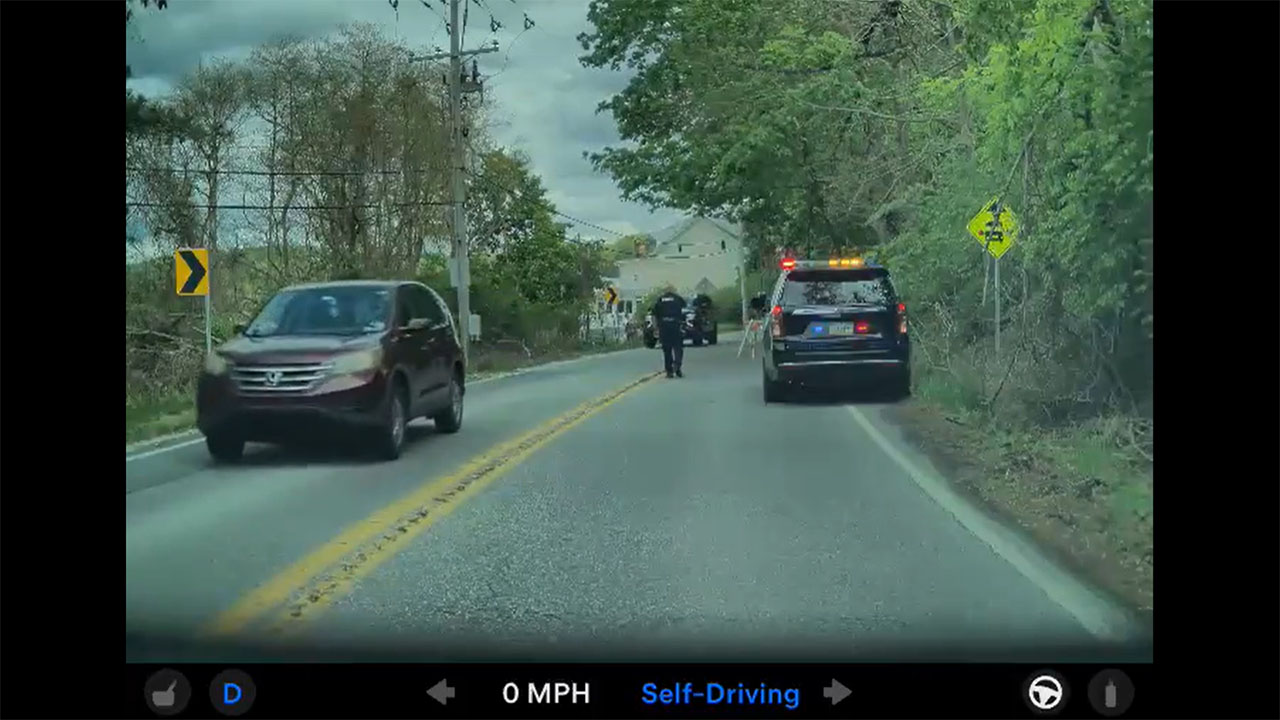
In a moment of striking transparency, Elon Musk has peeled back the curtain on the immense, often underappreciated challenge of achieving true vehicle autonomy. Responding to a viral video showcasing Tesla's Full Self-Driving (FSD) system successfully navigating a complex and dangerous traffic scenario, Musk's commentary shifted focus from celebration to sobering reality. His revelation underscores a fundamental truth about the current state of self-driving AI: the final stretch of development is exponentially harder than the beginning.
The "Long Tail" of Uncommon Scenarios
Musk explained that the core difficulty lies in the "long tail" of rare and unpredictable edge cases. While Tesla's FSD Beta can now handle millions of everyday driving situations, it's the one-in-a-million events—a child chasing a ball into the street, an overturned vehicle partially blocking a lane, or extreme weather anomalies—that present the greatest hurdle. Solving these requires not just incremental software updates, but potentially architectural leaps in how the AI perceives and reasons about the world. Each solved edge case reveals several new ones, making the last 1% of development feel like 99% of the work.
Data Scale vs. AI Reasoning
Tesla's advantage has always been its unmatched fleet data, collecting real-world driving scenarios from millions of vehicles. However, Musk's comments hint at a pivotal transition. The next phase is less about accumulating more data and more about developing superior "artificial general intelligence" for the car. This means moving beyond pattern recognition to true contextual understanding and prediction. The system must not only identify objects but infer intent—distinguishing between a pedestrian waiting at a curb and one about to jaywalk, for example. This shift from statistical analysis to cognitive reasoning is the monumental task at hand.
The implications of this "unfortunate truth" are far-reaching for the entire autonomous vehicle industry. It validates why competitors using high-definition maps and geofenced areas have progressed in limited domains, as they artificially reduce edge cases. Tesla's "vision-first" approach, aiming for a generalized solution everywhere, inherently confronts the full chaos of the real world. Musk's candor suggests that timelines for a truly driverless system, without need for human supervision, remain fluid and dependent on breakthroughs that are difficult to schedule.
For Tesla owners and investors, this revelation is a double-edged sword. It tempers expectations for an imminent, magical software flip to Level 5 autonomy, reinforcing that FSD, even in its "Supervised" form, will remain a co-pilot for the foreseeable future. However, it also highlights the staggering complexity of what Tesla is attempting and the immense value of its ongoing real-world AI training. Every mile driven with FSD engaged contributes to chipping away at that long tail. The path is harder than many assumed, but the company leading the charge in solving this fundamental AI problem could define the next era of transportation and technology.