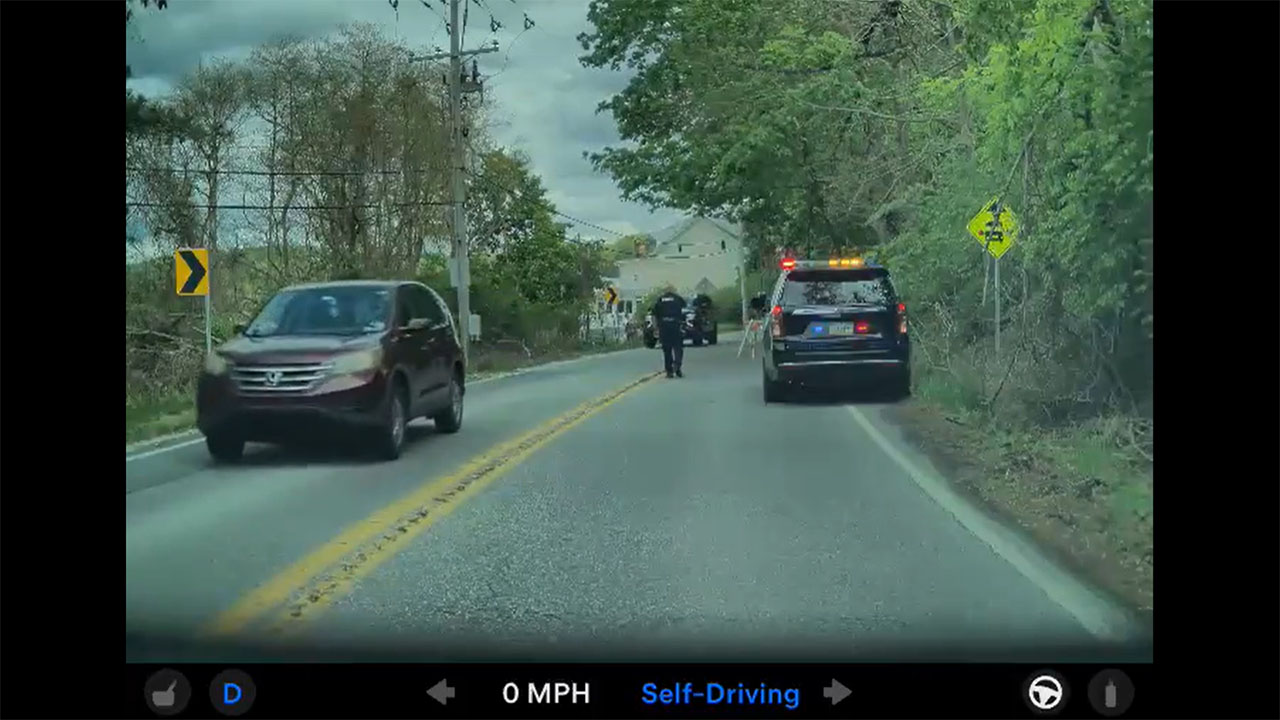
In a candid moment during Tesla's Q1 2026 earnings call, CEO Elon Musk delivered a sobering clarification that recalibrates the autonomous future for millions of the company's loyal customers. Musk confirmed that vehicles equipped with Tesla's Hardware 3 (HW3) computer will not achieve the long-promised milestone of unsupervised Full Self-Driving (FSD). This admission directly impacts an estimated 4 million Tesla vehicles on the road today, including those whose owners paid thousands upfront for the FSD capability with the expectation of eventual hands-free operation.
The Hardware Ceiling: HW3's Inherent Limitations
The core of the issue lies in the computational and sensory boundaries of the HW3 system, introduced in 2019 as Tesla's first in-house, full self-driving computer. While a monumental leap at the time, Musk explained that the path to true unsupervised autonomy requires a level of processing power and sensor redundancy that HW3 cannot provide. "The jump from supervised to unsupervised FSD is non-trivial," Musk stated, emphasizing the need for "orders of magnitude more real-world inference and a fault-tolerant architecture." This effectively places a hard ceiling on the capabilities of these vehicles, regardless of software updates. The focus for unsupervised operation has now squarely shifted to vehicles with the more advanced Hardware 4 (HW4) and subsequent platforms, which feature improved cameras and significantly more powerful computing cores.
Customer Backlash and the Legacy of Pre-Purchased FSD
The most immediate fallout surrounds the significant number of customers who purchased the FSD package, often for $12,000 or more, on their HW3-equipped vehicles. For these owners, the promise was an appreciating asset—a car that would one day drive itself. Musk's announcement transforms that investment into a more limited, albeit advanced, driver-assist feature set. Analysts anticipate potential legal challenges and heightened scrutiny from regulators, as the line between aspirational branding and deliverable product comes into sharp focus. Tesla's handling of this communication, years after taking payments for the feature, will be a critical test of customer relations and brand trust.
From a technical perspective, this move signals Tesla's pragmatic, if delayed, acknowledgment of the immense challenge of Level 4/5 autonomy. It underscores that continuous software iteration alone cannot overcome fundamental hardware constraints in a safety-critical system. The decision to draw a line at HW3 allows Tesla's engineering teams to concentrate development on more capable hardware without being held back by legacy platform limitations. However, it also raises questions about the lifecycle of Tesla's technology and how the company will manage future hardware transitions for a customer base accustomed to over-the-air software miracles.
Implications for the Tesla Ecosystem and Roadmap
For current Tesla owners, the implications are bifurcated. Owners of HW3 vehicles must adjust their expectations: their cars will receive continued improvements to the supervised FSD (City Streets) driver-assist system but will never operate as robotaxis or achieve unsupervised travel. This may dampen resale values tied to the FSD promise. Conversely, owners of newer HW4+ vehicles receive clearer validation of their vehicle's long-term autonomy potential, which could enhance retention and value. For investors, the clarification removes a significant overhang of technical uncertainty and potential future liability, allowing the company to pursue its robotaxi and next-generation platform goals with a defined hardware baseline. The market will now watch closely to see if this painful but clear delineation accelerates Tesla's path to a truly driverless future, or if it damages the brand's reputation for delivering on its most ambitious promises.