For years, Tesla's ecosystem was a walled garden of seamless convenience, with the Supercharger network providing a superior, integrated charging experience. However, as the electric vehicle landscape matures and drivers venture further into non-Tesla public charging territory, choice has become paramount. Since November 2025, Tesla drivers, particularly in Europe, have been presented with two compelling keys to the broader charging kingdom: the native Tesla Multipass and the established, multi-network Chargemap Pass. The decision between them isn't always straightforward, hinging on travel habits, cost sensitivity, and desired convenience.
Tesla Multipass: The Power of Native Integration
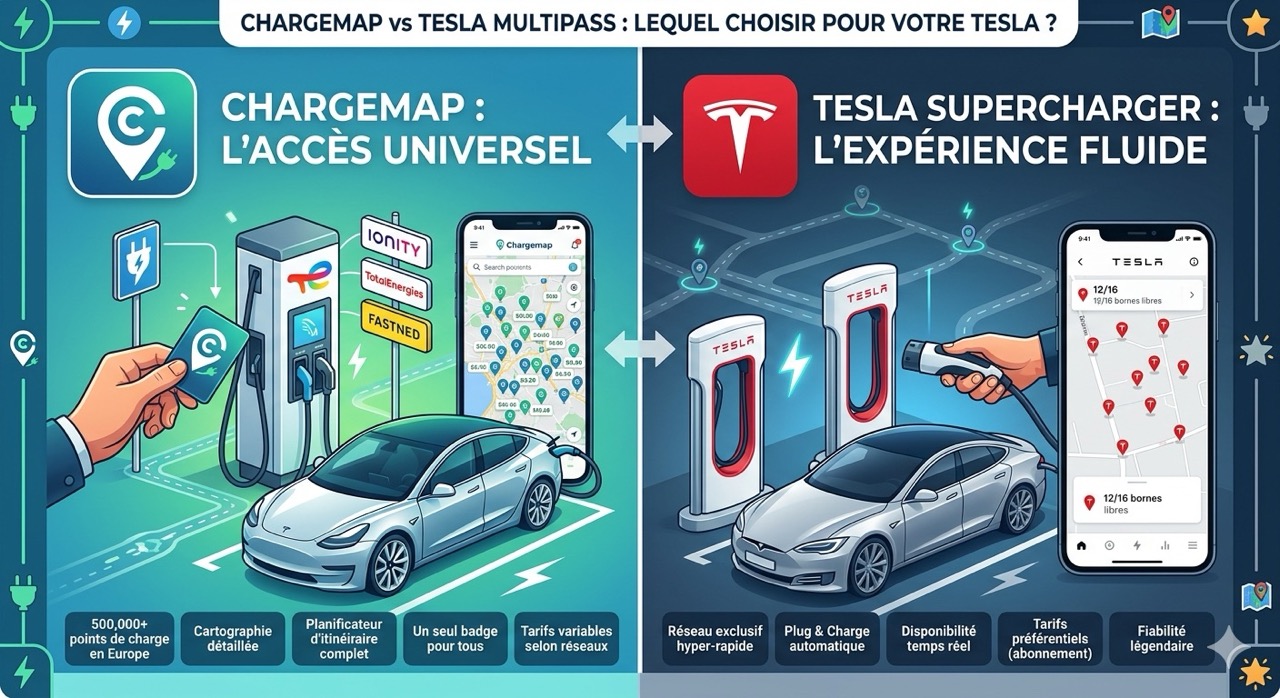
Integrated directly into the Tesla vehicle's software and linked to the driver's account, the Multipass is the epitome of the brand's plug-and-charge philosophy. There is no separate app to open or RFID card to tap; authentication and payment are handled automatically when you plug in at a supported non-Tesla charge point. This seamless experience significantly reduces friction, especially in poor weather. The Multipass grants access to a curated selection of major third-party networks that Tesla has partnered with, effectively extending the company's "one-stop" billing and support system. For drivers who prioritize absolute ease of use and want a unified experience that mirrors the Supercharger network, the Multipass is a powerful tool.
Chargemap Pass: The Aggregator's Advantage
The Chargemap Pass operates on a different principle: aggregation. It is an independent service that has built partnerships with a vast array of hundreds of charging operators across Europe, often including smaller, regional networks that may not be available on Tesla's platform. This can be a critical advantage for reaching remote destinations or utilizing local chargers at destinations like hotels or restaurants. While it requires using the Chargemap app or a physical RFID card, it offers a single point of access and billing for a remarkably diverse charging landscape. For Tesla owners who frequently travel off the beaten path or want maximum network coverage, Chargemap provides a broader, if slightly less integrated, safety net.
Strategic Choice: Exclusive Use or Strategic Overlap?
The optimal choice isn't necessarily mutually exclusive. A driver whose routine consists of major highways and urban centers may find the Tesla Multipass covers 95% of their non-Supercharger needs with superior convenience. Conversely, an adventurous driver exploring rural regions may rely on the Chargemap Pass as essential insurance. The most informed approach involves analyzing the specific networks each pass unlocks along your common routes. Critically, compare the pricing structures; while both simplify payment, the final kWh rate or session fee can differ between the two passes at the same charger, making one more cost-effective than the other depending on location and usage patterns.
For Tesla owners and investors, this evolution signals a strategic pivot. Tesla is acknowledging that interoperability is a competitive advantage, transforming its vehicles from being locked into a single, albeit excellent, network to becoming the most versatile EVs on the market. This move potentially increases the addressable market for Tesla by alleviating "charger anxiety" for prospective buyers in areas with sparse Supercharger coverage. It also positions Tesla as a central hub in the fragmented public charging ecosystem, a role that could generate valuable data and revenue streams. The competition between native integration and third-party aggregation will ultimately drive innovation and better pricing, a net benefit for all electric vehicle drivers.