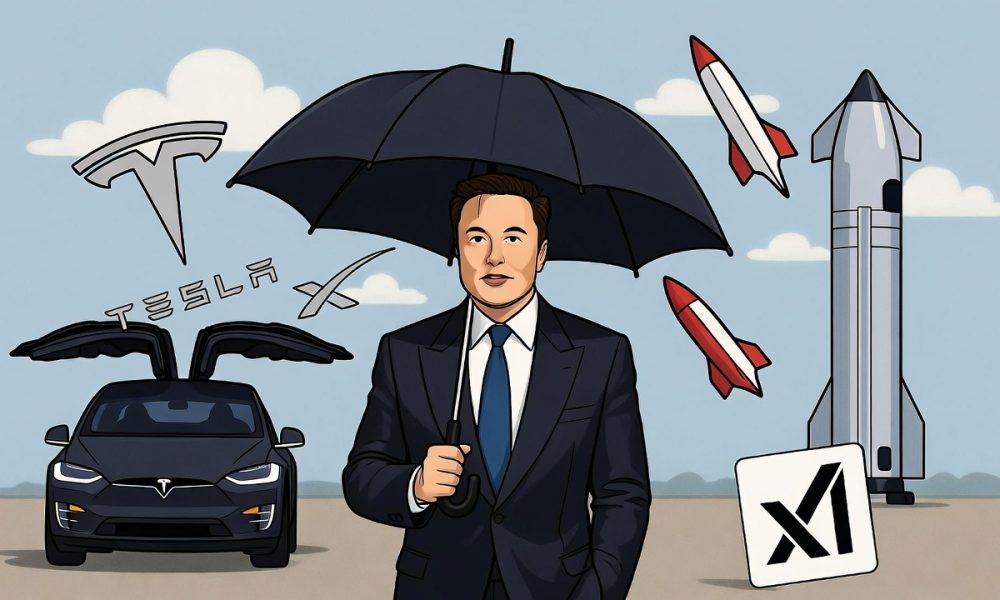
The corporate landscape of Elon Musk's empire is undergoing a seismic shift. Following his direct confirmation of a merger between SpaceX and xAI, the strategic alignment of his most ambitious ventures has begun in earnest. This initial consolidation, blending cutting-edge launch capability with frontier artificial intelligence, raises an inevitable and monumental question: is Tesla, the electric vehicle and clean energy giant, destined to become the third pillar in a revolutionary corporate trifecta?
The Strategic Logic of a Combined "Musk-X" Entity
On the surface, combining a rocket company, an AI lab, and an automaker seems incongruous. Yet, the connective tissue is the foundational technology driving all three: artificial intelligence and advanced compute. SpaceX's Starlink constellation aims to provide global, high-bandwidth connectivity, a potential data highway for autonomous vehicle networks and distributed AI. xAI's Grok and other models require immense computational power, a need that could be served by Tesla's Dojo supercomputer and its real-world AI training from millions of vehicles. A unified structure could accelerate development cycles, pool staggering resources, and create a closed-loop ecosystem for data, compute, and connectivity unmatched by any single competitor.
Navigating the Minefield of Financial and Regulatory Hurdles
While the strategic vision is compelling, the path to a triple merger is fraught with obstacles. Tesla is a publicly traded company with a market capitalization exceeding $500 billion, answerable to a vast pool of shareholders. Merging it with privately-held SpaceX and xAI would present astronomical financial and governance complexities. Furthermore, regulatory scrutiny would be intense, with agencies worldwide examining implications for antitrust, securities law, and even national security given the sensitive nature of the technologies involved. Any move would require a structure that protects Tesla's public market access while integrating its tech stack, a legal and financial puzzle of the highest order.
The potential rewards, however, could justify the monumental effort. A combined entity would wield unprecedented influence over the future of autonomy, robotics, and sustainable infrastructure. Tesla's energy storage and solar products could integrate with SpaceX's launch capabilities for off-grid or extraterrestrial projects, while xAI's models could evolve using real-time data from both Tesla's fleet and Starlink's global network. This convergence points toward a future where the boundaries between transportation, energy, space, and intelligence fundamentally blur.
Implications for the Tesla Ecosystem
For Tesla owners and investors, the prospect is a double-edged sword. Deeper integration could funnel more capital and AI talent toward solving Full Self-Driving (FSD) and robotics, potentially accelerating the timeline for a truly autonomous future and new product categories like the Tesla Robotaxi network. However, it also introduces new risks and uncertainties. Investor focus could shift from automotive margins to speculative, long-term tech moonshots, increasing volatility. The clarity of Tesla's standalone mission could become entangled with the broader, more complex goals of a conglomerate.
The confirmed SpaceX-xAI merger is the first domino. Whether Tesla joins the fold will depend on Musk's ability to architect a deal that satisfies regulators and shareholders while unlocking the synergistic potential he envisions. One thing is certain: the consolidation has begun, and its ultimate shape will redefine not just Musk's companies, but the trajectory of multiple global industries.

