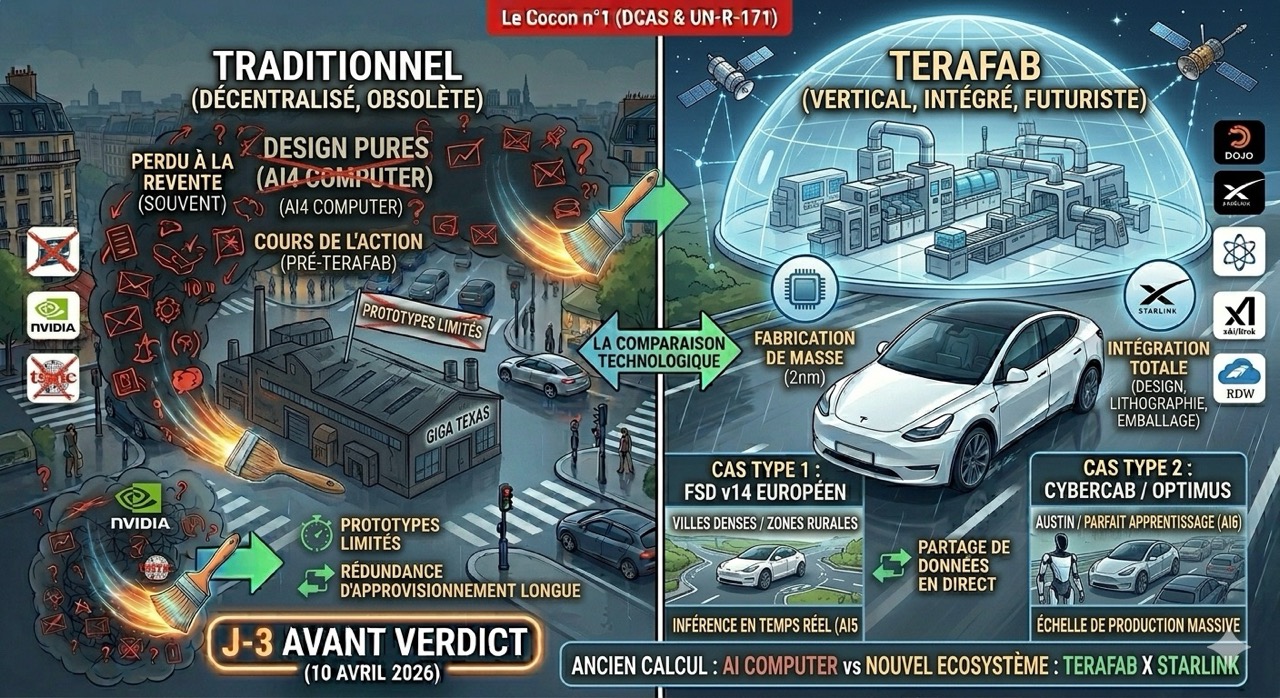
While Wall Street fixates on Tesla's capital expenditures, a seismic shift is quietly brewing that could redefine the company's technological sovereignty. Dubbed Project Terafab, this ambitious initiative is Tesla's bold gambit to bring the most critical component of the modern vehicle—the semiconductor—in-house. Announced officially on March 21 at an event in Austin's Seaholm Power Plant, the project represents a $25 billion declaration of independence from the volatile global chip supply chain, with production slated to begin by 2026.
The "Why Now": Beyond Supply Chain Security
Tesla's move is not merely a reaction to the chip shortages that crippled the auto industry. It is a proactive, strategic evolution. While securing a reliable supply is a key benefit, the core driver is performance optimization. Tesla's vertical integration, from batteries to software, has been a hallmark of its success. By designing and fabricating its own silicon, Tesla can create chips perfectly tailored for its unique needs in artificial intelligence, autonomous driving, and vehicle efficiency. This eliminates the compromise of using generic, off-the-shelf components and allows for deeper, system-level innovation that competitors relying on third-party suppliers cannot easily match.
The Terafab Ambition: A $25 Billion Bet on the Future
The scale of the commitment is staggering. The $25 billion investment signals that Terafab is far more than a pilot production line; it is intended to be a world-class semiconductor fabrication facility. This places Tesla in the rarefied air of companies like Intel and TSMC, who command the logic chip market. Tesla's focus, however, will likely be on specialized AI inference chips for its Full Self-Driving computer and high-voltage power semiconductors for its powertrains and energy products. Controlling the entire stack—from chip architecture to manufacturing—would give Tesla an unprecedented speed advantage in iterating and deploying new technologies directly into its vehicles and robots.
The implications of this vertical leap are profound. Success would not only insulate Tesla from external supply shocks but could also create a new, high-margin revenue stream. Tesla could eventually supply its advanced, application-specific chips to other companies, much like it has begun opening its Supercharger network. However, the challenges are immense. Semiconductor fabrication is a field with brutal economies of scale, relentless R&D costs, and a fierce war for talent. Tesla must navigate this complex landscape while simultaneously executing on its core automotive and energy goals.
What Terafab Means for Tesla Owners and Investors
For owners, the long-term promise is vehicles that are more capable, efficient, and updated even more rapidly. Proprietary chips could unlock new performance ceilings for autonomy and vehicle functionality that are tightly woven into Tesla's hardware. For investors, Terafab is a classic high-risk, high-reward Musk venture. It demands significant capital upfront and carries execution risk, but its success would erect a formidable and highly profitable "moat" around Tesla's business. It transforms the company from an automaker into a vertically integrated technology and AI powerhouse, justifying its valuation through control over the fundamental silicon that will power the future of transportation and beyond.