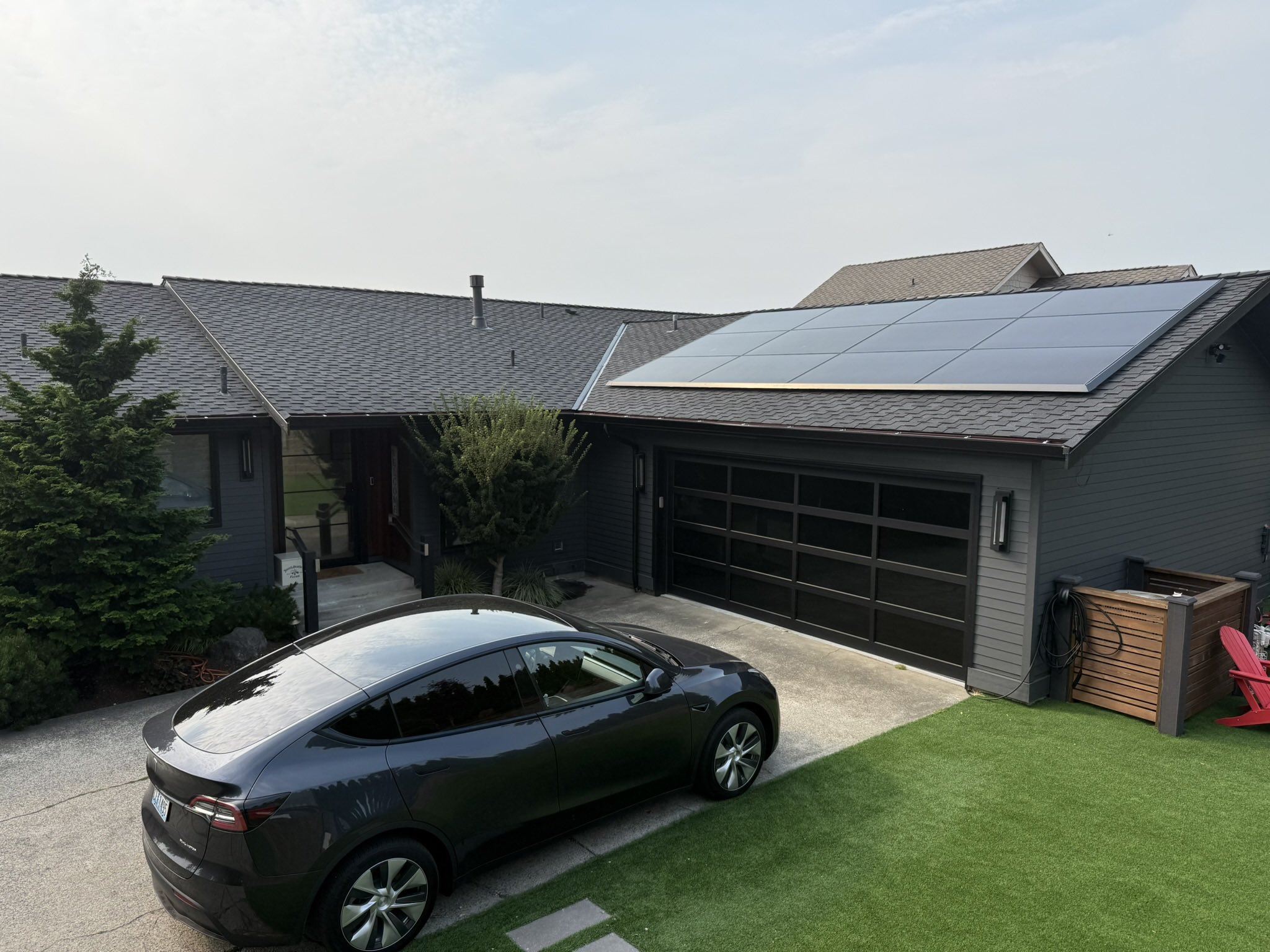
For years, the promise of beautiful, integrated rooftop solar has been hampered by the clunky, time-consuming, and often invasive installation process. That paradigm is now being directly challenged. Leaked images and details of Tesla's newly developed 'rail-less' solar mounting system have surfaced, revealing a potential quantum leap in installation efficiency and roof integrity that could reshape the entire residential solar industry.
The End of the Rail Era
Traditional solar installations rely on a framework of long, aluminum rails that are first secured to the roof. Panels are then clamped onto these rails, a method that requires extensive drilling, precise alignment, and significant labor time. Tesla's new system, in stark contrast, eliminates these rails entirely. Instead, individual solar panels appear to connect directly to specialized, low-profile mounts anchored to the roof deck. This radical simplification is the core innovation, promising to drastically reduce the number of components and steps required on-site. The visual result is a sleeker, flatter array that aligns with Tesla's design ethos of minimalism and seamless integration.
Quantifiable Gains: Speed and Structural Integrity
The technical advantages of this rail-less approach are substantial. According to the emerging specifications, the system enables an installation that is 33% faster than conventional methods. This dramatic reduction in labor time translates directly to lower soft costs, a major hurdle for solar affordability. Furthermore, by minimizing roof penetrations and distributing weight and mounting points differently, Tesla claims the system offers enhanced roof integrity. Fewer holes mean fewer potential leak points, a primary concern for homeowners, and a more robust defense against extreme weather. This combination of speed and durability addresses two of the most significant customer pain points in a single, elegant solution.
This innovation cannot be viewed in isolation; it is a strategic move within Tesla's broader energy ecosystem. A faster, cheaper, and more reliable installation process for Solar Roof tiles and traditional panels lowers the barrier to entry for the Tesla Energy suite. It makes the path from solar generation to Powerwall storage to electric vehicle charging via a Tesla EV smoother and more compelling. The system reinforces Tesla's unique position as an integrated sustainable energy company, not just a panel manufacturer or carmaker.
For Tesla owners and investors, the implications are multifaceted. Homeowners considering solar now have a compelling reason to wait or choose Tesla, anticipating a less disruptive installation and a potentially more resilient roof system. For investors, this underscores that Tesla's innovation engine is firing on all cylinders beyond the automotive sector. By attacking the soft costs and practical drawbacks of solar deployment, Tesla is positioning its energy division for significantly improved margins and scalability. If the promised 33% installation speed increase holds true in widespread practice, it could be the catalyst that finally accelerates the adoption of rooftop solar at the pace the energy transition demands.

