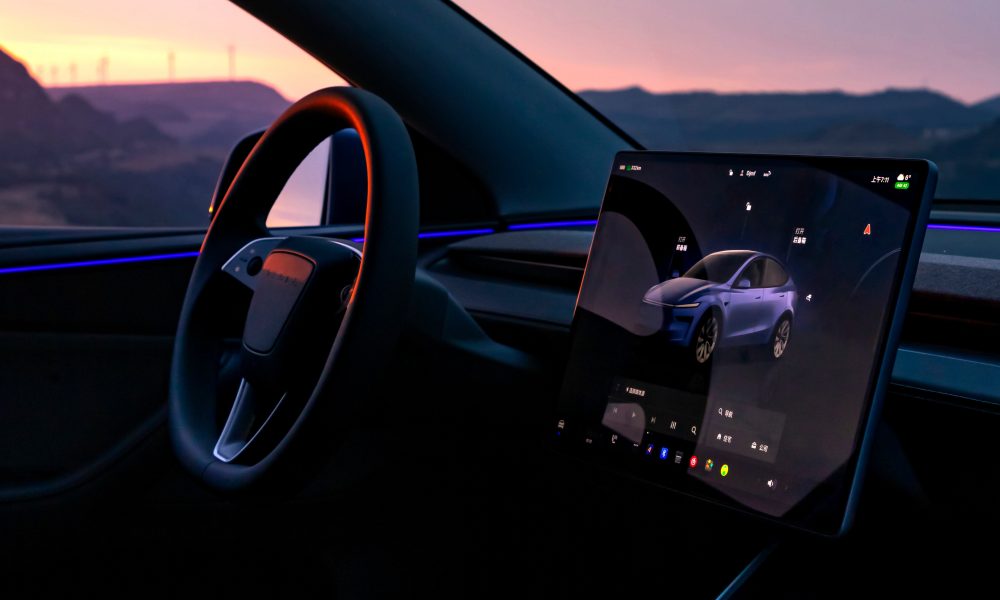
For years, the absence of Apple CarPlay and Android Auto has been a defining—and for some, frustrating—characteristic of the Tesla ownership experience. While CEO Elon Musk has historically dismissed the need for such integrations, favoring Tesla's proprietary "skeuomorphic" software approach, a new report suggests the Silicon Valley automaker's stance may be evolving. Contrary to the assumption that Tesla has permanently closed the door on CarPlay, internal discussions and development efforts around integrating the popular Apple ecosystem are reportedly still alive, signaling a potential strategic pivot to cater to a broader market.
The Persistent Demand in a Walled Garden
Tesla's in-car infotainment system is often lauded as the most advanced in the industry, a seamless part of the vehicle's futuristic ethos. For many owners, its native functionality for navigation, media, and vehicle controls negates the need for third-party interfaces. However, a significant cohort of potential buyers, especially those deeply embedded in the Apple ecosystem, view the lack of CarPlay as a major drawback. The system's strength lies in its familiarity and seamless integration of an iPhone's core functions—messages, music libraries, podcasts, and preferred mapping apps like Apple Maps or Google Maps—into the driving experience. By reportedly keeping development "in the works," Tesla acknowledges that even a superior walled garden may need a gate to accommodate user preference and competitive pressure.
Strategic Shifts and Software Revenue Realities
This potential reversal is not merely about convenience; it's a calculated business consideration. As Tesla's growth strategy increasingly targets mainstream consumers beyond its early adopter base, aligning with widely expected features becomes critical. Furthermore, Tesla's future profitability is heavily tied to its Full Self-Driving (FSD) and software services. Introducing CarPlay could be framed as an additive feature, not a replacement, preserving Tesla's core software revenue streams while removing a common purchase barrier. The move could be particularly strategic for models like the anticipated "Model 2" compact car, aimed at volume markets where buyer expectations for smartphone integration are non-negotiable.
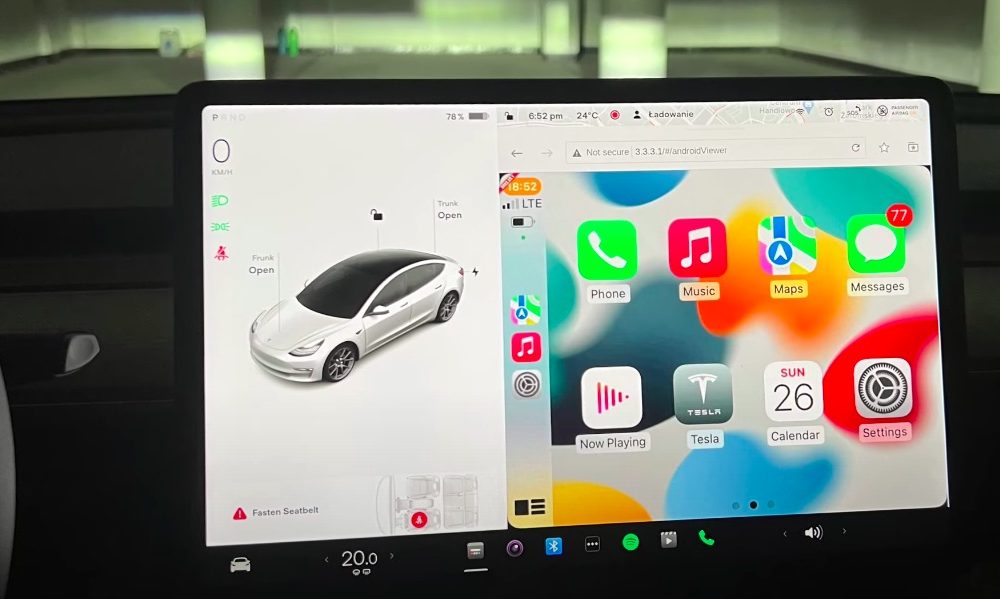
The technical implementation remains a key question. Tesla would likely insist on a deeply integrated version that maintains its unique user interface aesthetic and safety protocols, rather than a simple projection. This could involve a dedicated app within the Tesla interface or a split-screen functionality, ensuring drivers retain immediate access to vital vehicle controls and data. Such an approach would allow Tesla to offer the convenience of CarPlay while upholding its philosophy of a cohesive, controlled user experience.
Implications for the Tesla Ecosystem
For current and prospective Tesla owners, this development is significant. It promises greater choice and could ease the transition for iPhone loyalists considering an EV. For investors, it signals a maturing, customer-centric approach from a company historically known for its top-down vision. Adopting CarPlay would not be an admission of failure but a pragmatic adaptation to market demands, potentially expanding Tesla's addressable market without diluting its technological leadership. The company's ambition appears to be having it both ways: maintaining its superior native system while co-opting a competitor's popular platform to eliminate final objections. If executed well, this could be the ultimate compromise in the ongoing battle for the digital dashboard.