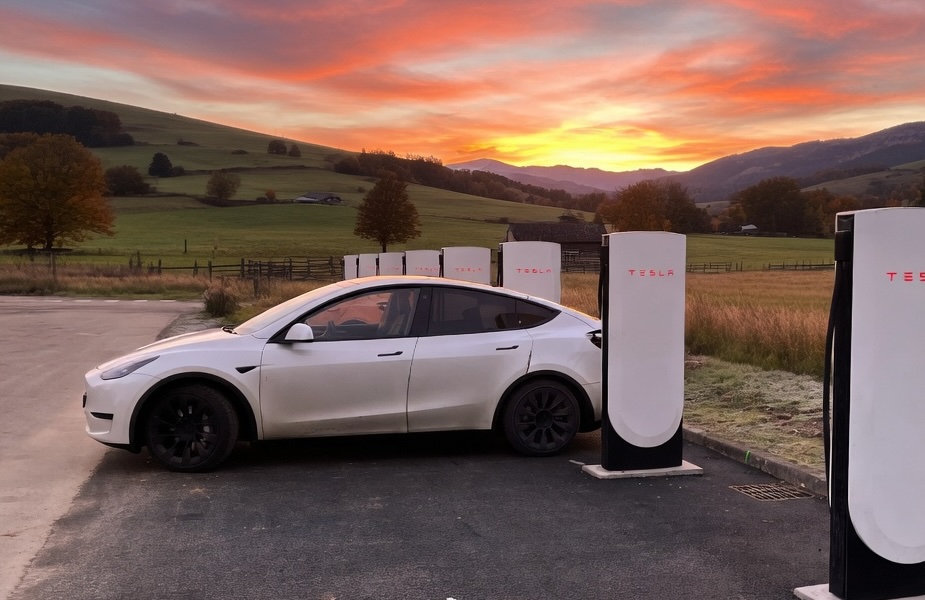
While the world awaits the official unveiling of the Tesla Robotaxi on August 8th, the company is already moving dirt in the background. New construction plans submitted to the City of Chandler, Arizona, reveal Tesla's intent to build a novel type of charging facility: a private Supercharger station explicitly designed to support its future autonomous fleet. This is the first clear physical evidence of Tesla building dedicated infrastructure for its Robotaxi network, signaling a strategic pivot from planning to tangible deployment.
A Private Oasis for Autonomous Vehicles
The filings, discovered and reported by local outlets, detail plans for a charging station at the northwest corner of Chandler Boulevard and 94th Street in the Phoenix East Valley. Unlike any existing Tesla charging site, this location is described as a "private Supercharger station" intended for use by the company's fleet vehicles. Crucially, the documents state the stalls will not be open to the public, a stark departure from Tesla's core mission of expanding accessible EV charging. The design suggests a logistics hub, focused on efficient, high-uptime charging for a constantly circulating fleet rather than customer amenities.
Why Arizona is the Perfect Proving Ground
This choice of location is no accident. Arizona has long been a friendly testing ground for autonomous vehicles, with less restrictive regulations and expansive, predictable road networks. Tesla already operates a significant vehicle dynamics and testing facility in the area. Establishing a private charging depot in Chandler positions Tesla to launch and scale a tightly controlled Robotaxi pilot program. It allows the company to refine the complex dance of autonomous charging—where a vehicle must navigate a station, plug itself in, and unplug without human intervention—in a manageable, geofenced environment before a broader rollout.
The implications of this move are twofold. First, it confirms that Tesla envisions its initial Robotaxi operations as a closed, company-owned fleet, rather than immediately summoning private customer vehicles into a shared network. Second, it highlights a new infrastructure paradigm. A successful Robotaxi business requires ultra-reliable charging at strategic hubs to maximize vehicle utilization and profitability. Public Superchargers, which can be crowded and require human interaction, are not fit for this purpose. This private station is the prototype for a shadow charging network built for machines, not people.
Strategic Implications for Tesla's Ecosystem
For Tesla owners and investors, this development is a concrete step that de-risks the ambitious Robotaxi vision. It demonstrates capital allocation and execution toward a service that could unlock a high-margin, recurring revenue stream far beyond vehicle sales. However, it also suggests a bifurcation in Tesla's charging strategy. The continued expansion of the public Supercharger network remains critical for consumer EV adoption, but a parallel, private network will be essential for fleet logistics. Investors should watch for more of these permits as a leading indicator of the Robotaxi network's rollout timeline and capital requirements.
For the broader EV market, Tesla's move sets a precedent. It validates that autonomous ride-hailing is not just a software challenge but a massive infrastructure undertaking. As Tesla builds its first dedicated depot, it gains an invaluable operational lead in solving the real-world logistics of running an electric autonomous fleet, turning a speculative vision into a physical reality one charging stall at a time.