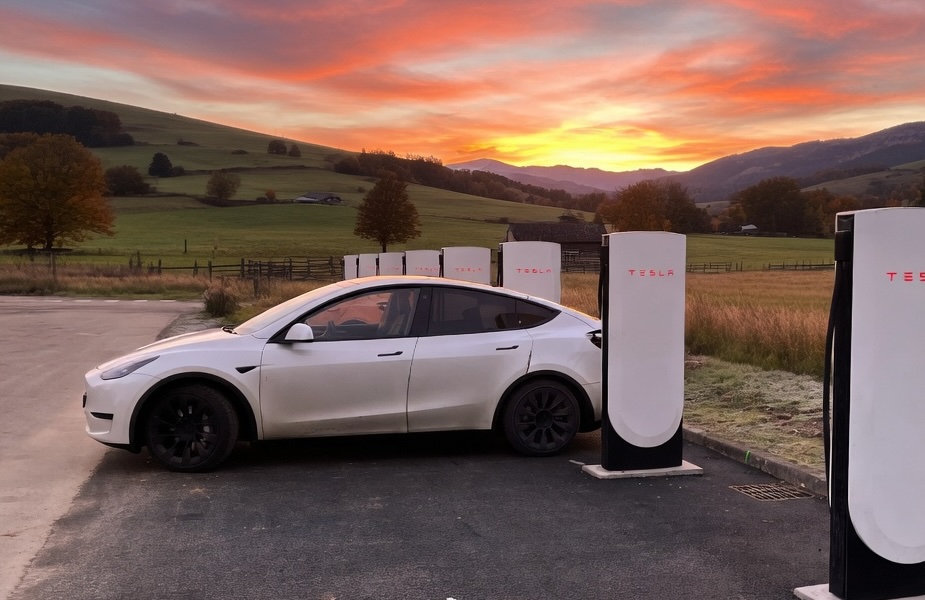
Tesla is quietly laying the groundwork for a future where its Robotaxis operate without human intervention—and the latest evidence comes not from a software update, but from a pair of building permits in Arizona. The automaker has submitted applications for two private Supercharger stations in Chandler and Mesa that would be exclusively reserved for its autonomous Robotaxi fleet, marking the first time Tesla has designed charging infrastructure specifically for self-driving vehicles. These stations, discovered in municipal records, will feature V4 Supercharger stalls and will not be open to the public—a clear signal that Tesla is preparing for a dedicated, high-utilization network to support its ambitious robotaxi launch.
A Private Charging Network for Autonomous Operations
The filings reveal a strategic departure from Tesla’s traditional approach of building public Supercharger stations. Instead of catering to retail customers, these two Arizona sites are designed to serve as high-throughput hubs for a fleet of autonomous electric vehicles. By keeping the stations private, Tesla can control charging schedules, optimize energy costs, and ensure maximum uptime for its Robotaxis without the unpredictability of public access. The choice of Chandler and Mesa is no accident—both cities are part of the greater Phoenix metropolitan area, a region where Tesla has already tested autonomous driving technology extensively due to favorable weather and road conditions.
Why V4 Superchargers Matter for Robotaxis
The decision to deploy V4 Supercharger stalls at these private stations underscores Tesla’s focus on speed and efficiency. V4 chargers, which began rolling out in 2023, offer up to 350 kW of peak power and feature a longer cable designed for easier access with vehicles that have different charge port locations—a critical consideration for a fleet of Robotaxis that may include future vehicle variants. For autonomous operations, faster charging translates directly to higher fleet utilization, meaning fewer idle hours and more revenue-generating miles per vehicle per day. Tesla’s internal projections suggest that a Robotaxi could need to charge for only 15–20 minutes during peak usage windows, making V4’s high-speed capability essential.
These dedicated stations also solve a logistical puzzle that has haunted autonomous vehicle deployments: how to keep the fleet charged without human drivers. By building private, gated facilities, Tesla can integrate automated charging robots or inductive charging pads—technologies the company has patented but not yet commercialized. The Arizona permits do not specify whether the stations will include such automation, but the private nature of the sites leaves the door open for future upgrades without the constraints of public accessibility standards.
Implications for Tesla Owners and Investors
For current Tesla owners, the immediate impact is minimal—these stations will not be available for public use. However, the long-term implications are significant. If Tesla successfully rolls out a Robotaxi network in Arizona, it could serve as a blueprint for similar private Supercharger hubs in other markets, potentially reducing congestion at public Superchargers by diverting fleet vehicles to dedicated sites. For investors, this move signals that Tesla is moving beyond theory and into physical infrastructure for its robotaxi ambitions. The company’s ability to execute on this vision will be closely watched, especially given CEO Elon Musk’s repeated promises of a Robotaxi launch in 2025. The Arizona permits suggest that Tesla is not just building software—it is building the concrete, electrical, and real estate foundation for a new era of autonomous mobility.