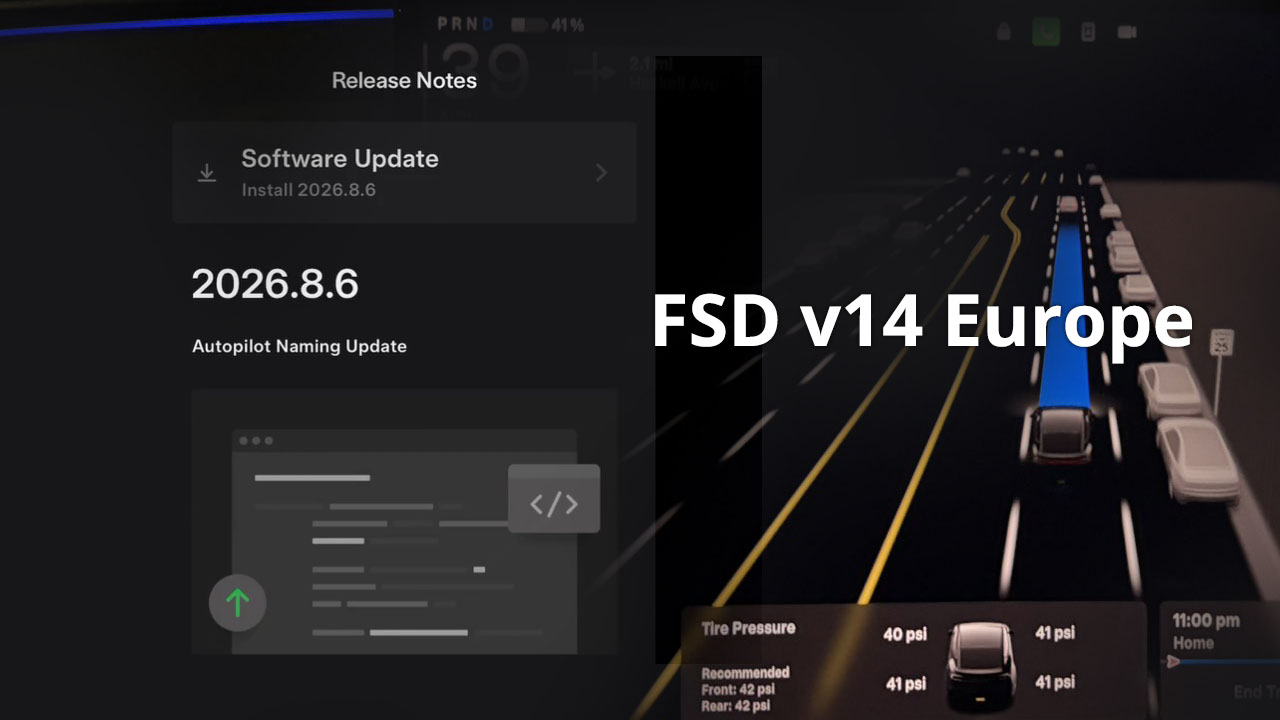
Tesla's software deployment strategy is entering a critical new phase, with the latest update serving as a clear precursor to a long-awaited technological leap across the Atlantic. The rollout of software version 2026.8.6 to vehicles in both North America and Europe is far more than a routine patch; it is a foundational update that standardizes Tesla's driver-assistance branding globally, setting the stage for the potential European debut of its most advanced autonomous driving system yet.
Standardizing the Road to Autonomy: A Key Rebranding Goes Global
In March, Tesla began renaming its basic Autopilot feature to Autopilot (Supervised) in North America via update 2026.2.9. This subtle but significant change was designed to emphasize the driver's continuous responsibility while using the system. The new 2026.8.6 update now brings this crucial rebranding to the European fleet. This alignment is not merely cosmetic. It represents a unified software architecture and a harmonized user experience across major markets, which is a prerequisite for the international deployment of more complex features like Full Self-Driving (FSD).
Decoding the Signals: Why 2026.8.6 Points to FSD v14
The synchronized update strongly suggests Tesla is laying the final groundwork for FSD (Supervised) v14 in Europe. The European regulatory environment is distinct and stringent, requiring meticulous validation. By first ensuring all vehicles operate on the same core software version with consistent terminology, Tesla simplifies the subsequent activation and oversight of a more powerful AI-driven system. Industry analysts view this as a classic Tesla maneuver: deploying underlying infrastructure widely before flipping the switch on headline features. The update's release notes, while typically focused on minor improvements and bug fixes in such deployments, are secondary to the strategic platform unification it achieves.
For Tesla owners, particularly in Europe, this update is a tangible sign of progress. It moves the continent from a separate software track closer to the cutting-edge developments seen in North America. The rebranding to Autopilot (Supervised) also serves an immediate, practical purpose by reinforcing safety protocols and managing driver expectations ahead of more capable software. It is a necessary educational step before introducing a system with vastly greater operational capability.
The implications for Tesla and its stakeholders are substantial. A successful pathway to FSD in Europe would unlock a massive new market for the high-margin software subscription, directly boosting revenue. For investors, this systematic, regulatory-conscious rollout demonstrates a maturing approach to global expansion beyond hardware sales. It signals that Tesla's most valuable asset—its software and AI—is moving closer to worldwide monetization. The 2026.8.6 update may appear modest on the surface, but it is a decisive move in the high-stakes game of autonomous driving, positioning Tesla for its next major offensive.