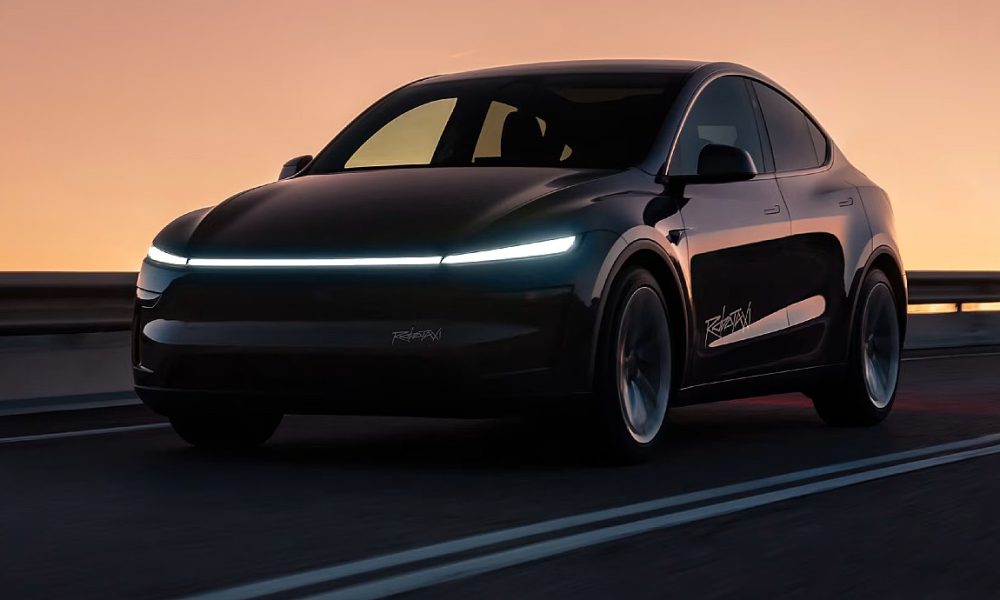
Tesla's ambitious Robotaxi service in Austin has shattered a critical barrier, marking a monumental new accomplishment for the program that has been quietly maturing since its launch last summer. After months of cautious, safety-first operations with a limited geofence and a restrained fleet, the company has now removed a major guardrail, signaling a decisive shift from testing to scalable deployment. This breakthrough, confirmed by recent operational data, demonstrates that the system is not just functioning, but evolving faster than many analysts anticipated.
From Geofence to Full Autonomy: Removing the Safety Net
The initial rollout of Tesla’s Robotaxi service in Austin was notably conservative. The company deliberately kept the geofence small, the fleet size minimal, and the operational parameters tight to prioritize safety over speed. However, Tesla has now begun removing those self-imposed guardrails. The most significant change involves expanding the service area beyond the original downtown core, allowing vehicles to navigate complex suburban intersections and arterial roads without human intervention. This expansion was previously cited by Tesla as a primary bottleneck, but the system has now proven it can handle the increased variability. The removal of these restrictions is not merely incremental; it represents a fundamental shift in the program’s operational philosophy, moving from a controlled experiment to a genuine public service.
Data-Driven Validation and Fleet Scaling
This accomplishment is rooted in rigorous data collection. Tesla has been using its fleet of thousands of vehicles in Austin to train its neural networks on edge cases, from jaywalking pedestrians to unpredictable construction zones. The recent milestone is directly tied to a reduction in disengagement rates—moments where the system requires human takeover—which have dropped by a significant margin over the past three months. With this validation, Tesla is now actively scaling the Robotaxi fleet in Austin, adding more Model 3 and Model Y units equipped with the latest Hardware 4.0 suite. This scaling is crucial; a Robotaxi service with only a handful of cars is a novelty, but a fleet capable of providing reliable, on-demand rides across a broad area is a genuine urban transportation alternative.
What This Means for the Broader EV Landscape
The implications extend far beyond Austin city limits. This achievement serves as a powerful proof-of-concept for Tesla’s vision of a fully autonomous ride-hailing network. For competitors in the EV and autonomous vehicle space, it raises the stakes. While other players like Waymo have operated in limited geographies for years, Tesla’s approach—leveraging a massive consumer fleet for data collection and using a vision-only system—offers a fundamentally different, and potentially more scalable, path to profitability. The success in Austin provides a template for rapid deployment in other cities, provided regulatory approval is secured. It validates Tesla’s thesis that a camera-based system, without expensive LiDAR, can achieve the reliability required for commercial service.
For Tesla owners and investors, this development is a watershed moment. Owners who purchased Full Self-Driving (FSD) capability now have a clearer line of sight to the promised value of their investment, as the technology transitions from a driver-assist feature to a revenue-generating asset. For investors, the removal of these guardrails in Austin directly supports the thesis that Tesla is not merely an automaker, but a high-margin technology and mobility platform. The successful expansion of the Robotaxi service de-risks a key pillar of Tesla’s future valuation, suggesting that the long-awaited autonomous revenue stream is finally beginning to flow.