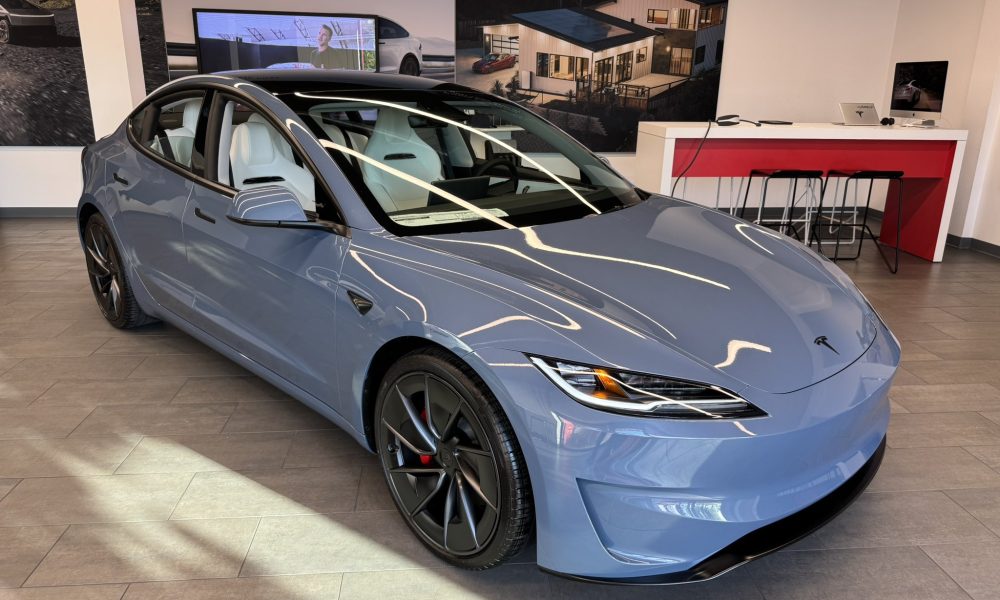
In a strategic move to broaden its market dominance, Tesla has quietly introduced a compelling new variant to its best-selling Model Y lineup. The new Model Y Standard All-Wheel Drive (AWD) has appeared on the company's US configurator, priced at $41,990. This positions the model as a powerful bridge between the entry-level Rear-Wheel Drive (RWD) version and the higher-performance Long Range, offering a significant performance upgrade for a minimal price premium.
A Strategic Middle Ground for Performance Seekers
The new variant directly targets buyers who prioritize acceleration and all-weather capability but may not need—or want to pay for—the extended range and premium audio of the Long Range trim. For just $2,000 more than the $39,990 base RWD Model Y, customers gain a dual-motor AWD system. This translates to a substantial performance leap: Tesla estimates a 0-60 mph time of 5.0 seconds, a full 1.5 seconds quicker than the base model. This move effectively creates a new performance tier, making AWD accessible to a much wider audience without forcing them into the $47,990 Long Range configuration.
Specifications and Strategic Omissions
While delivering superior acceleration, the Standard AWD makes calculated trade-offs. Its estimated EPA range of 260 miles sits neatly between the RWD's 260 miles and the Long Range's 310 miles, though real-world AWD efficiency can vary. Crucially, Tesla confirms this model does not include the "premium" interior features bundled with the Long Range, such as the immersive audio system and rear LCD screen. This careful segmentation allows Tesla to offer a lower price point by unbundling features, letting customers choose between raw performance and luxury amenities.
This launch is a classic Tesla maneuver, leveraging its streamlined manufacturing and vertical integration to create nuanced variants that address specific consumer desires. By inserting a fifth model into the lineup, the company applies pressure on competitors whose AWD offerings often come with a much higher cost penalty. It also serves as a savvy tool to manage demand across the Model Y production line, potentially steering more buyers toward a slightly higher-margin vehicle than the absolute base model without significant additional cost to Tesla.
For Tesla owners and investors, this move signals a continued focus on aggressive, software-driven product strategy. Existing Model Y RWD owners may feel a slight pang of "acceleration envy," while prospective buyers gain a more compelling reason to enter the Tesla ecosystem. Financially, the variant could improve overall average selling prices and margins by upselling customers from the base model. It also demonstrates Tesla's confidence in its battery technology and cost structure, able to offer a dual-motor system at an unprecedented low premium. As the EV price war intensifies, this calculated expansion of the Model Y family proves Tesla remains on the offensive, forcing rivals to reconsider their own pricing and packaging strategies in the world's most critical EV market.