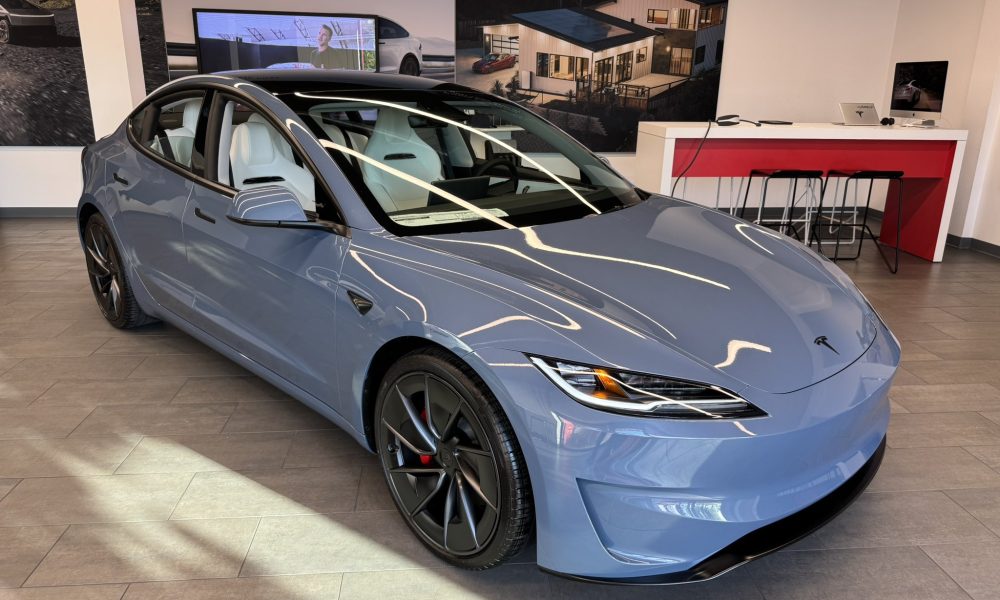
In a harrowing real-world test far beyond routine commuting, Tesla's Full Self-Driving (FSD) system is credited with saving a life. A Georgia man, suffering a sudden and massive heart attack while alone in his Tesla Model Y, was able to engage the advanced driver-assistance system, which then safely navigated him to the nearest hospital. This extraordinary incident shifts the public conversation around autonomous driving from theoretical convenience to tangible, life-preserving utility, showcasing a potential future where electric vehicles are active partners in passenger safety.
A Real-Time Medical Emergency Meets Autonomous Tech
The driver, whose identity remains private, recognized the severe symptoms of a heart attack while on the road. With his ability to operate the vehicle rapidly deteriorating, he activated Tesla's Full Self-Driving (FSD Beta) system. The software took over steering, braking, and acceleration, interpreting complex traffic signals, lane changes, and intersections. This allowed the driver to focus entirely on his deteriorating health, contacting emergency services and conserving vital energy while the Model Y handled the precise driving tasks that would have been perilous, if not impossible, for him to perform manually in his condition.
Beyond Convenience: The Safety Paradigm of Assisted Driving
While debates often center on FSD's technical progression toward full autonomy, this event highlights a critical intermediate value: driver-assistance as a critical safety redundancy. Tesla's system is designed to follow traffic laws and navigate to a selected destination, which in this case was the fastest route to emergency care. It performed without hesitation or error under immense pressure—a scenario no standard test can replicate. This demonstrates that advanced EV technology can act as a crucial fail-safe, not just for preventing accidents caused by human error, but for managing catastrophic in-vehicle medical events where the human driver becomes incapacitated.
The implications for the broader automotive and tech industries are profound. This incident provides a powerful, human-centric narrative for the development of autonomous systems, emphasizing their role as guardian technologies. It also underscores the importance of robust, reliable sensor suites and software that can perform in worst-case scenarios. For regulators and the public, it frames the technology not as a replacement for human drivers, but as a potentially life-saving co-pilot capable of executing a safe stop or emergency diversion when the primary operator cannot.
What This Means for Tesla Owners and Investors
For current and prospective Tesla owners, this story validates the significant investment in FSD capability, framing it as more than a luxury—it's an advanced safety feature with demonstrable, real-world impact. It reinforces the value of Tesla's integrated approach, where over-the-air software updates continuously refine a system that can respond to edge-case emergencies. For investors, the incident is a potent case study in product differentiation that transcends typical market metrics. It strengthens Tesla's brand as a safety and technology leader, potentially influencing consumer choice and providing a compelling point of contrast against competitors who lack such a mature, widely deployed assisted-driving system. As the technology continues to evolve, its role as a potential lifesaver may become one of its most powerful and humanizing features.