Tesla owners in the United States have gained a meaningful new charging option, with Ionna confirming that its network now supports Plug & Charge for Tesla vehicles. After a one-time activation inside the Ionna smartphone app, drivers can simply pull up, plug in, and walk away — the session authenticates and bills automatically, with no cards, screens, or manual payment steps required. It is a small convenience on paper, but a significant one for anyone who has grown accustomed to the seamless experience of Tesla's own Supercharger network.
How Plug & Charge Works for Tesla Drivers
The setup is deliberately simple. Tesla owners download the Ionna app, link their vehicle and payment details, and enable the Plug & Charge feature once. From that point on, the vehicle and the charger handle the handshake on their own. The ISO 15118 standard underpinning the technology allows the car to identify itself to the station and authorize payment securely, meaning the charging session begins within seconds of the connector locking into place. Drivers can monitor progress remotely through the app, but nothing else is demanded of them at the stall.
The rollout matters because Tesla's connector has become the de facto standard in North America. Ionna — the charging joint venture backed by eight major automakers, including BMW, GM, Honda, Hyundai, Kia, Mercedes-Benz, Stellantis, and Toyota — has been building out its network with native NACS connectors, and this software update closes the loop for Tesla drivers who previously had to authenticate sessions manually or rely on adapters at rival networks. In effect, Ionna is signaling that Tesla vehicles are first-class citizens on its stations, not an afterthought.
A Charging Landscape That Keeps Converging
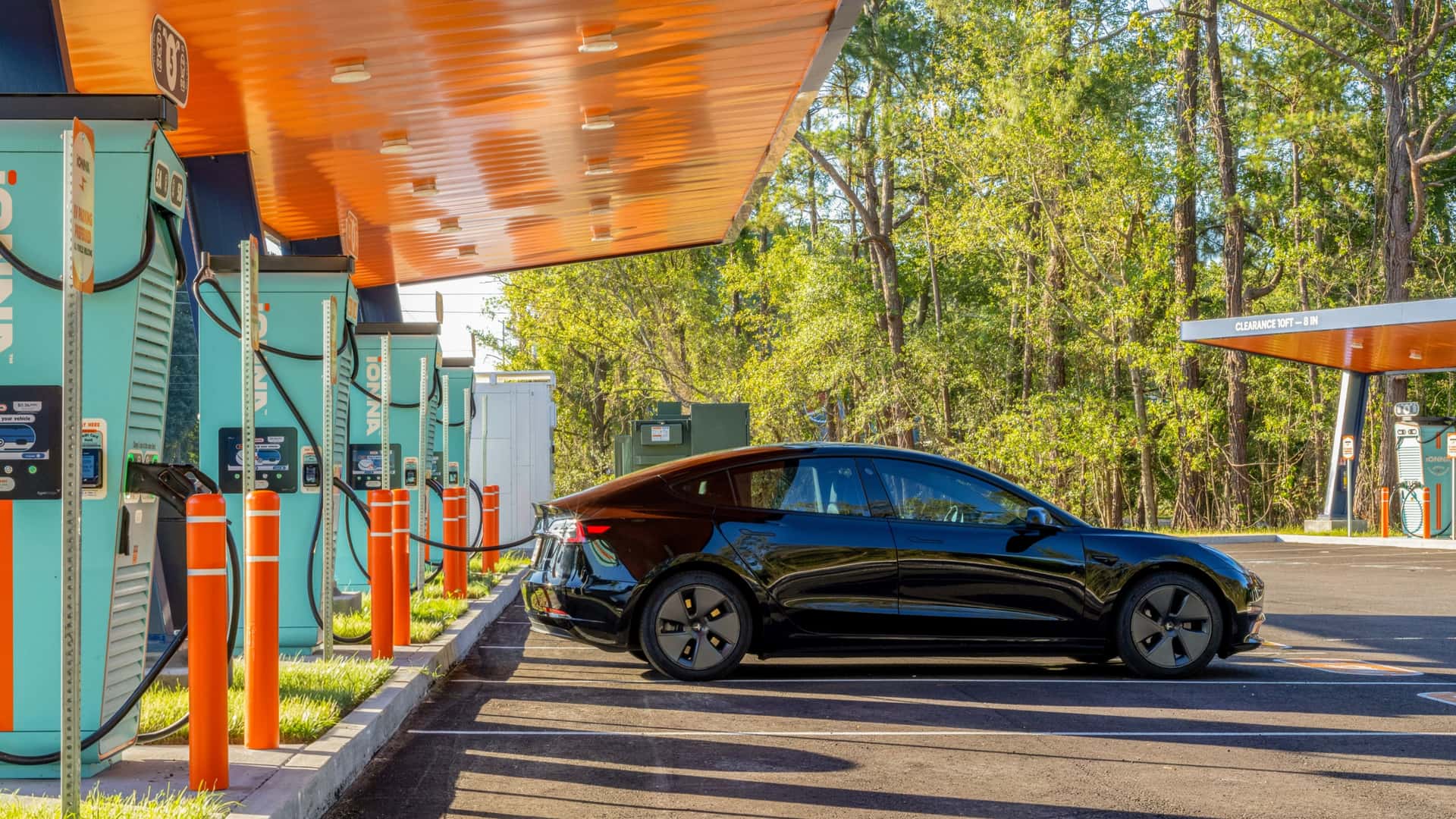
The bigger story here is the steady erosion of the walled-garden model in EV charging. For years, Tesla's Supercharger network was a proprietary moat; today it is increasingly open to other brands, while third-party networks like Ionna are racing to match the plug-and-go simplicity that made Superchargers the benchmark. Ionna has committed to deploying thousands of stalls across the U.S. under its "Rechargeries" branding, featuring canopies, amenities, and a reliability-first design philosophy. Automatic authentication for Tesla is the kind of detail that turns a network from a backup option into a genuine daily habit.
For Tesla, the calculus is straightforward. Every Ionna station that treats a Tesla like a native vehicle reduces range anxiety for owners and weakens the argument that Tesla's charging advantage is unique. That is a trade Tesla has already accepted by opening its network to rivals — the company now earns revenue from other brands while competing on the overall ownership experience rather than charger access alone. Ionna, for its part, gains access to the largest installed base of NACS-equipped EVs in the country.
What It Means for Owners and Investors
For Tesla owners, the practical takeaway is more choice with less friction: road trips can now route through Ionna sites without the mild dread of app fumbling in bad weather, and the experience closely mirrors Supercharging. For investors, the development is a reminder that the EV charging market is maturing into an interoperability story. Networks that deliver seamless, standards-based authentication will win utilization; those that don't will be bypassed. Tesla's share of the charging conversation may dilute, but its vehicles become more usable on more networks — a trade-off that favors the broader electric vehicle ecosystem and, arguably, Tesla's core business of selling cars.