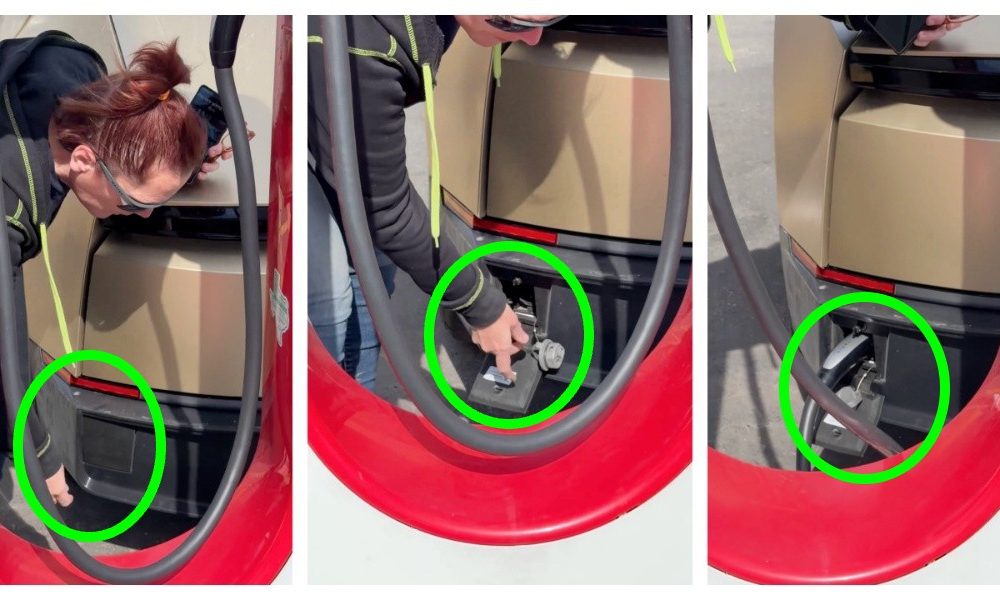
A new video circulating on social media has offered the clearest look yet at a critical, and surprisingly conventional, component of Tesla's autonomous future: the Tesla Cybercab's charging port. Captured at a Tesla facility, the brief clip shows an employee plugging the robotaxi prototype into a Tesla Supercharger, revealing a charging solution that is both pragmatic and a significant departure from the sleek, automated systems many had envisioned for a fully driverless vehicle.
A Manual Door in an Autonomous World
The most striking detail in the footage is the charging port's design. Located on the rear passenger side of the vehicle, it is concealed behind a manual door with a physical latch. This design choice is immediately provocative. For a vehicle designed to operate without a human driver, the need for a person to manually open a flap and insert a plug presents a clear operational paradox. It suggests that, at least for the initial deployment phase, Tesla envisions a human-in-the-loop process for refueling its robotaxi fleet, likely handled by service staff at dedicated hubs rather than relying on complex and expensive robotic charging arms.
Leveraging the Supercharger Network
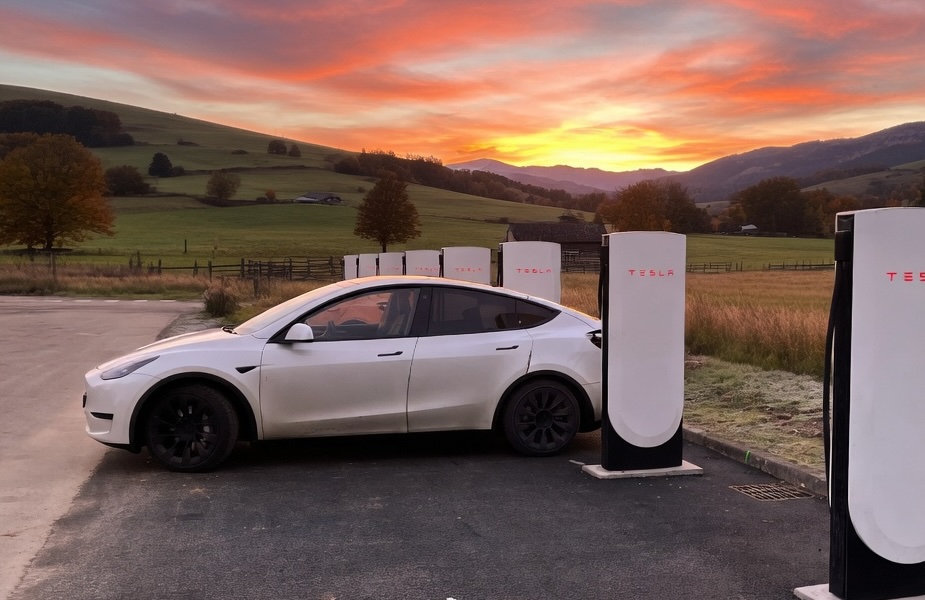
Equally significant is the use of a standard Tesla Supercharger connector. This move is a masterstroke in leveraging existing infrastructure. By designing the Cybercab to use the world's most reliable and widespread fast-charging network, Tesla avoids the monumental cost and complexity of building a separate charging ecosystem for its robotaxis. It also provides immense flexibility; a Cybercab could, in theory, be charged at any of Tesla's tens of thousands of global stalls, not just at specialized depots. This interoperability is a massive strategic advantage over competitors who might develop siloed, proprietary systems.
The choice underscores a philosophy of practical iteration over futuristic over-engineering. While automated conductive charging or wireless induction systems are in development by various companies, they remain less proven and far less ubiquitous. Tesla's approach prioritizes getting a functional fleet on the road quickly, using battle-tested technology. The manual port is a temporary bridge, ensuring the vehicles can be charged reliably today while the company potentially develops more automated solutions for the long term.
Implications for the Robotaxi Ecosystem and Tesla's Bottom Line
For Tesla investors and future users, this glimpse is highly revealing. It indicates that the early Cybercab rollout will be tightly managed, with vehicles returning to controlled service centers for charging and maintenance, maximizing uptime and simplifying logistics. Financially, utilizing the Supercharger network turns a massive capital expense into a potential revenue stream, as the robotaxi division would presumably pay to use the infrastructure. For owners, it signals that the dream of a car that drives and refuels itself entirely independently is a later-stage evolution; the first generation will be a revolutionary ride-hail vehicle, but one still supported by human touchpoints behind the scenes.