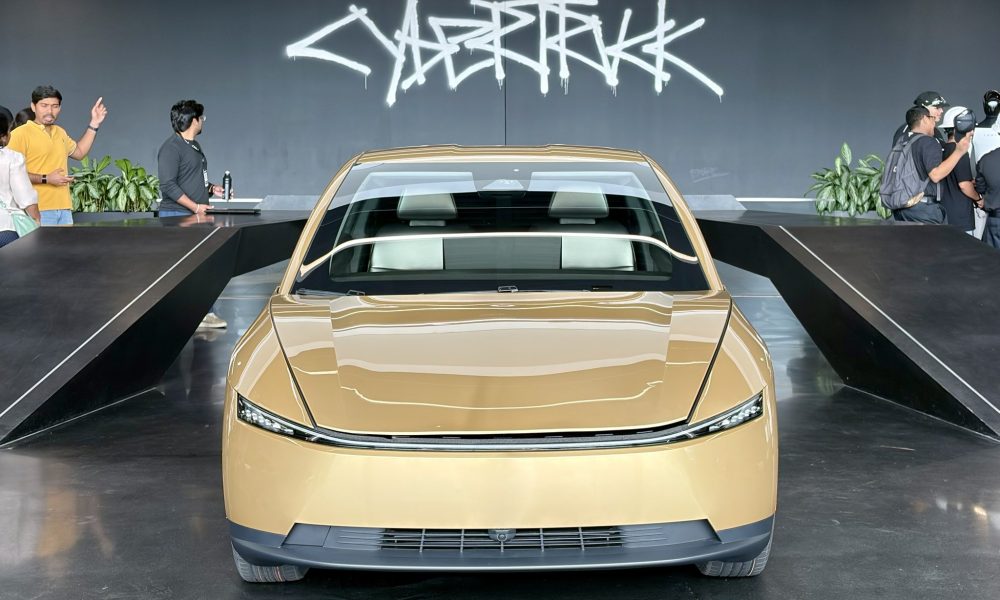
Tesla has officially kicked off mass production of its groundbreaking Cybercab robotaxi at Giga Texas, and the first units rolling off the line feature a striking transformation that’s turning heads across the EV community. The autonomous vehicle, long teased as a futuristic pod devoid of traditional controls, has emerged with a design shift that no one saw coming. Early images from the factory floor reveal a more aggressive, angular front fascia and a restructured cabin that prioritizes both passenger comfort and manufacturing efficiency. This isn't just a minor tweak; it's a fundamental reimagining of what a purpose-built robotaxi can look like in 2025.
A Design Revolution for Mass Production
The most visible change is the Cybercab’s new front end, which now incorporates active aerodynamic elements and a redesigned light bar that integrates seamlessly with the vehicle’s structural exoskeleton. Sources close to the production line confirm that the shift was driven by real-world testing data and the need to simplify assembly at scale. Gone are some of the more experimental, complex curves seen in the prototype; in their place are sharper, stamped-metal panels that reduce production time per unit by an estimated 15%. This pragmatic approach ensures that the Cybercab can be built alongside the Cybertruck on the same advanced manufacturing lines, a strategic move that leverages existing tooling and supply chains at Giga Texas.
Inside the New Cybercab: A Passenger-First Cockpit
Stepping inside, the interior has undergone a radical simplification that underscores Tesla’s vision for a fully autonomous fleet. The most dramatic change is the removal of the traditional yoke steering wheel and pedals, replaced by a sweeping, curved display that runs the entire width of the dashboard. The seating layout has been reconfigured to a 2+2 configuration with rear-hinged doors, offering unprecedented legroom and a lounge-like atmosphere. Tesla engineers have also integrated a new bioweapon defense mode HEPA filter system as standard, recognizing that shared mobility vehicles require the highest air quality standards. The cabin is devoid of any driver controls, reinforcing the message that this is a vehicle designed exclusively for autonomous operation from day one.
Implications for Tesla Owners and Investors
For current Tesla owners, the Cybercab’s production debut signals a pivotal shift in the company’s product strategy. The robotaxi is not a consumer vehicle for sale to the public; instead, it represents a new revenue stream that could eventually allow owners to earn passive income by adding their personal Teslas to the network. Investors should note that the cost of manufacturing has been dramatically reduced through these design changes, with Tesla targeting a sub-$25,000 build cost per unit. This aggressive pricing, combined with the vehicle’s ability to operate without a driver, positions the Cybercab to disrupt the $1 trillion global transportation market. The next 12 months will be critical as Tesla scales production from hundreds to thousands of units per week, testing both the vehicle’s reliability and the regulatory framework for autonomous fleets.