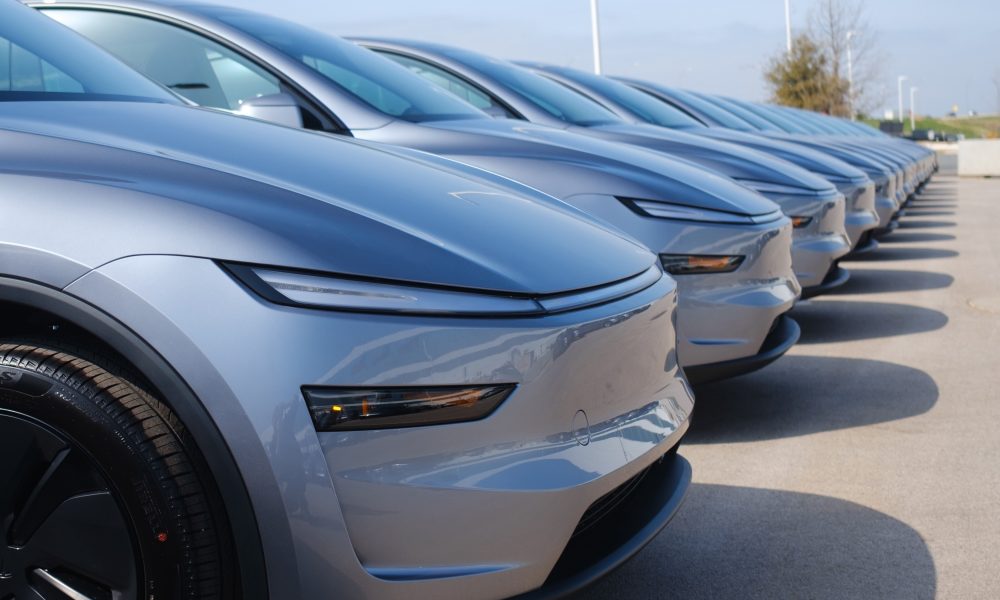
In a move that has sent ripples through the automotive and tech industries, Tesla has initiated a comprehensive and enigmatic rebranding effort, signaling a profound shift beyond its identity as a car company. The removal of the iconic Tesla Motors from its social media handles, the subtle but significant change to simply @Tesla, and the quiet disappearance of the "Motors" from its official website mark the most visible steps in a larger, strategic pivot. This isn't merely a cosmetic update; it's a declaration of intent, reframing the company's core mission from building electric vehicles to becoming the world's leading sustainable energy and AI ecosystem.
Decoding the Strategic Pivot
The rebranding is a direct reflection of the company's evolving portfolio, which has long outgrown the "Motors" moniker. Tesla's business is now a multi-faceted operation encompassing energy generation and storage through Solar Roof and Megapacks, a burgeoning artificial intelligence division focused on Full Self-Driving and the Optimus robot, and a supercomputing infrastructure to support it all. The name change formally acknowledges this reality, positioning the electric vehicle as a critical, but single, component within a much larger technological matrix aimed at accelerating the world's transition to sustainable energy.
Market Context and Competitive Positioning
This evolution comes at a pivotal moment. The global EV market is becoming increasingly crowded, with legacy automakers and new entrants vying for market share. By shedding the "Motors" label, Tesla strategically distances itself from the pack, asserting its unique identity as a technology and energy company that also makes cars. It frames the competition not as Ford or GM, but as energy giants and AI leaders. This repositioning is designed to attract a different class of investor and talent, one that values disruptive technology platforms over traditional automotive manufacturing metrics.
The rebrand also serves to unify Tesla's narrative. For years, the company's energy business operated somewhat in the shadow of its automotive success. Now, the energy storage, solar, and AI divisions are elevated to equal footing under the singular, powerful Tesla brand. This creates a cohesive story for stakeholders: every Megapack deployed, every software update released, and every vehicle sold contributes to the same overarching mission. It’s a masterstroke in corporate storytelling that simplifies a complex enterprise into a clear, future-focused vision.
Implications for Owners and the Investment Thesis
For Tesla owners, the rebrand reinforces that their vehicle is a connected node in a dynamic, software-updatable network, not a static product. It underscores the increasing value of the Full Self-Driving software suite and the potential for their car to become an autonomous asset. For investors, the implications are even more significant. The move signals that Tesla's long-term valuation should be assessed through the lens of a high-margin software, energy, and AI company, rather than a capital-intensive automaker. This could justify a fundamentally different—and potentially higher—price-to-earnings multiple, as the market begins to price in the sum of Tesla's diverse and disruptive parts.