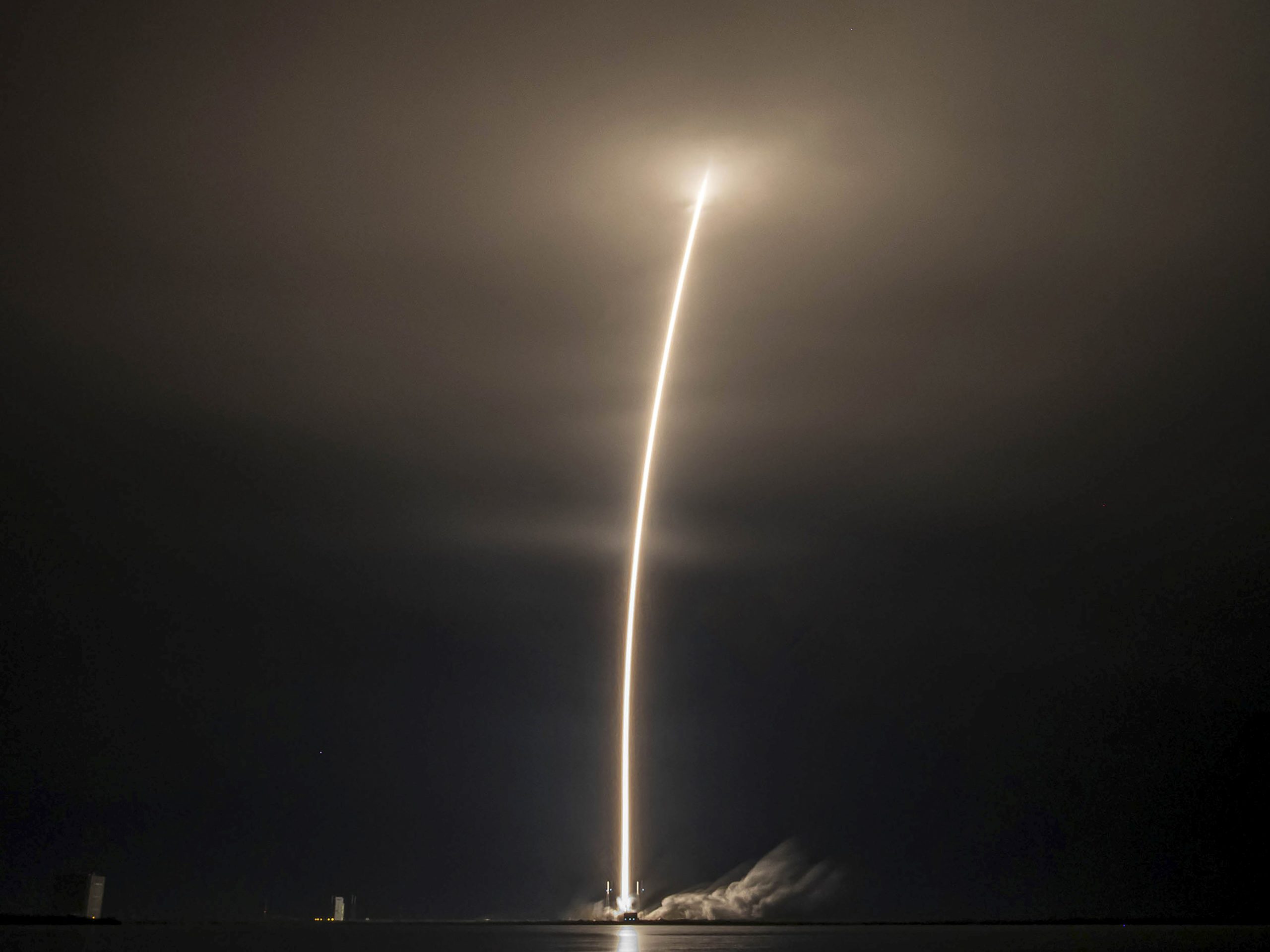
In a rare operational hiccup for the typically flawless Falcon 9 program, SpaceX has announced a stand-down of its launch manifest following an anomaly during a recent mission. The incident, involving a failure of the rocket's upper stage to perform a planned deorbit burn, has sent ripples through the aerospace community and prompted an immediate internal investigation. This pause underscores the inherent complexities of spaceflight and highlights the rigorous safety protocols that govern even the most experienced launch providers.
The Anomaly: A Successful Launch with a Post-Mission Glitch
The mission in question launched successfully from Vandenberg Space Force Base in California, delivering its payload—reportedly a batch of Starlink satellites—into the intended orbit. The primary mission was a success. However, after satellite deployment, the Falcon 9 upper-stage rocket failed to execute its scheduled deorbit burn. This maneuver is a critical final step designed to ensure the spent stage re-enters Earth's atmosphere over a remote ocean area, adhering to space debris mitigation standards. The failure leaves the upper stage in an uncontrolled, decaying orbit, posing no immediate threat but violating best practices for space traffic management.
Implications for SpaceX and the Broader Launch Industry
SpaceX's response was swift and transparent, a hallmark of its operational culture. The company has delayed upcoming Falcon 9 launches across multiple pads, including high-profile missions, to prioritize a thorough review of the failure. This decision, while disruptive to a packed schedule, demonstrates a commitment to flight reliability that has become a cornerstone of its reputation. The anomaly serves as a stark reminder that rocket science remains exceptionally difficult, even for a company that achieved a record 96 successful launches in 2023. The investigation will likely focus on the upper stage's Merlin Vacuum engine ignition system or its avionics, with findings influencing future flight procedures and hardware.
For Tesla observers, the event provides a fascinating window into the engineering philosophy shared across Elon Musk's ventures. The same principles of rapid iteration, data-driven problem-solving, and a non-hierarchical approach to fault resolution that propel Tesla's EV and software advancements are deeply embedded in SpaceX's culture. This incident is not a sign of systemic failure but a testament to the proactive, safety-first engineering discipline required when operating at the cutting edge of technology. The pause is a strategic investment in long-term reliability over short-term cadence.
What This Means for Tesla Owners and Investors
While SpaceX and Tesla are separate entities, their technological and leadership synergies mean developments in one can offer insights into the other. For Tesla owners and enthusiasts, this event reinforces the overarching corporate ethos of prioritizing safety and systemic integrity over unbridled speed. It's a real-world example of the complex engineering challenges inherent in pioneering sectors, whether launching rockets or scaling full self-driving software. For investors, the situation highlights the disciplined risk management that underpins these ambitious companies. A temporary slowdown to address a root cause is preferable to ignoring a potential pattern, a philosophy that directly translates to Tesla's methodical approach to vehicle recalls, software updates, and manufacturing quality. The market's reaction to SpaceX's delay will be minimal, but the long-term reaffirmation of operational rigor is a positive signal for the stability of Musk's broader technological ecosystem.