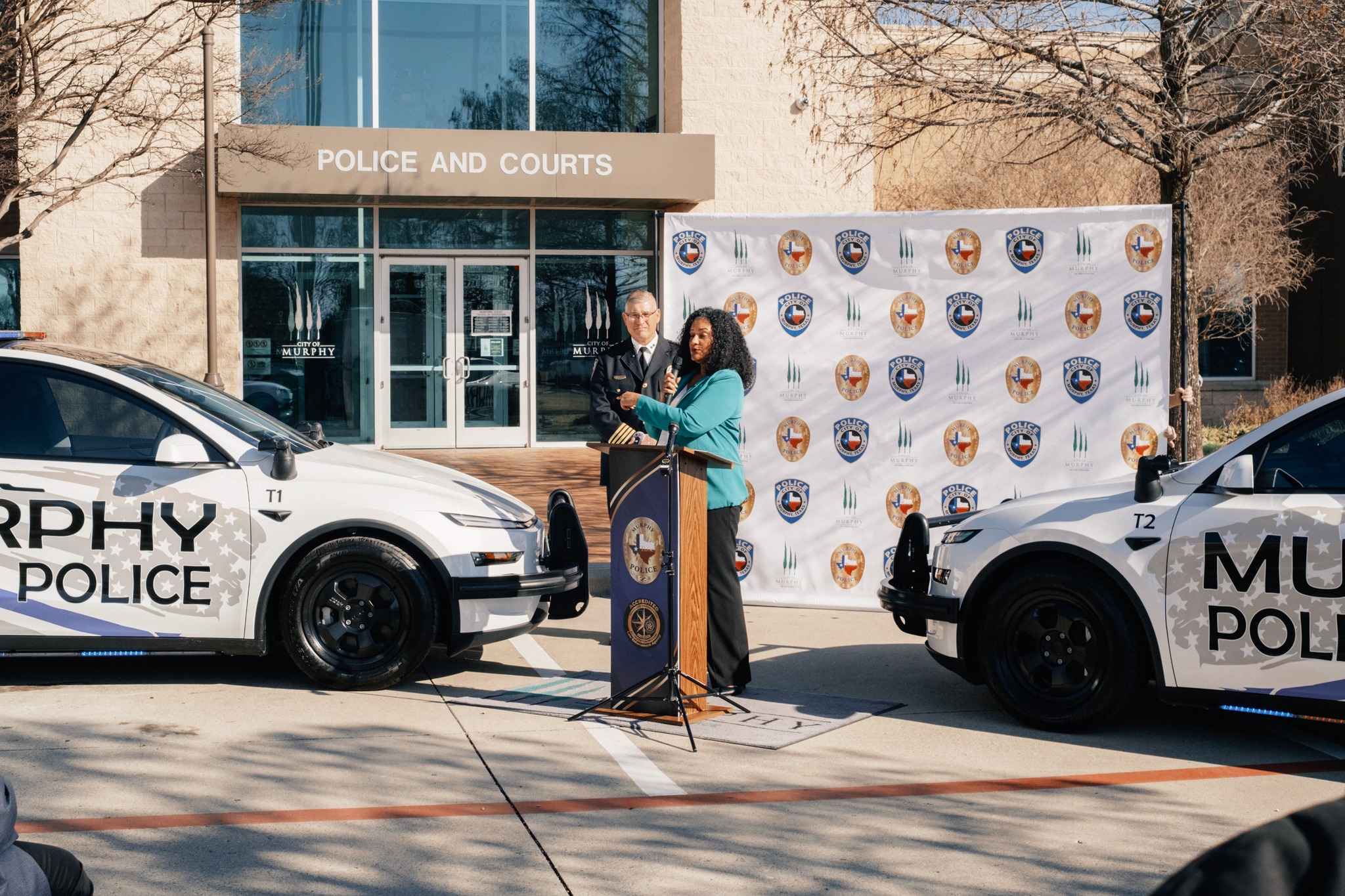
The image of a police cruiser is undergoing a radical transformation, moving from the rumble of a V8 to the near-silent hum of an electric motor. Leading this charge into a new era of law enforcement is the Murphy Police Department in Texas, which has officially deployed two 2026 Tesla Model Y electric SUVs as marked patrol vehicles. This strategic acquisition, facilitated by the specialized upfitter UP.FIT, signals a significant shift in how municipalities view the operational and economic calculus of fleet management, with Tesla firmly in the driver's seat.
UP.FIT's Transformation: From Civilian SUV to Patrol Ready
The transition from a consumer vehicle to a fully equipped police car requires extensive modification, a task handled by UP.FIT. The company outfitted the 2026 Model Ys with the full suite of necessary law enforcement equipment, including emergency lighting systems, sirens, partition cages, specialized console computers, and distinctive police livery. This professional upfitting is critical, ensuring the vehicles meet the rigorous demands of patrol duty while maintaining the integrity and safety features of the Tesla platform. The partnership between police departments and upfitters like UP.FIT is essential to making EVs a viable and reliable tool for first responders.
The Driving Force: Cutting Costs and Carbon Footprints
The Murphy Police Department's decision was not merely about embracing new technology; it was a fiscally responsible strategy. The primary motivation, as highlighted in the announcement, is to cut operational costs. Compared to traditional internal combustion engine (ICE) patrol vehicles, the Tesla Model Y offers substantially lower fuel (charging) costs, reduced maintenance expenses due to fewer moving parts, and decreased brake wear thanks to regenerative braking. For a municipal budget, these savings compound over the vehicle's lifespan, freeing up resources for other community needs. Furthermore, the move aligns with broader sustainability goals, reducing the department's carbon emissions and operational noise pollution.
This adoption is part of a growing, nationwide trend of police departments testing and integrating electric vehicles into their fleets. The Tesla Model Y, with its high-performance acceleration, low center of gravity, and spacious interior, presents a compelling package for police work. Its instant torque can be advantageous in certain response scenarios, while its advanced software and connectivity offer potential integration with future policing technologies. The Murphy deployment acts as a high-profile case study for other agencies watching closely.
Implications for Tesla and the EV Market
For Tesla and its investors, the police fleet market represents a lucrative and strategically important new vertical. Successful deployments like Murphy's serve as powerful validation of the vehicle's durability, performance, and total cost of ownership. A positive long-term report from the department could accelerate adoption by other cities, opening a steady stream of bulk fleet sales. This move also pressures traditional police vehicle manufacturers to accelerate their own EV offerings, further legitimizing electric propulsion in all segments of the automotive market.
For current and prospective Tesla owners, this news reinforces the brand's expanding reputation for utility and robustness beyond consumer use. It demonstrates confidence in the platform's reliability under demanding conditions. As more public agencies adopt EVs, the charging infrastructure is likely to see accelerated expansion and standardization, benefiting all electric vehicle drivers. Ultimately, the sight of a Tesla Model Y in police livery is more than a novelty; it's a tangible indicator of the electric vehicle's transition from alternative choice to mainstream, multi-role workhorse.


