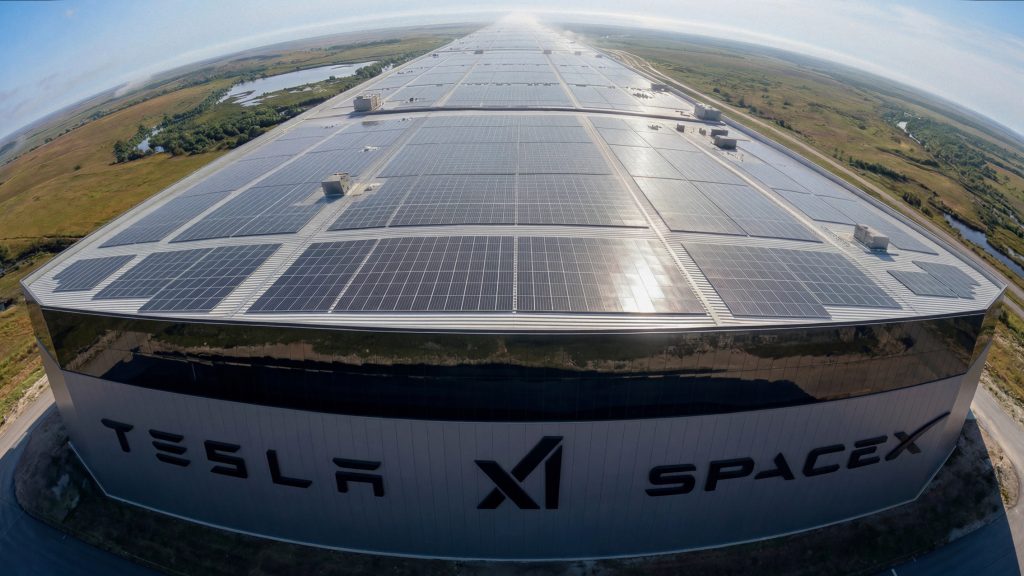
In a move that could reshape the semiconductor landscape for the automotive and aerospace industries, Intel has officially joined the ambitious Terafab project. This high-stakes manufacturing initiative, originally spearheaded by Elon Musk's Tesla, SpaceX, and xAI, gains a formidable and established partner with decades of chipmaking expertise. The collaboration signals a strategic pivot from design-centric ambition to production-scale reality, aiming to secure a domestic and vertically integrated supply of the advanced silicon that powers everything from autonomous vehicles to supercomputers.
The Terafab Vision: From Concept to Concrete
The Terafab project, until now a bold proposal from three of Musk's most disruptive companies, aims to establish a large-scale, domestic semiconductor fabrication facility. Its primary goal is to mitigate the supply chain vulnerabilities starkly exposed in recent years and to tailor chip production specifically for the unique needs of artificial intelligence, high-performance computing, and next-generation transportation. With Tesla's insatiable need for Dojo and Full Self-Driving (FSD) processors, SpaceX's demands for radiation-hardened and ultra-reliable components, and xAI's race for AI-optimized hardware, the consortium requires a dedicated and agile source of silicon. Intel's entry provides the proven manufacturing muscle to turn this vision into a functioning fab.
Intel's Strategic Gambit in the Foundry Wars
For Intel, this partnership is a masterstroke in its aggressive IDM 2.0 strategy to become a major player in the contract chip manufacturing (foundry) business. Aligning with Tesla, SpaceX, and xAI instantly provides a portfolio of anchor clients with massive, predictable, and growing demand for cutting-edge chips. It allows Intel to co-develop and produce specialized semiconductors, moving beyond commodity CPUs. This deal is a direct challenge to foundry leaders like TSMC and Samsung, proving Intel can attract the industry's most innovative and demanding customers. The collaboration will likely accelerate Intel's advanced packaging and process node roadmaps, as it works to meet the consortium's stringent performance and power efficiency targets.
The implications of a successful Terafab facility extend far beyond the partner companies. It represents a significant step toward U.S. semiconductor sovereignty, aligning with the objectives of the CHIPS and Science Act. By combining Intel's fabrication expertise with the vertically integrated design ethos of Musk's companies, the project could pioneer new efficiencies in chip development cycles, from architecture to finished wafer. This tight feedback loop is crucial for iterating on AI hardware, where software and silicon development are increasingly intertwined. The facility could eventually serve external customers, potentially becoming a powerhouse for automotive-grade, AI-centric semiconductors.
For Tesla owners and investors, this partnership de-risks one of the company's most critical strategic paths. It ensures a dedicated, scaled supply for the next-generation of FSD and AI training chips, reducing reliance on external suppliers and potentially lowering costs over the long term. This vertical integration mirrors Tesla's approach to batteries and drives its industry-leading margins. Investors should view this as a strengthening of Tesla's "moat," securing its autonomy and technological pace in the EV and robotics sectors. For the broader market, it underscores that the future of transportation and AI is not just about software algorithms, but about who controls the physical silicon that makes those algorithms possible.