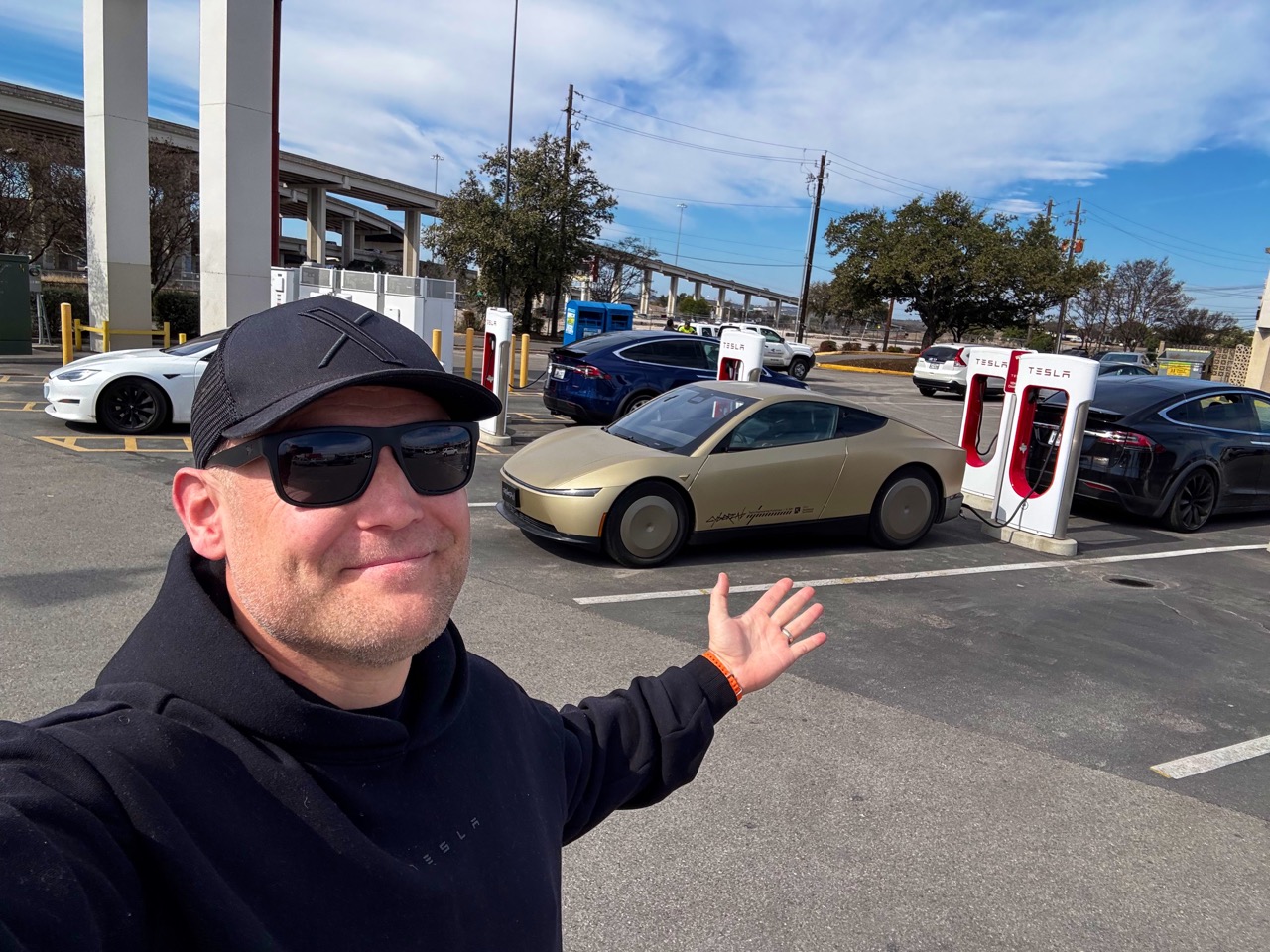
The veil over Tesla's autonomous future has been pulled back a little further. For the first time, a clear photograph has emerged showing a Tesla Cybercab prototype plugged into a Supercharger, providing the most tangible evidence yet that the company's robotaxi ambitions are accelerating from the drawing board to real-world validation. This single image, captured not on a controlled test track but at a public charging station, signals a pivotal shift from conceptual design to functional testing, offering a rare glimpse into the next chapter of mobility.
A Design Built for Function, Not Convention
The leaked photo confirms the Cybercab's radical departure from traditional automotive design. The vehicle exhibits a striking, angular silhouette that appears to draw clear inspiration from the Cybertruck's geometric language, suggesting a shared design ethos for Tesla's next-generation products. More than an aesthetic choice, this form is likely dictated by function. The absence of traditional driver controls, a central pillar of the dedicated robotaxi, allows for a reimagined interior focused solely on passenger experience. The compact footprint hints at efficiency for dense urban environments, while the visible sensor suite—expected to be powered by Tesla's latest Hardware 5 computer—underscores its core mission: navigating city streets without human intervention.
Charging Logistics and the Autonomous Fleet Reality
Seeing the Cybercab at a Supercharger is arguably as significant as seeing it on the road. It confirms Tesla is actively solving the critical logistical puzzle of autonomous fleet management. For a profitable robotaxi network, vehicles must recharge themselves between fares with minimal downtime. This image implies Tesla is testing the full integration of its autonomous software stack with the Supercharger network, a process that involves precise navigation into a stall, automated connection, and likely communication with Tesla's central operational software. The use of the existing V3 or V4 Supercharger infrastructure suggests Tesla plans to leverage its formidable charging advantage to keep its future fleet operational and revenue-generating around the clock.
The timing of this leak is no accident, coming on the heels of Elon Musk's announcement of a dedicated Tesla Robotaxi unveiling event on August 8, 2024. This real-world sighting serves as a powerful piece of validation, demonstrating tangible progress to investors and the public ahead of the showcase. It moves the conversation from speculative promises to observable prototypes, applying pressure on competitors in the autonomous ride-hailing space. The photo also provides crucial context for Tesla's recent strategic shifts, including the reported pivot to a more affordable next-generation EV platform that may share key components with the robotaxi, highlighting a unified vision for scalable, autonomous transport.
For Tesla owners and investors, this development carries profound implications. The successful deployment of the Cybercab network would unlock a massive new high-margin revenue stream, fundamentally altering Tesla's business model from automotive manufacturer to mobility service provider. For owners, it heralds the arrival of the fully autonomous technology promised for years, with potential future options to add their own vehicles to a shared Tesla network. The visible progress also reinforces the strategic value of Tesla's vertically integrated ecosystem—from the vehicle and AI software to the global charging infrastructure—a moat that competitors will find exceedingly difficult to cross as the race for autonomy enters its next critical phase.