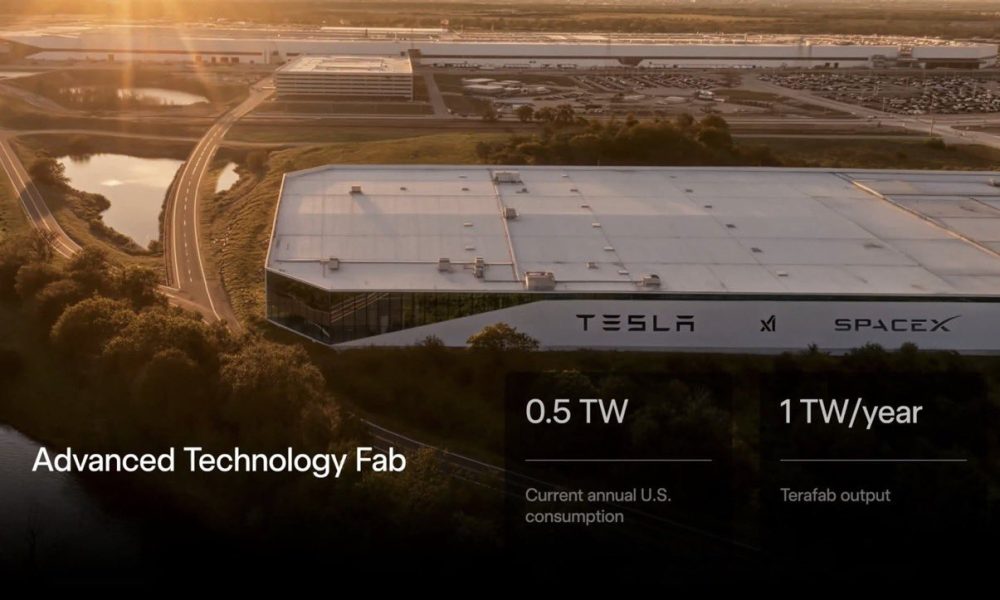
In a move that could reshape the semiconductor landscape for the electric vehicle industry, Elon Musk's ambitious Terafab project has secured a cornerstone partnership. First revealed by the Tesla CEO in March, the planned joint-venture semiconductor fabrication facility at Giga Texas is rapidly moving from concept to concrete reality, signaling a massive vertical integration play aimed at securing the silicon heart of future autonomy and electrification.
The Terafab Vision: Silicon Sovereignty in Austin
Terafab represents a bold strategic gambit to bring critical semiconductor production in-house. Planned for the North Campus of Giga Texas, the facility is envisioned as a massive complex dedicated to designing and fabricating the specialized chips that power everything from Tesla's Full Self-Driving (FSD) computer and Dojo supercomputer to future vehicle platforms. This initiative directly addresses the supply chain vulnerabilities exposed during the global chip shortage, aiming to give Tesla unprecedented control over its most crucial component. By colocating chip fabrication with its largest vehicle factory, Tesla aims to streamline innovation cycles and reduce logistical bottlenecks.
Securing a "Massive New Partner"
While the identity of the new partner remains officially undisclosed, securing a heavyweight in the semiconductor world is a prerequisite for such a capital-intensive endeavor. Industry analysts speculate the partner is likely a leading firm in semiconductor manufacturing equipment or an established chipmaker with advanced process node expertise. This partnership provides the essential technological bedrock and manufacturing know-how Tesla lacks as a newcomer to silicon fabrication. The collaboration suggests Terafab will be a true joint venture, blending Tesla's application-specific integrated circuit (ASIC) design with a partner's production mastery to create a dedicated supply for Tesla's exponentially growing needs in EVs, robotics, and AI.
The implications of this move extend far beyond mere supply security. Controlling its own chip destiny allows Tesla to design hardware and software in perfect unison, optimizing performance for its specific neural networks and vehicle architectures. This level of co-design is a competitive moat that other automakers relying on generic, off-the-shelf chips cannot easily replicate. Furthermore, it positions Tesla not just as a car company, but as a vertically integrated technology powerhouse capable of producing its own "brains" for an autonomous future.
For Tesla owners and investors, the Terafab partnership is a clear signal of long-term strategic depth. It mitigates a key operational risk—component shortages—while potentially lowering costs and accelerating the pace of hardware innovation. Faster iteration on FSD and AI training could result from this tighter integration. Investors should view this as a capital allocation toward securing a fundamental technological advantage, reinforcing Tesla's differentiation in the crowded EV market. The project, however, carries execution risk; building a state-of-the-art fab is a multi-billion dollar endeavor with a long timeline. Yet, if successful, Terafab could become the silicon engine that powers Tesla's dominance for the next decade.