While legacy automakers remain locked in a debate over physical buttons and timid hybrid powertrains, Tesla has just sounded the starting gun for the next revolution. The era of the driver is ending. In a definitive statement, Ashok Elluswamy, Tesla's head of AI, confirmed the Cybercab is not merely a car; it is a technological rupture designed to render the driver's license as obsolete as the VHS tape. This isn't an incremental step in autonomy—it's the final leap toward a transportation paradigm where the steering wheel is a relic.
The Cybercab as a Service, Not a Product
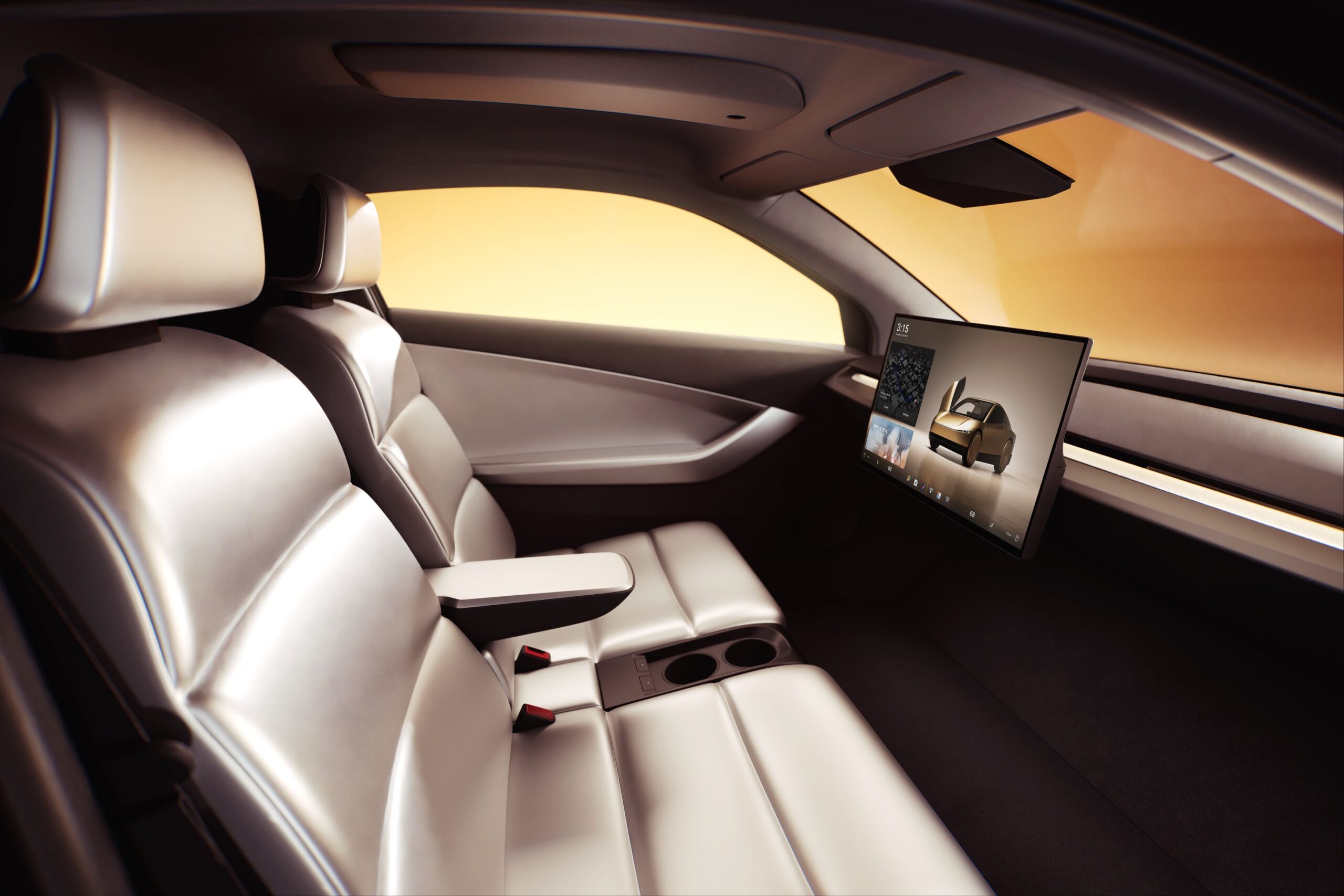
Tesla's vision for the Cybercab fundamentally redefines vehicle ownership and utility. Unlike any Tesla before it, the Cybercab is engineered from the ground up for the Robotaxi network, operating as a driverless service. This shift from a consumer product to a fleet asset is profound. It means the vehicle's entire design—lacking a steering wheel and pedals, according to Elon Musk's prior announcements—prioritizes passenger experience, durability for continuous operation, and maximum uptime. The economic model transitions from personal asset depreciation to generating continuous revenue for both Tesla and fleet owners, creating a new mobility-as-a-service ecosystem.
The Unmatched Data Advantage and FSD Breakthrough
Legacy automakers pursuing autonomy face a fundamental disadvantage: a lack of real-world data at scale. Tesla's Full Self-Driving (FSD) software, already deployed to millions of customer vehicles, collects and learns from billions of miles of diverse driving scenarios. This vast, ever-growing dataset is the fuel for the neural networks that will power the Cybercab. Elluswamy's team isn't just coding rules; they're training an artificial driver with more experience than every human driver combined. This iterative learning loop, moving toward the promised "end-to-end neural net" architecture, is what gives Tesla the confidence to eliminate manual controls entirely, a move competitors cannot match for years.
The implications of a truly driverless vehicle extend far beyond convenience. It promises to reshape urban landscapes by reducing the need for parking, optimizing traffic flow through connected AI, and providing affordable mobility to non-drivers. The societal shift will be monumental, challenging a century of car-centric design and personal vehicle identity. For Tesla, the Cybercab represents the ultimate validation of its long-term strategy, where hardware, software, and infrastructure converge into a single, autonomous service platform.
For Tesla owners and investors, the Cybercab's arrival signals two critical developments. First, it unlocks the immense latent value of the Robotaxi network, potentially creating a new, high-margin revenue stream that could dwarf traditional auto sales. Second, the advanced AI and sensor suite proven in the Cybercab will inevitably cascade into consumer models, accelerating the adoption and capability of FSD in personal vehicles. The success of this platform could see Tesla's valuation pivot from that of an automaker to that of a dominant AI and mobility service provider, making the transition away from the steering wheel the most significant financial event in the company's history.