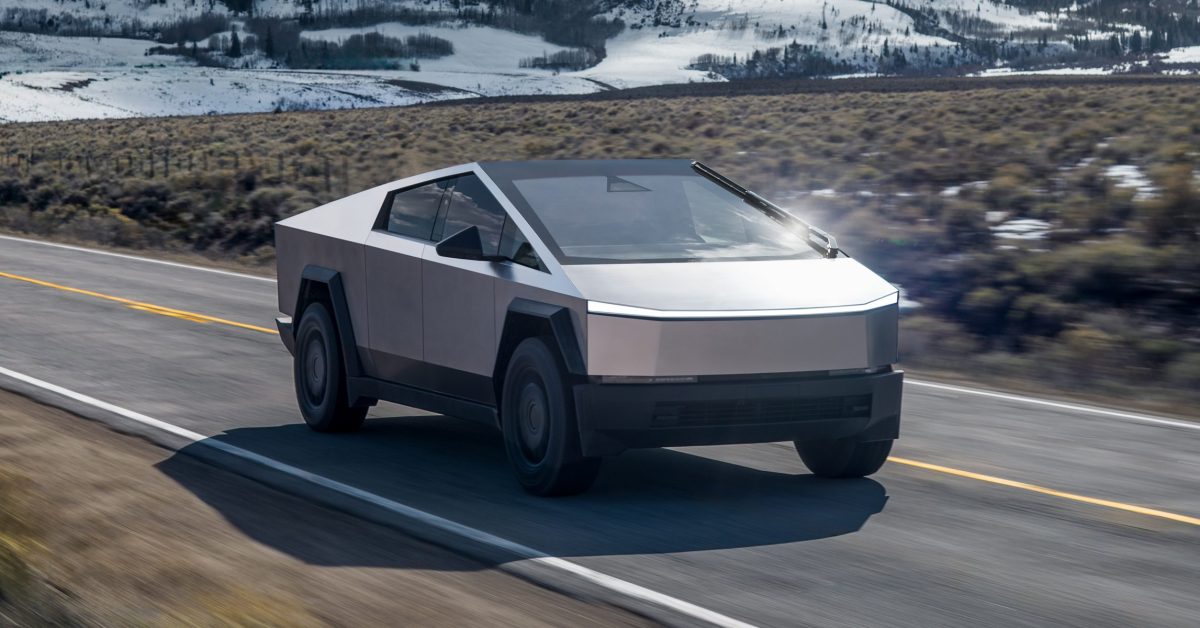
A Pickup Built for a Market That Never Arrived
The official explanation centers on reallocating floor space for the Cybercab, Tesla’s dedicated robotaxi, which Musk has positioned as the company’s next growth engine. Yet the rationale strains against arithmetic. Giga Texas sprawls across millions of square feet in Austin, and the facility was purpose-built with room to expand. The real constraint is not square footage—it is the order book. Tesla originally tooled the Cybertruck line for an annual capacity of 250,000 units. Actual sales have tracked at roughly a tenth of that figure, a gap that turns the truck’s assembly hall into one of the most expensive underutilized assets in the auto industry.
The shortfall is not for lack of trying. Tesla has rolled out foundation-series variants, aggressive financing incentives, and even a lower-priced rear-wheel-drive trim to widen the appeal. None of it moved the needle far enough. The pickup segment is the most brand-loyal corner of the American car market, dominated by the Ford F-150, Chevrolet Silverado, and Ram 1500—trucks whose buyers reward familiarity, towing reliability, and dealer networks, not angular exoskeletons and steer-by-wire experiments. The Cybertruck won headlines; it never won the heartland.
Cybercab Takes the Floor—and the Strategy
The timing of the wind-down is instructive. Tesla is pouring capital into the Cybercab, a two-seat autonomous vehicle with no steering wheel or pedals, which Musk insists will underpin a robotaxi network spanning multiple cities. Shifting Giga Texas capacity toward that program signals where Tesla believes its future lies: not in selling niche lifestyle trucks to consumers, but in deploying fleets of self-driving EVs at scale. It is a bet that requires investors to accept a long runway before revenue materializes—and it comes as rivals like Waymo already operate commercial driverless services.
There is also a financial dimension the company has been reluctant to discuss. The Cybertruck was engineered around stainless-steel body panels and a 48-volt electrical architecture, both costly and difficult to scale. Low volumes spread those fixed costs across far too few vehicles, dragging on automotive gross margins that Tesla has spent two years defending through price cuts. Ending the program stops the bleed, but it also writes off tooling and development spending that Musk once described as “production hell” to bring to life.
What the Retreat Means for Owners and Investors
For current Cybertruck owners, the announcement raises immediate questions about resale value, software support, and parts availability. Tesla has a track record of servicing discontinued vehicles—the original Roadster still receives attention—but a truck with a bespoke steel body and limited production run is a different proposition. Owners should expect weaker resale prices as the market prices in the truck’s orphan status, even as Tesla likely commits to years of over-the-air updates. Prospective buyers sitting on reservations now face a straightforward calculation: buy a vehicle with a known expiration date, or walk away.
For investors, the message is more nuanced. Killing the Cybertruck removes a visible drag on margins and frees capital for the robotaxi and Optimus humanoid programs Musk has made the centerpiece of his long-term pitch. But it also confirms that Tesla’s consumer vehicle lineup is thinning at the very moment competitors are flooding the EV market with fresh models. The company’s valuation increasingly rests on autonomy and AI promises rather than metal on the road—a shift that raises the stakes on Cybercab execution. The Cybertruck’s quiet exit is less a failure of engineering than a reminder that even Tesla cannot manufacture demand for a vehicle the market never asked for.


