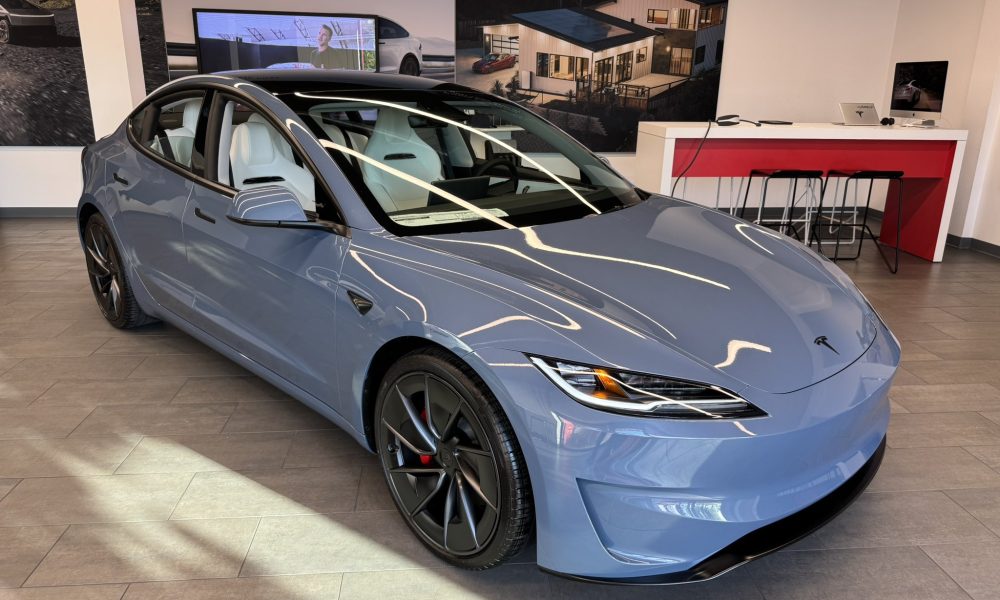
The promise of a Tesla has always been about more than just transportation; it's about accessing the cutting edge of electric vehicle technology. For Canadian customers eagerly awaiting their new Model Y Performance, however, that promise now feels partially broken. A significant discrepancy has emerged, revealing that these vehicles are being delivered without the advertised Vehicle-to-Load (V2L) capability, a feature that allows the car to power external devices and equipment. This omission is not a global standard but a specific, puzzling shortfall in the Canadian market, leaving new owners and industry watchers asking a simple, frustrating question: why?
A Feature Gap in a Key Market
Tesla's rollout of V2L has been a staggered, market-by-market affair. While the functionality is present and actively promoted in the United States and other regions, Canadian Model Y Performance units are rolling off delivery lots without the necessary hardware or software enablement. This isn't a case of a delayed over-the-air update; these vehicles physically lack the bi-directional charging hardware required to send power back out through the charge port. The inconsistency is stark: a customer in Detroit receives a fully functional mobile power station, while one in Toronto, purchasing the same trim of the same vehicle, receives a car with that core capability permanently absent.
Regulatory Hurdles or Strategic Decision?
The "why" behind this omission points to two likely, and interrelated, culprits: regulatory certification and supply chain strategy. Firstly, enabling V2L in a consumer vehicle requires approval from standards bodies like UL in the U.S. and CSA in Canada. Tesla may have prioritized certification in its largest market first, leaving Canadian homologation for a later date. More critically, ongoing global parts shortages could be forcing tough manufacturing decisions. By producing a single variant for North America—one without the bi-directional hardware—Tesla may be simplifying production to maximize output during a period of high demand, effectively deprioritizing the Canadian market for this feature due to its smaller sales volume.
The impact on Canadian EV enthusiasts is tangible. V2L is not a gimmick; it represents a fundamental shift in viewing an electric vehicle as an integrated energy asset. For outdoor adventures, it can power campsites. In emergencies, it can keep essential home appliances running during an outage. Its absence diminishes the utility and future-proof value of a premium vehicle. Tesla's communication on the matter has been characteristically opaque, with no official timeline provided for if or when the feature might be retrofitted or introduced in future Canadian builds, fostering uncertainty and disappointment.
Implications for Tesla's Brand and Buyers
For current and prospective Tesla owners in Canada, this situation serves as a cautionary tale. It underscores the importance of verifying specific feature availability for one's region at the exact time of order, as global marketing does not always translate to local reality. For investors, it highlights the ongoing challenges Tesla faces in managing a complex global supply chain while maintaining feature parity. While likely a temporary, logistics-driven issue, it risks eroding brand trust in a competitive market where rivals are beginning to standardize such features. The resolution—whether through a future hardware retrofit program or a swift certification and inclusion in new builds—will be closely watched as a test of Tesla's commitment to treating all its markets equally.