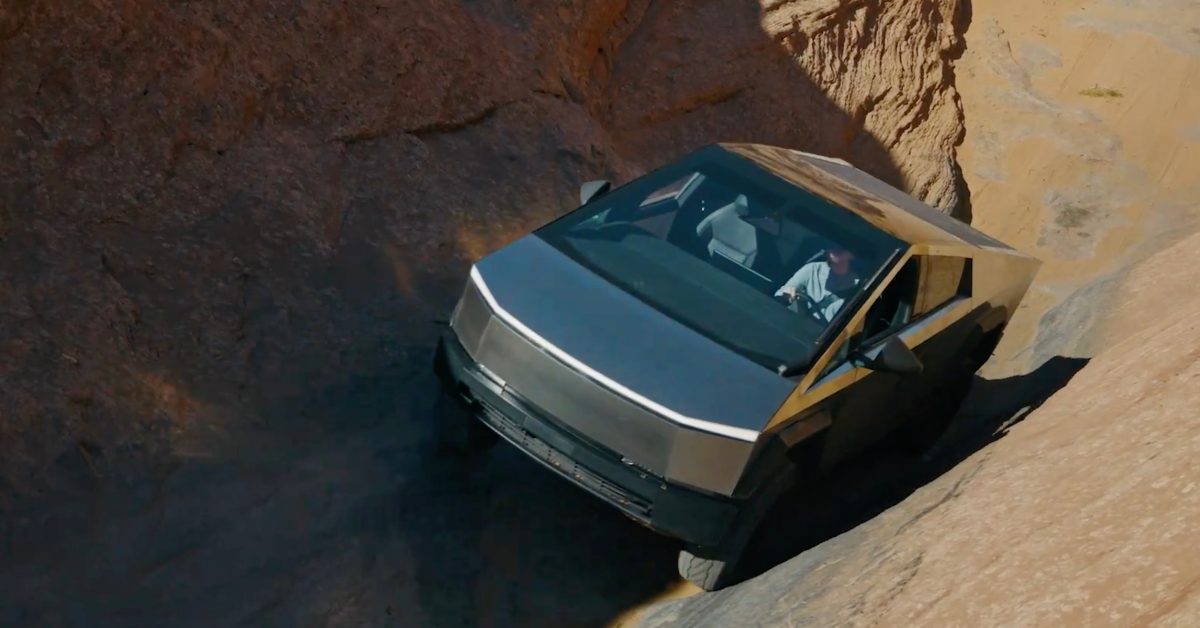
Tesla has quietly rewritten the Cybertruck playbook, and the timing is anything but subtle. Just days after confirming that Cybertruck production at Gigafactory Texas will end around mid-2027, the automaker has pushed prices on its polarizing electric pickup up by as much as 10% in the United States — and stopped taking orders for the entry-level variant entirely. The cheapest Cybertruck a customer can now configure costs $92,490, a figure that would have seemed unthinkable when the truck was first unveiled with a promised sub-$40,000 starting price.
A Price Hike Wrapped in a Scarcity Play
The changes hit the lineup at its most accessible point. Tesla has closed the order books on the base Dual Motor AWD trim, effectively removing the truck's value proposition from the configurator overnight. What remains is a more expensive slate of configurations, with increases reaching up to 10% depending on variant. For buyers who had been circling the sub-$80,000 version, the message is blunt: that truck is no longer available to order. The move transforms the Cybertruck from a mass-market aspiration into a low-volume, high-margin niche product — a repositioning that aligns neatly with Tesla's decision to wind down production at its Austin facility within roughly two years.
Analysts will note the strategy echoes classic end-of-lifecycle tactics in the auto industry. When a manufacturer plans to sunset a model, it typically trims complexity, drops low-margin trims, and raises prices to capture remaining demand from loyalists. Tesla appears to be doing exactly that, compressing the Cybertruck range into its most profitable configurations while production capacity is gradually reallocated elsewhere at Giga Texas.
The Mid-2027 Countdown Changes the Calculus
The production end date is the story behind the story. Confirming that Cybertruck assembly will cease around mid-2027 gives Tesla a defined window to monetize existing tooling and inventory. Raising prices during that window is a calculated bet: demand for a vehicle with a known expiration date may actually firm up among collectors and enthusiasts, while the reduced trim lineup simplifies manufacturing logistics during the ramp-down. It also protects margins at a moment when Tesla's broader EV business faces intensifying competition and pricing pressure across its Model 3 and Model Y lines.
There is risk, of course. The Cybertruck has never been a volume seller in the way the Model Y became a global phenomenon, and a 10% price increase on an already expensive electric vehicle narrows the addressable buyer pool further. Critics will argue that Tesla is squeezing the last drops of revenue from a program that struggled to match its hype, while supporters will counter that the company is simply prioritizing profit per unit over units per quarter — a discipline Wall Street has repeatedly rewarded.
What It Means for Owners and Investors
For current Cybertruck owners, the news cuts both ways. Ending production in 2027 and thinning the lineup could bolster resale values by limiting future supply, turning existing trucks into something closer to instant collectibles. But serviceability, parts availability, and software support over a decade-long ownership horizon become fair questions when a model line is officially sunset. Prospective buyers, meanwhile, face a stark choice: pay $92,490 or more for the privilege now, or walk away from a truck whose entry point has effectively vanished.
For Tesla investors, the signal is about capital allocation. Shutting down Cybertruck production frees floor space and engineering resources at Gigafactory Texas — capacity that Tesla will almost certainly redirect toward higher-volume programs, potentially including the next-generation affordable EV and Optimus robotics work. The price hike extracts maximum margin during the wind-down, a financially rational move even if it stings for the Cybertruck faithful. The real test comes in the next earnings cycle: watch Cybertruck delivery numbers and average selling prices to see whether demand holds at the new, loftier sticker — or whether Tesla's most audacious experiment is limping toward its 2027 finish line.


