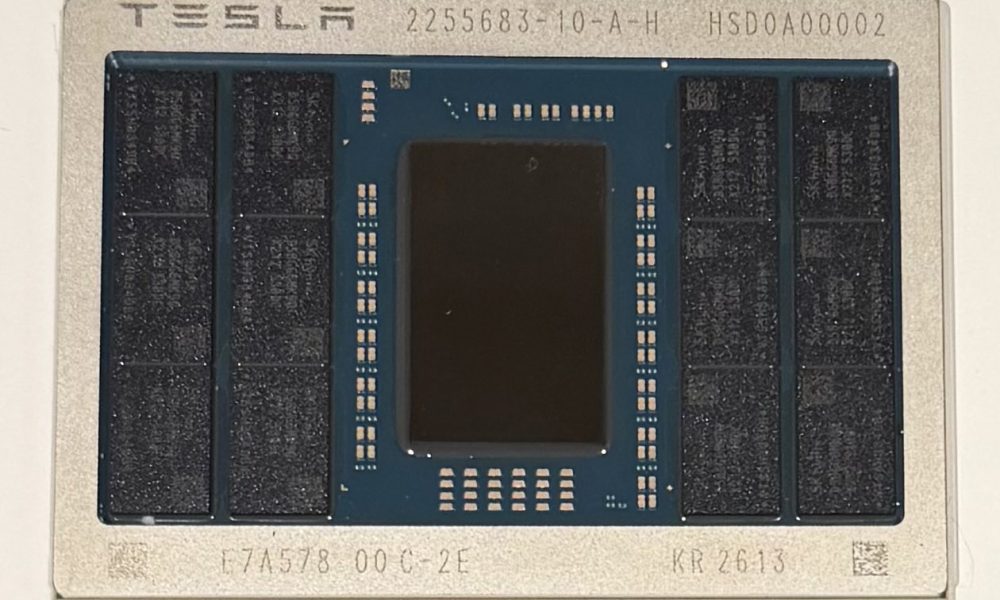
A Silicon Divorce Between Cars and Robots
The strategic split is stark. Tesla's AI4 platform, the inference computer now shipping in every new Model 3, Model Y, Model S, and Model X, will remain the brain of the vehicle fleet. The AI5 chip, by contrast, will be engineered from the ground up for the physical and computational demands of a bipedal robot — a machine that must process vision, balance, and real-time decision-making across dozens of actuators while navigating unstructured environments. Musk's framing suggests Tesla no longer views its cars as the primary consumer of cutting-edge compute; that distinction now belongs to Optimus.
The announcement immediately triggered debate over what it implies about AI4's ceiling. If Tesla is confident enough to divert its most advanced silicon to robotics, the company is effectively declaring that its automotive inference hardware has reached the point of diminishing returns for self-driving. That is a bold assertion from a company that has historically sold autonomy as a moving target, with each hardware generation framed as the one that would finally unlock unsupervised Full Self-Driving.
Hardware 3 Owners Remember the Upgrade Trap
For many longtime owners, the news lands with an uncomfortable echo. The Hardware 3 era left thousands of early FSD purchasers facing the prospect of paid or complicated retrofits when Tesla shifted to AI4, and the memory of that transition remains raw. Musk has previously suggested that Hardware 3 vehicles would require an upgrade to run the most advanced FSD software, a concession that fueled lawsuits, class-action chatter, and a lasting trust deficit among the earliest believers in the mission.
The AI5 decision risks reopening that wound. Owners who purchased FSD on the premise that their hardware would be future-proof now have fresh reason to ask whether AI4 will suffer the same fate — not because Tesla moves to AI5 for cars, but because the company's brightest engineering resources will increasingly point toward Optimus. Tesla has not announced any plan to retrofit AI4 vehicles, and the company's messaging implies none is needed. Whether owners accept that assurance is another matter entirely.
What the Split Means for the Tesla Thesis
For investors, the calculus is a blend of opportunity and risk. On one hand, dedicating AI5 to Optimus sharpens Tesla's positioning as an artificial intelligence and robotics company rather than a conventional automaker — a narrative that has underpinned much of its valuation premium. Musk has claimed Optimus could eventually dwarf the car business, and exclusive silicon gives the robot program a dedicated performance runway that shared hardware could never provide. On the other hand, the move implicitly caps the automotive AI story at AI4, raising questions about how Tesla will market future FSD improvements and whether robotaxi ambitions can be fully realized on current-generation compute.
For Tesla owners, the practical takeaway is that their vehicles' self-driving capabilities will be defined by software optimization on AI4 rather than by new silicon. That places intense pressure on Tesla's engineering team to extract more performance from existing hardware through neural network efficiency, model compression, and over-the-air updates. For investors, the watchpoints are clear: timelines for unsupervised FSD on AI4, the first credible Optimus production milestones, and whether the AI5 exclusivity becomes a proof point for Tesla's robotics ambitions — or another chapter in the company's long, contentious history of hardware promises.


