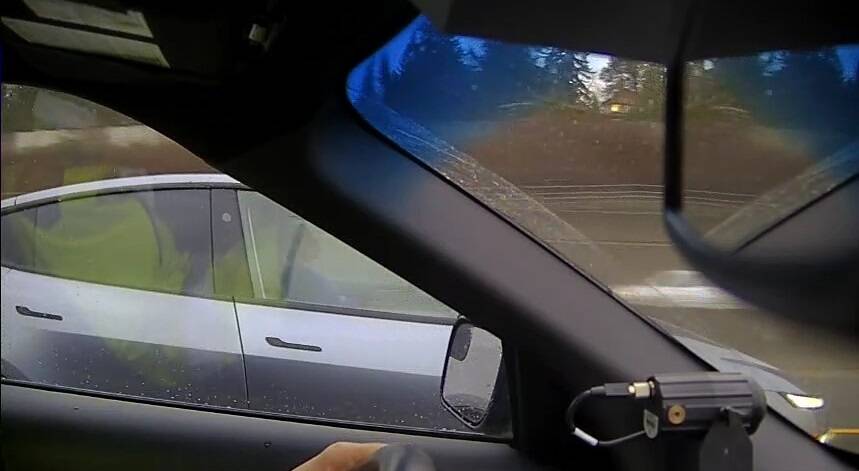
A recent incident on a busy British Columbia highway has reignited critical conversations about driver responsibility and the evolving role of advanced driver-assistance systems. A Tesla driver in the Vancouver area is facing fines after police observed her appearing to be asleep behind the wheel of her new Model Y during the morning rush hour on Highway 1. This event starkly illustrates the dangerous gap between the capabilities of systems like Tesla's Autopilot and the legal, as well as ethical, obligations of the human in the driver's seat.
The Incident: A Wake-Up Call on Autopilot's Limits
According to reports, the driver was ticketed after a police officer spotted the Tesla moving with traffic while the occupant's head was tilted back and eyes appeared closed. The vehicle was reportedly operating with Tesla's Autopilot engaged, a system designed for highway use that combines adaptive cruise control and lane-keeping assistance. While the technology can handle steering, acceleration, and braking within its lane, it is unequivocally classified as a Level 2 driver-assistance system. This classification mandates that the driver must remain fully attentive, with hands on the wheel and ready to take over immediately. The B.C. ticket underscores that using Autopilot does not absolve a driver of the legal duty to be in control of the vehicle at all times.
Context: The Persistent Challenge of Driver Complacency
This is far from an isolated case. Global safety regulators, including the U.S. National Highway Traffic Safety Administration (NHTSA), are actively investigating Tesla's Autopilot following a series of crashes, many involving incidents where drivers were allegedly inattentive. The core issue is a phenomenon known as automation complacency, where over-reliance on technology leads to a dangerous drop in situational awareness. Despite Tesla's cabin camera-based driver monitoring system, which issues alerts for detected inattention, determined individuals continue to find ways to circumvent these safeguards. This latest public incident in B.C. serves as a potent real-world example of the risks that complacency poses, not just to the driver but to all road users.
The implications for Tesla and its community are immediate and significant. For Tesla owners, this is a critical reminder that the "autonomous" label is a future aspiration, not a current reality. Engaging Autopilot or the more advanced Full Self-Driving (FSD) Beta is an act of shared control, not a license for disengagement. For investors, the incident highlights the ongoing regulatory and reputational hurdles the company faces as it pioneers this technology. Each such event adds pressure for more robust—and potentially more restrictive—driver monitoring solutions, which could impact both the user experience and the regulatory pathway toward higher levels of automation. Ultimately, the journey toward safer roads hinges on both technological refinement and a fundamental shift in driver behavior, a duality this B.C. ticket makes uncomfortably clear.

